
Last updated November 16, 2026
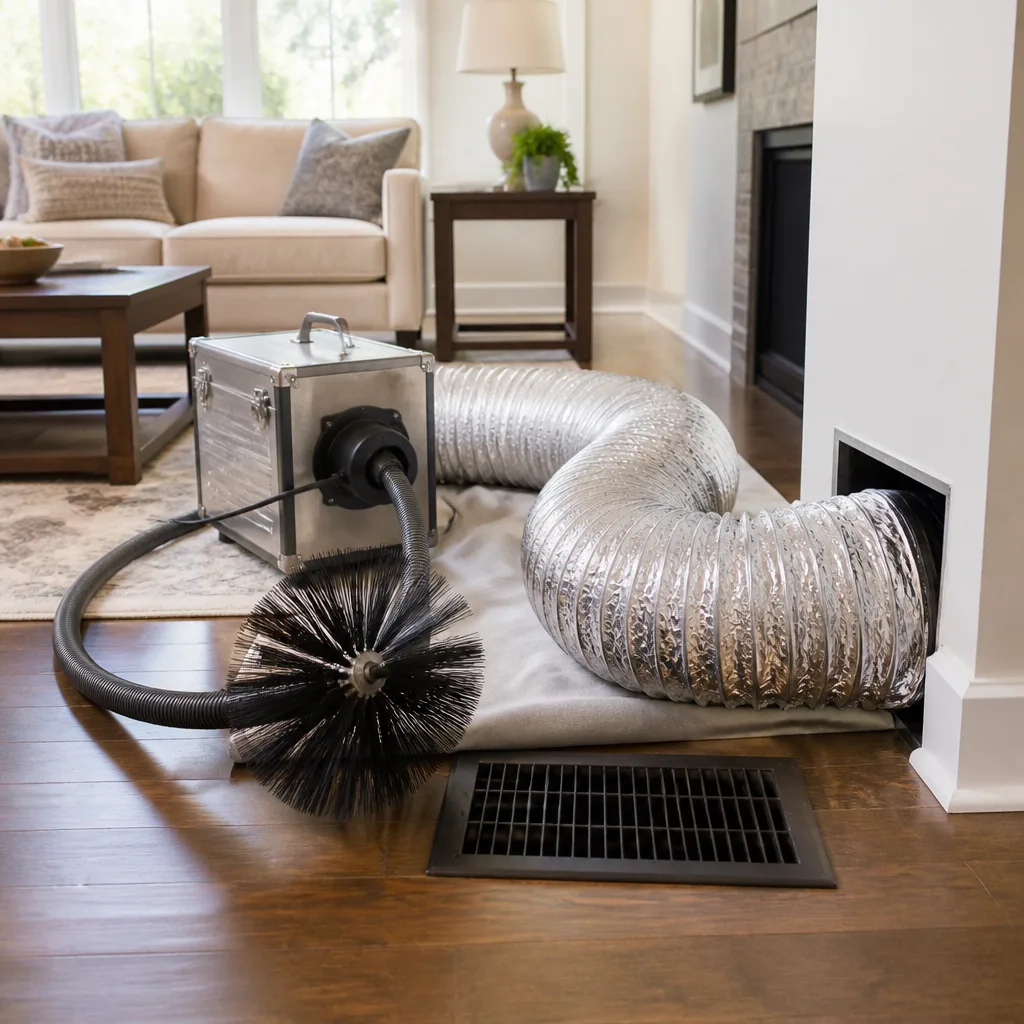 Whole-home duct cleaning
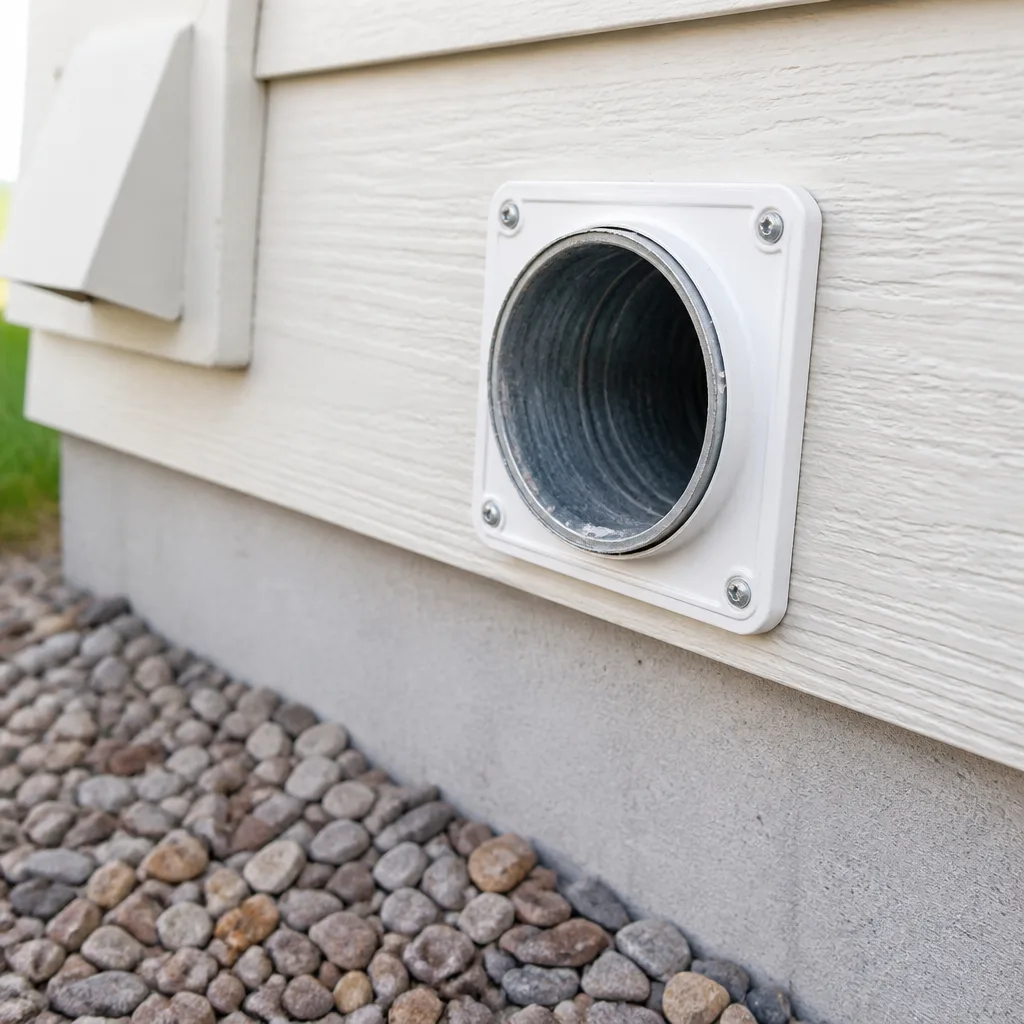 Dryer vent cleaning
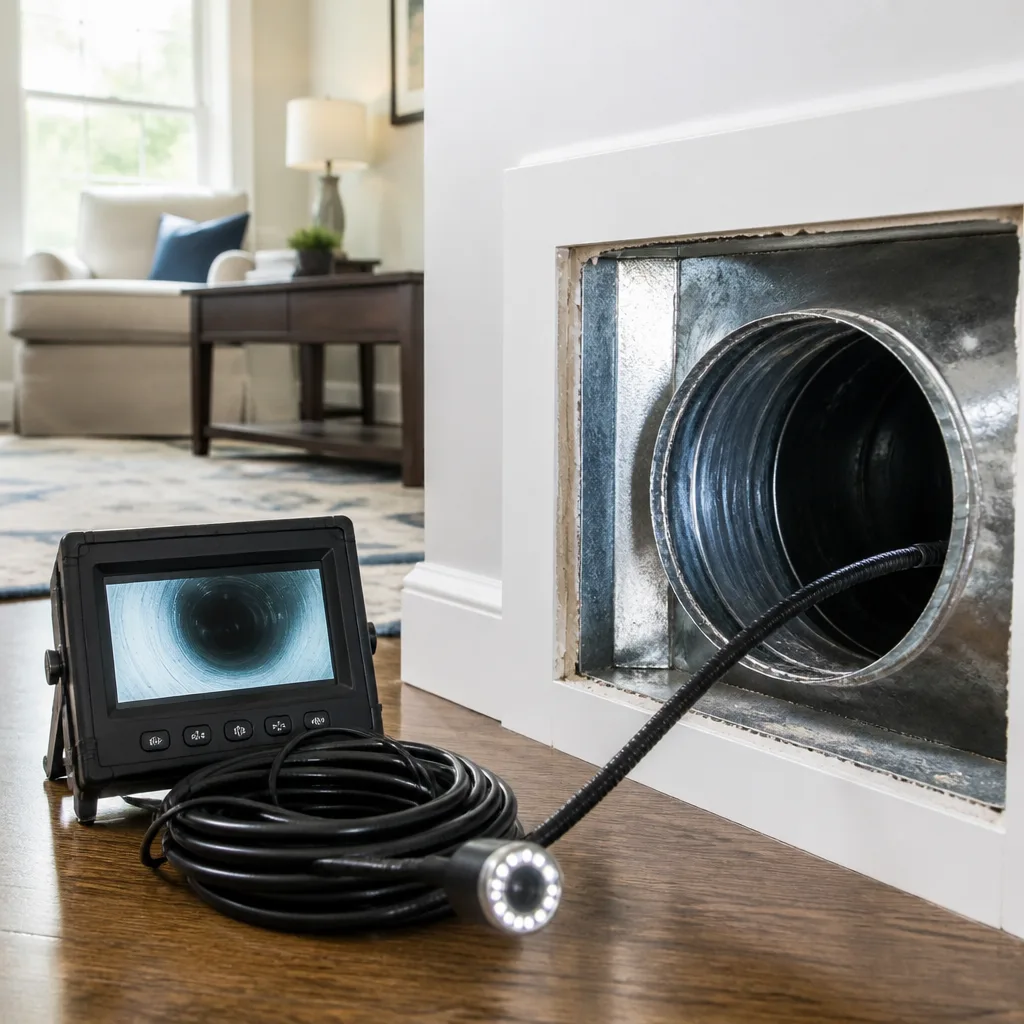 Camera inspection
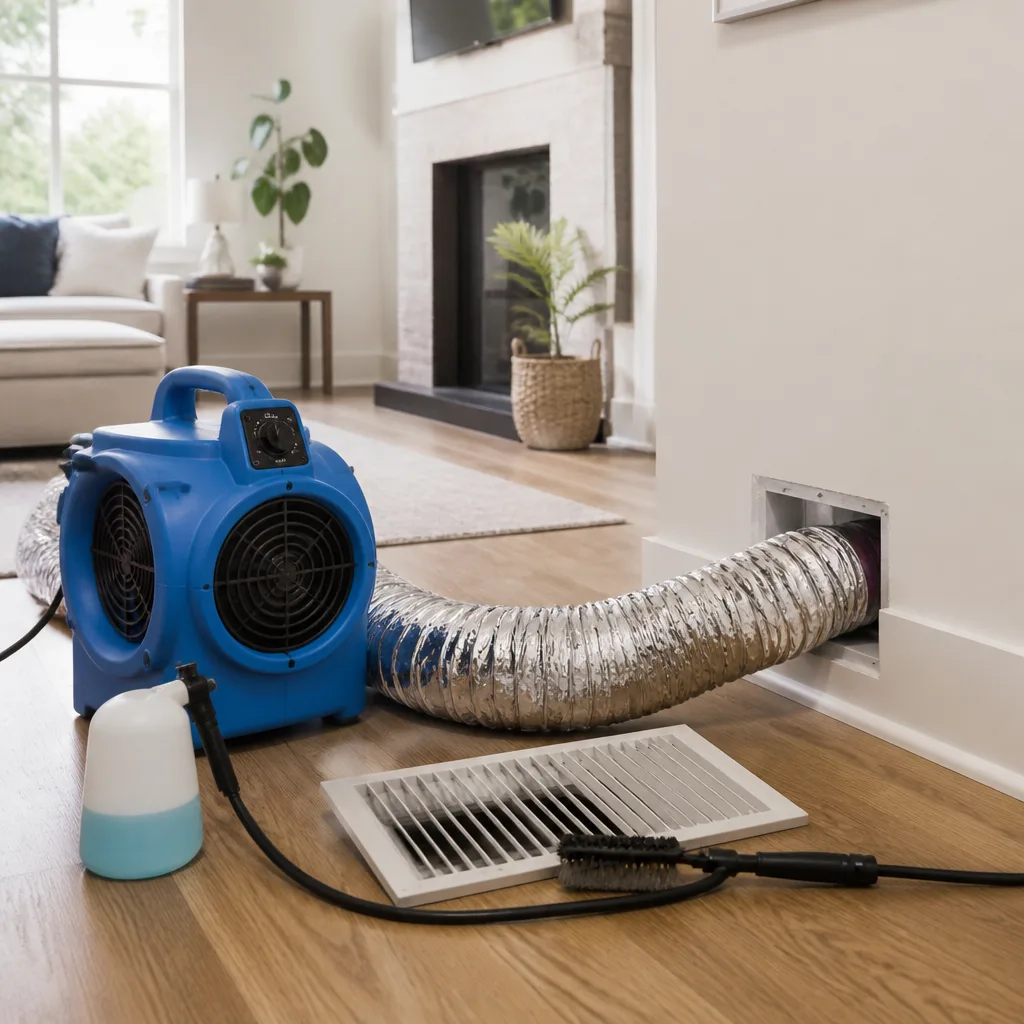 Sanitizing & deodorizing
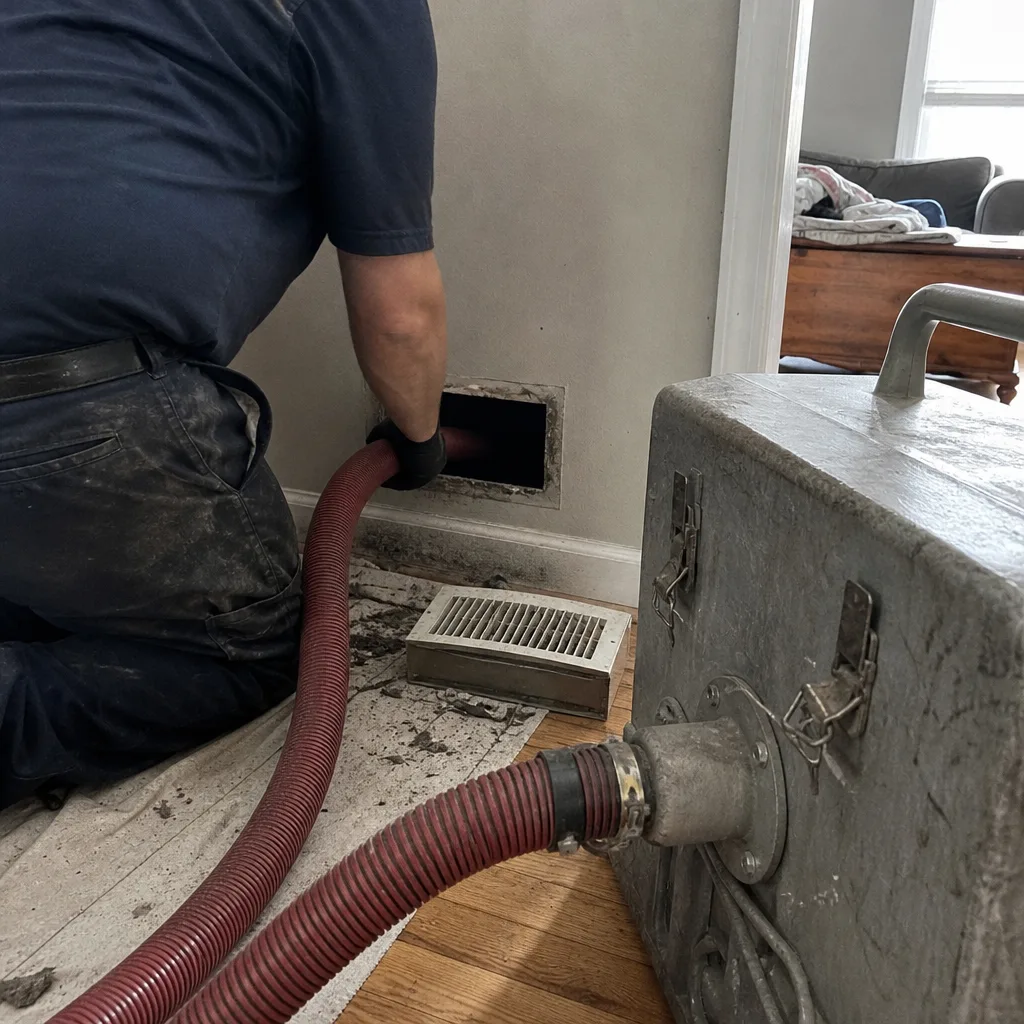
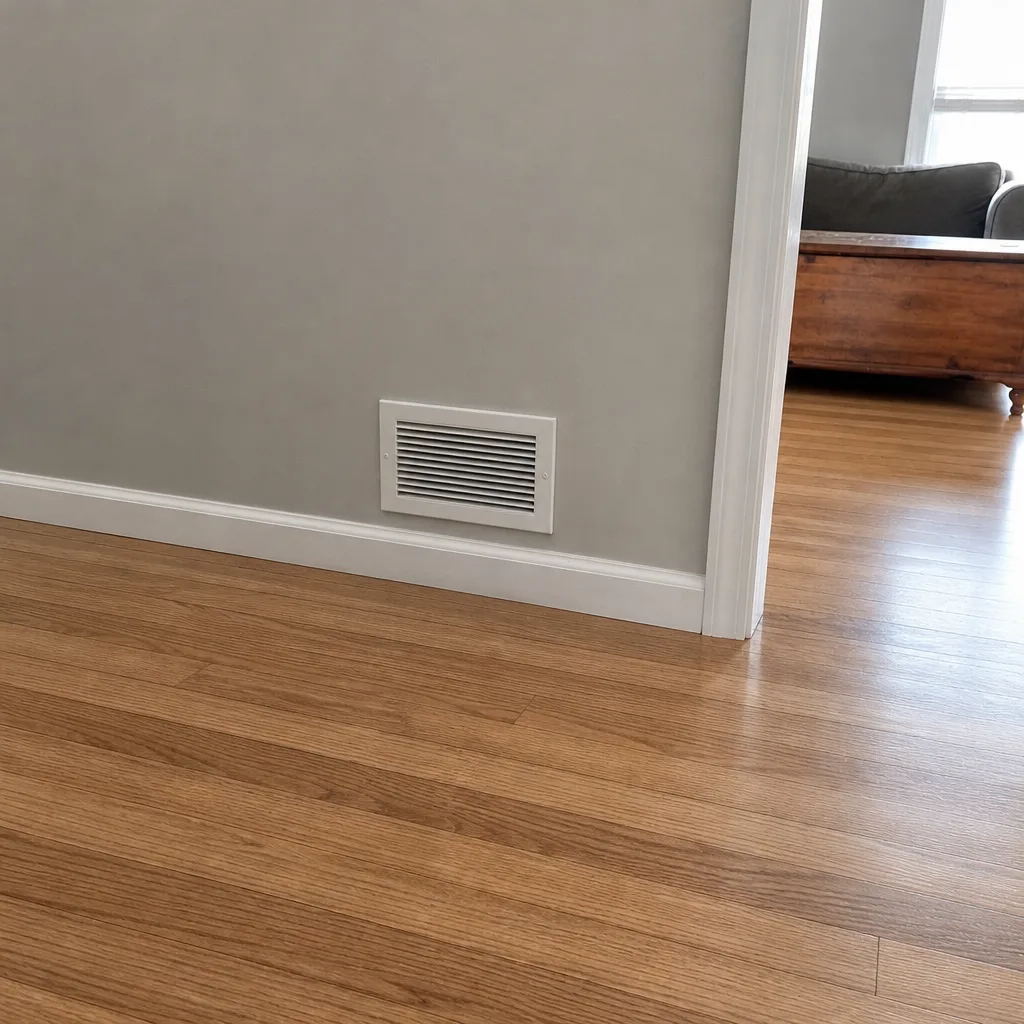
Whole-system duct and dryer vent check with before-and-after photos - you see exactly what came out of your vents
That "$99 whole-house special" is a bait ad - the real number appears once they are in your hallway, or the "clean" is a shop-vac at the register. We photograph the inside of your ducts before and after instead.
DIY vs Professional Air Duct Cleaning: The Albany Homeowner’s Decision Guide
Here’s the part most homeowners get wrong: DIY duct cleaning isn’t dangerous. It’s just structurally limited in a way you usually discover after you’ve already bought the equipment. A consumer-grade brush kit and a shop vac can clean the first 18 inches of a duct run pretty well – the trouble is that most contamination settles at the bends, the transitions, and near the air handler, and those tools can’t reach any of it without negative pressure pulling the debris out instead of pushing it around. In this guide we’ll show you exactly what you can do yourself and get real results, where DIY starts creating the illusion of cleaning while the actual problem stays put, and how to decide which side of that line your Albany home is on.
Quick Answer
A shop vac and a brush kit can handle surface dust at the registers, the accessible plenum, and your dryer’s lint trap. Everything past the first stretch of duct – the bends, the runs, the area around the air handler – needs truck-mounted or HEPA-contained equipment running under negative pressure to actually extract debris rather than redistribute it. If you’ve had recent renovation, rodents, or a suspected mold problem, that’s not a DIY job at all.
Styles & brands we work with
- Whole-home duct cleaning
- Dryer vent cleaning
- Camera inspection
- Sanitizing & deodorizing
Table of Contents
- What DIY Duct Cleaning Can Actually Accomplish
- Why Negative Pressure Is the Whole Game
- Where DIY Runs Out of Road
- What Professional Equipment Actually Does
- The Real Cost Comparison
- How to Use DIY Between Professional Visits
- When Cleaning Reveals a Repair Problem
- Common Mistakes to Avoid
- When to Call a Professional
What DIY Duct Cleaning Can Actually Accomplish
We’re not here to tell you every DIY effort is wasted. It isn’t. There’s a real, bounded list of things a careful homeowner can do that genuinely helps – and the clearest way to draw the line is to name what’s on the doable side of it.
The doable list
- Register and grille cleaning. Pop the covers off, wash them in the sink, dry them fully, and clear the visible dust from the boot opening. This alone cuts the dust you see settling on furniture between HVAC cycles.
- Surface wiping inside the supply plenum. The short stretch of ductwork directly above the furnace or air handler is often accessible – some are lined with foil-faced insulation that collects dust quickly. Wipe what you can reach without tools.
- Dryer lint trap and vent opening at the back of the dryer. Pulling the flexible transition duct behind the dryer and clearing it of lint is quick, safe, and worth doing.
- Return-air grille cleaning. Returns pull more debris than supplies because they’re constantly inhaling. Vacuuming them regularly is cheap maintenance with a visible payoff.
- Filter changes on schedule. The single highest-return piece of DIY maintenance in any Albany home’s air system is a clean filter. It costs a few dollars and does more than a home brush kit ever will.
What “clean” actually means here
Notably absent from that list: the inside of the duct runs. That’s the piece most homeowners assume DIY covers and the piece it really doesn’t. The National Air Duct Cleaners Association defines a “clean” system using specific criteria for what’s visible inside a duct run and at the components attached to it – a definition no shop vac can satisfy. Knowing that distinction is the difference between actual maintenance and a satisfying but mostly cosmetic project. If you haven’t had the system looked at and you’re wondering whether air duct cleaning is even the right call, that’s the question this guide is built to answer.
Why Negative Pressure Is the Whole Game
Duct cleaning is fundamentally a containment problem, not a scrubbing problem. Debris inside a duct is a mix of settled dust, lint, hair, pet dander, construction fines (gypsum dust, sawdust), and sometimes biological material. Every one of those things is light enough to go airborne the moment something disturbs it. If you agitate the inside of a duct without pulling air out at the same time, you’re just giving that material a lift ticket into the rooms you’re trying to clean.
The physics, plainly
- Professional equipment attaches a high-volume vacuum to a single open supply or return register, then seals the rest of the system so the only air path into it is from the register being worked on.
- The vacuum runs continuously, pulling the entire duct system into negative pressure – lower pressure inside the ducts than in the room.
- Agitation tools (air whips, rotary brushes, air jets) travel down each run, loosening debris that’s stuck to the walls.
- The loosened debris is pulled toward the vacuum by the pressure differential, not pushed toward the nearest rooms.
- At the machine, HEPA filtration captures the fines that a shop vac’s pleated filter simply can’t hold without the airflow collapsing.
A consumer shop vac connected to a single register has almost none of this. It has some suction, but it can’t pressurize the entire system, it has no way to seal the other registers, and its filter clogs within minutes of pulling heavy dust. Agitation without the pressure differential is the mechanical equivalent of sweeping a dusty floor into a fan.
This matters even more in Albany’s older housing stock. Much of the city’s residential supply ductwork is galvanized steel – cold, easy to sweat, and quick to collect condensation dust at the transitions after a humid summer. Fiberboard duct appears in some additions and post-1990s builds, and it traps debris differently. The material affects which tools a trained technician chooses – a rotary brush that’s fine on metal can shred fiberboard liner. That’s a judgment call you make with equipment in hand, not a universal tool choice.
Where DIY Runs Out of Road
The place DIY fails isn’t the first 18 inches at the register. It’s everything past the first bend – and there are always bends. Duct runs don’t run straight through a house. They zig-zag around framing, over joist bays, drop through wall cavities, and terminate in boots at the ceiling or floor. Every one of those transitions is a place dust accumulates and a place a rigid brush can’t pivot.
The four scenarios that make professional cleaning non-negotiable
Most of the time, DIY vs professional is a judgment call. These four situations take the judgment out of it:
- Post-renovation debris. Drywall dust, sawdust, spray foam overspray, and drywall screw heads all end up in return ducts during any serious remodel. Drywall dust is abrasive and it’s also wet-setting – it hardens onto duct walls as it cures. A shop vac can’t break it loose, and if you agitate it without containment, it goes into every room in the house.
- Rodent contamination. Mice and squirrels find their way into ducts through exterior penetrations, especially in older neighborhoods with mature trees and deep-set foundations. Once inside, they leave droppings, urine, nesting material, and – critically – hantavirus-laden dust that becomes airborne the moment anything disturbs it. This is a HEPA-containment situation with proper protective gear, not a shop-vac situation. It’s also a job that often reveals the exterior breach that let them in, which then needs sealing.
- Mold-suspected systems. Mold requires moisture, and hidden moisture in HVAC systems usually traces back to a source: a condensate pan that isn’t draining, a duct that sweats in a damp basement, or a coil that hasn’t been cleaned. Cleaning without correcting the moisture source just buys you a recontamination cycle. Suspected mold also means the technician needs containment equipment – not because the mold is going to jump out at you, but because mold spores travel on air and cross-contamination between rooms is the entire risk.
- Systems that have never been cleaned. A duct system that hasn’t been cleaned since installation holds decades of buildup. That’s not a first-18-inches problem – it’s a whole-system job.
One important boundary: DIY duct cleaning isn’t dangerous the way electrical work or gas is. There’s no fire risk and no electrocution risk. Where it becomes a real problem is with biological contamination (scenario two and three above) or where the homeowner’s effort creates a false sense of resolution and postpones addressing an active repair. That’s the structural limitation – not a safety hazard.
What Professional Equipment Actually Does
The gap between consumer gear and professional gear isn’t a marketing gap. It’s a working-load gap, the same one that separates a framing nailer from a finish nailer or a landscaping crew’s equipment from a homeowner’s. The components matter and they do different jobs.
The equipment, in plain terms
- High-volume HEPA vacuum units capable of sustaining negative pressure across an entire residential system while handling the fines generated by agitation. Abatement Technologies equipment, for example, is built for containment-grade work and the kind of HEPA handling you’d want in a home with serious air-quality concerns.
- Rotary agitation tools and air whips – Rotobrush and Nikro systems are the working standard here, and they’re the same class of equipment used on commercial and industrial jobs. Rotobrush’s rotary brush spins at controlled speed inside the duct without shredding the liner. Nikro air whips use compressed air jets to scour pockets the brush misses.
- Camera and inspection tools for verifying what’s actually inside a run before and after – and for locating damage that stops the cleaning short.
- Sealing equipment to isolate unused registers so the vacuum actually draws from the one being cleaned. This one detail matters more than most homeowners realize.
The workflow looks like this from the inside of an actual job:
- Walk the system. Identify all supply and return registers, note any sealed or blocked runs, and check the air handler and filter cabinet.
- Attach the vacuum unit to a single return trunk and seal the remaining openings.
- Work each register in turn with the agitation tool, letting the pressure differential pull loosened debris toward the machine.
- Inspect with a camera at the air handler and at key transitions; capture before-and-after photos so the homeowner sees what changed.
- Clean the air handler exterior, blower wheel (carefully), and filter cabinet.
- Clean or replace the filter and reassemble the system.
If your home has a Honeywell or Aprilaire whole-home air-quality system (media cabinet, humidifier, or UV unit), the technician needs to be fluent in it – a Honeywell media cabinet is not the same cleaning problem as a standard 1-inch filter slot, and an Aprilaire humidifier adds a bypass duct that collects mineral dust. We work alongside both brands as part of everyday service in Albany, and that matters when a “clean the ducts” job turns into “the humidifier bypass is full of crust.” More on what we do across the whole house is on the Duct Cleaning Albany main page.
The Real Cost Comparison
The most common DIY vs professional comparison online is dishonest because it only counts the shop vac receipt. Real cost adds up differently. Here’s the honest ledger for a typical Albany home.
The DIY line items
- Shop vac – $100 to $250 for a wet/dry unit with a HEPA cartridge filter. The filter itself is $25 to $40 to replace when it clogs.
- Duct brush kit – $40 to $120 for a consumer-grade kit. Half the ones you’ll find online have flexible shafts that pop out of their couplings after a few runs.
- Time – realistically 4 to 8 hours for a determined homeowner with no prior experience, often more, and the work is uncomfortable (up ladders, in crawl space, in the basement).
- Replacement filter for the HVAC system – $15 to $60 depending on MERV rating and cabinet size.
- Probability of hiring a professional afterward – high, if the DIY attempt reveals the system was worse than it looked.
What a professional visit typically runs in Albany
Whole-system air duct cleaning in Albany is priced by the number of systems, the number of registers, and whether additional services (dryer vent, repair) are included. Typical whole-home estimates fall in a range – a common starting point for a single-system home is roughly $350 to $600 depending on register count and system size, with larger homes and multi-zone systems quoted higher. The estimate is free, and the written estimate sets the final price. We do not quote per-vent teaser pricing.
Look hard at the ROI comparison in one more piece – repair. If the professional visit uncovers a damaged duct, a disconnected run, or an unsealed plenum breach, that repair is a real line item that changes the math, because it produces measurable efficiency improvement, not just cleaner air. Neither a shop vac nor a brush kit will ever reveal a disconnected supply run behind a finished wall. That’s the hidden variable in every DIY-vs-professional cost conversation, and it’s why we recommend professional inspection at least once in any home you plan to stay in – it’s the diagnostic step that tells you which years are “DIY fine” and which years are not.
How to Use DIY Between Professional Visits
The best use of DIY duct maintenance is between professional visits, not as a substitute for them. Thinking about the two as a matched pair – not interchangeable – is where most homeowners get real value out of the effort they’re willing to put in. The idea is not “wait as long as possible between professional cleanings by doing DIY in between.” It’s “you already committed to a professional relationship with the system; here’s what makes the professional visit more effective when it happens.”
The maintenance calendar we’d suggest
- Monthly: check the filter – replace if visibly loaded. In Albany’s older housing stock, filter loading happens faster than the “every three months” rule implies, especially in homes with pets or near major arterials.
- Quarterly: pull and rinse the register covers; vacuum the visible duct opening at each supply.
- Twice a year: clean the dryer vent line from the dryer back as far as you can safely reach; verify the outside flapper moves freely when the dryer runs.
- Seasonally (spring and fall): wipe the accessible plenum surfaces, and if you have a Honeywell or Aprilaire humidifier, check the bypass duct and pad – or reset the water panel per the system’s instructions.
- Annually: walk the basement or mechanical room with a flashlight and look for disconnected flex duct at the air handler, moisture near the condensate pan, or sagging duct straps.
One maintenance task that has more value than most people realize is the dryer vent. It’s the leading cause of household dryer fires, and unlike duct cleaning, the accessible portion is genuinely within a homeowner’s ability to check regularly. Pulling the lint trap after every load, cleaning the transition duct behind the dryer, and verifying the exterior flapper is a meaningful safety routine. That said, the full run inside the wall – and especially the roof or side-wall termination – needs professional equipment to clean properly, and that’s the piece most homeowners can’t reach or evaluate. If you’ve never had that line cleaned, dryer vent cleaning is worth scheduling at least once, and then keeping the accessible parts clean between visits.
When Cleaning Reveals a Repair Problem
Here’s something that doesn’t get said often enough in this conversation: cleaning and repair are not the same problem, and the second one is where most of the real value sits. A cleaning-only service will drill into the system, agitate, extract, and leave – and if it’s part of a company that doesn’t do repair, whatever damage it found along the way becomes “call someone else.” That handoff is common, and it’s a bad experience for the homeowner because the diagnosis gets lost in translation.
The repair problems cleaning actually surfaces
- Disconnected flex duct at a takeoff or the air handler. This is the most common efficiency killer we encounter – it doesn’t show up as a duct-cleaning problem, but it does show up as an HVAC efficiency problem.
- Damaged or collapsed duct liner inside a run. If the inner liner of insulated flex or duct board has torn away, it becomes a trap for debris and a restriction on airflow. Cleaning alone can’t fix this.
- Unsealed plenum joints and gaps at the air handler. These pull unconditioned air from the basement or crawl directly into the system, which both reduces efficiency and re-introduces dust that cleaning just removed.
- Sagging or improperly supported duct. Low spots in horizontal runs collect debris and moisture; a run that sags needs re-strapped, not re-cleaned.
The reason this matters for the DIY decision is that the answer to “should I clean these ducts myself?” partly collapses into “do I know what’s actually inside my ducts?” If the answer is “I don’t know,” that’s the actual starting point – and there’s a straightforward way to close the gap. Albany homeowners get a written estimate and a system inspection before the cleaning, and any repair need is quoted before work proceeds. Cleaning, dryer vent, and repair are all handled by the same team, so there’s no handoff between a cleaner and a repair sub.
Common Mistakes to Avoid
We’ve seen the same handful of errors enough times that they’re worth a specific list. Each one is worth a minute of your attention before you start pulling register covers.
- Assuming a shop vac connected to one register cleans the whole system. It creates localized suction at the connection point, but without sealing the other registers, the vacuum draws air from every other opening in the house – the register you’re working on gets maybe 10% of the available airflow. The vacuum’s rated flow and the actual flow through the target run are two very different numbers.
- Running a brush without containment. This is the biggest mechanical error in DIY duct cleaning. Agitating a supply or return without a HEPA vacuum running means every particle you loosen goes back into the room. In a home with allergies, that twenty-minute DIY project can leave you coughing for a day.
- Using a shop vac rated for wet/dry work on dry dust without a HEPA filter. Standard shop vac filters pass fine dust straight through. Running one in a dusty basement without a HEPA cartridge is worse than running nothing at all.
- Skipping the air handler and plenum on the assumption that “the ducts” are the whole job. The air handler cabinet, blower wheel, and coil are the largest invisible reservoirs of dust in the system, and they’re also the pieces most likely to be skipped in a cheap cleaning.
- Assuming a low flat-rate “duct cleaning special” covers the whole system. In Albany – as in most markets – the low teaser price frequently covers a limited number of registers or one system, with the rest billed on-site. Whole-system pricing agreed in writing before work starts is the correct structure.
- Ignoring the dryer vent because the duct cleaning covered “the vents.” Duct cleaning and dryer vent cleaning are separate jobs on separate equipment. In older Albany homes with long vent runs and multiple bends, a loaded dryer vent is a fire risk that a supply-duct cleaning doesn’t touch.
- Cleaning a mold-suspected system at home. Agitation in a mold-positive system without HEPA containment is the one scenario where DIY actually makes things meaningfully worse. If there’s visible mold around a register or a musty smell when the system runs, that’s a containment job, not a shop-vac job.
When to Call a Professional
Call a professional rather than going DIY when any of the following apply: recent renovation in the home, rodent evidence in or around the ductwork, musty smell from a register, visible mold inside a supply or return boot, a dryer that suddenly takes two cycles to dry a normal load, a home you’ve just purchased (pre-move-in cleaning is a clean-slate reset worth doing before furniture arrives), a system you can’t remember the last cleaning of, or a heating or cooling season that ended with dust on every horizontal surface. In any of those cases the decision isn’t really DIY-vs-professional – the system has a specific problem that equipment and technique need to address.
For everything else – a home with a maintained system, scheduled filter changes, and a cleaning done at reasonable intervals – DIY between visits is a reasonable contribution. Duct Cleaning Albany offers free estimates in Albany: call (888) 861-7237. We answer 24/7. Fast dispatch from 7am to 7pm, Sunday through Friday. We’ll walk your system, show you what we find, and give you a written per-system price before any work starts.
See the difference
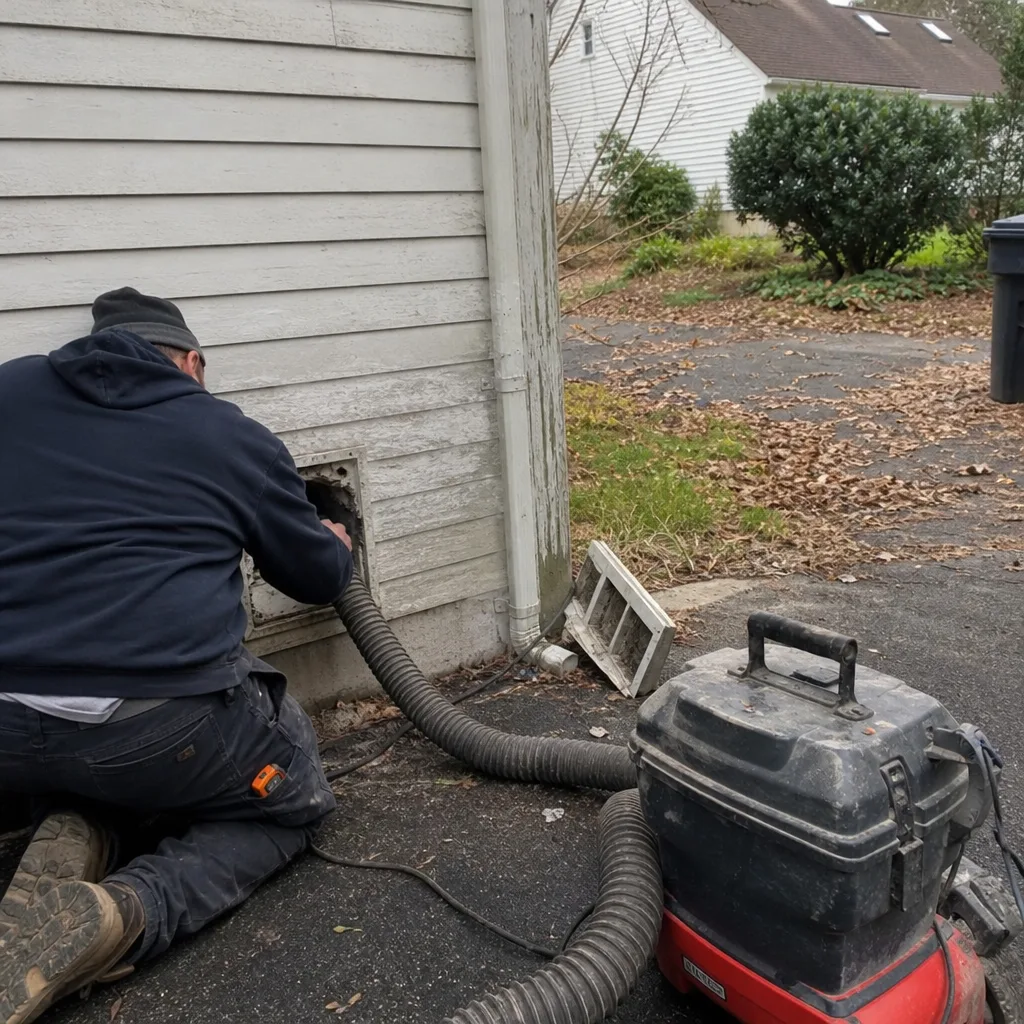 Before
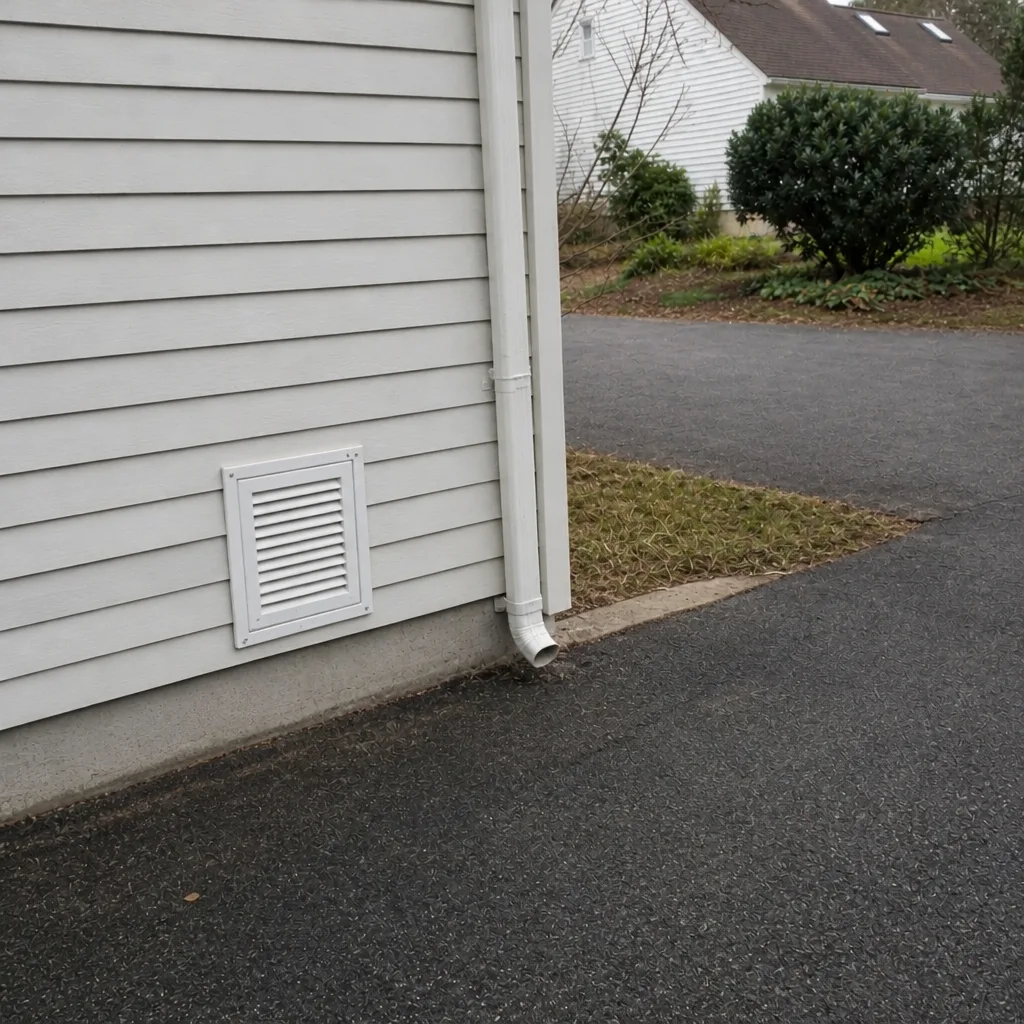 After
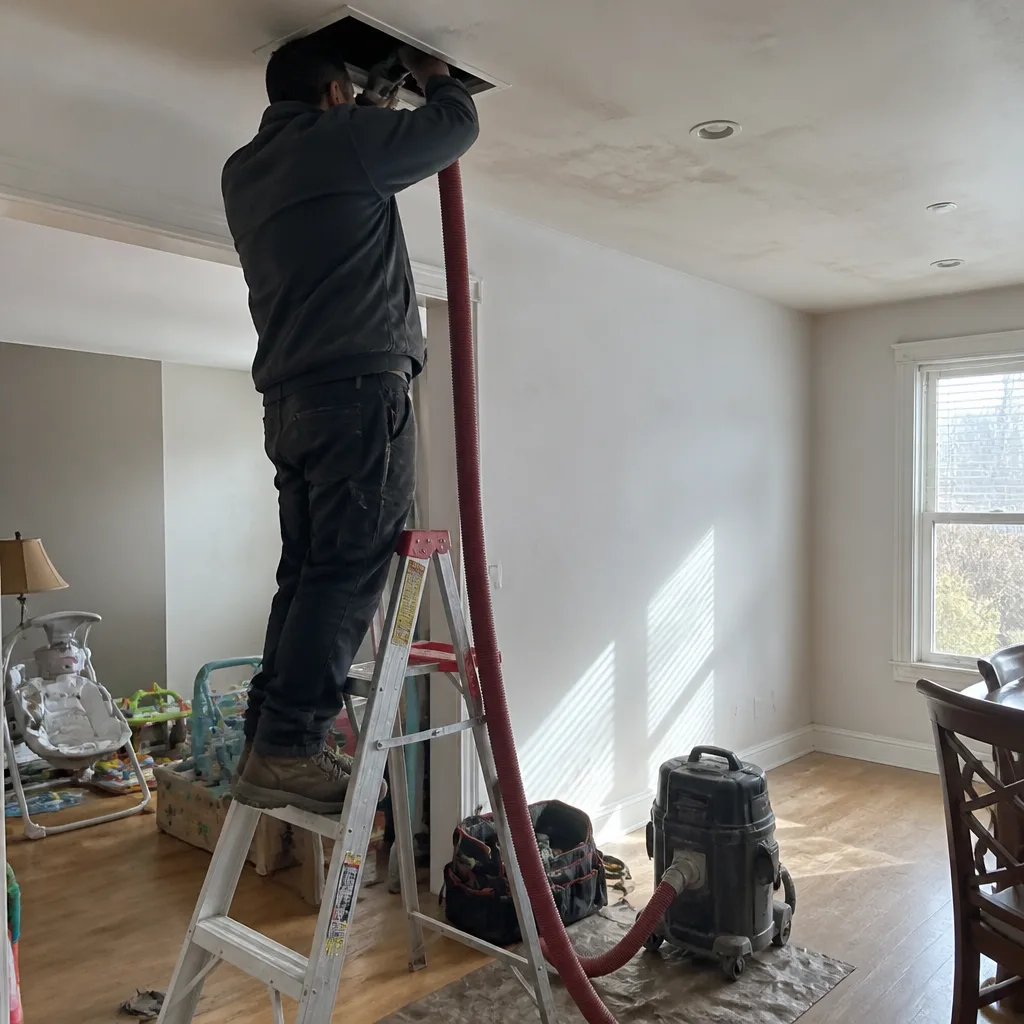 Before
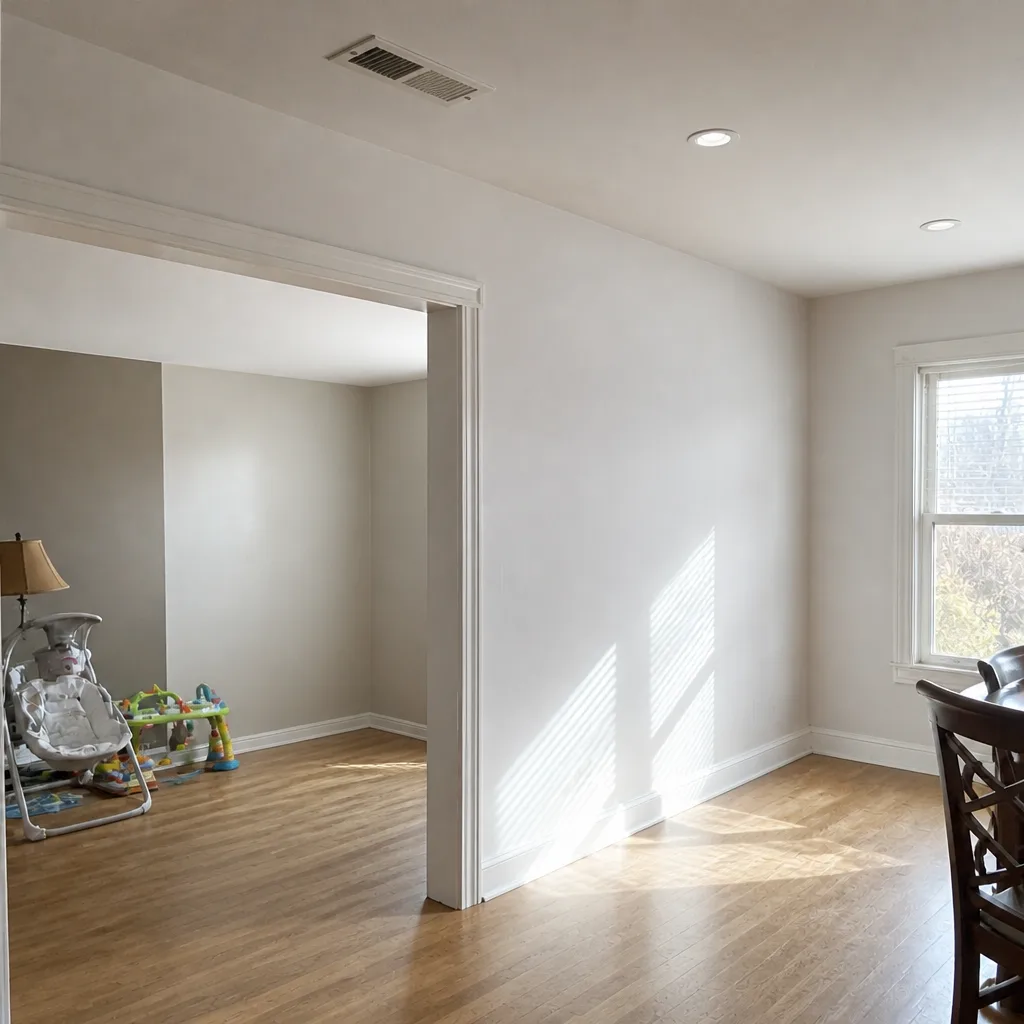 After
 Before
 After
Frequently Asked Questions
Yes, within a specific and limited scope. Cleaning register covers, wiping the visible plenum surfaces, changing filters on schedule, clearing the lint trap and dryer transition duct, and vacuuming accessible boot openings are all legitimate, useful DIY tasks. What DIY can’t do is clean the inside of the duct runs, agitate debris loose at the bends and transitions, extract it under negative pressure, and verify what was removed – which is most of what “duct cleaning” actually means. If a homeowner’s expectation is only “register covers and filters,” DIY is fine. If it’s “the system is clean,” that requires professional equipment.
Whole-system air duct cleaning in Albany typically falls somewhere in the range of a few hundred dollars for a single-system home with a standard register count, with larger and multi-zone homes quoted higher. The estimate is free, and the written estimate sets the final price. We don’t quote per-vent teaser pricing. Call (888) 861-7237 for an exact quote. We answer 24/7. Fast dispatch from 7am to 7pm, Sunday through Friday.
Because they’re frequently not for the same job. A cheap “duct cleaning special” often covers a limited number of registers or one piece of the system, with the rest billed on-site once the technician has you in an awkward conversation. Others skip the air handler, blower wheel, and plenum entirely – which are the largest dust reservoirs in the system. The honest way to compare is to ask, before work starts, exactly which components are included, how the price is set (per system, not per vent), and whether the price in writing is the final price. We quote per system, in writing, before any work starts. Call (888) 861-7237 for a free estimate.
Before-and-after photos of your own ducts, taken on your system, are the standard we use. A camera inspection at the air handler and at key transitions should show a visible difference, and a technician should be able to walk you through what was cleaned and what condition it was found in. If you’re not given before-and-after photos and an honest walkthrough of the system’s condition, you don’t have verification that the work happened. Call (888) 861-7237 and we’ll be specific about what the process looks like.
Most homes in Albany land somewhere between every three and every five years under normal use, with that interval shortening if there are pets, recent renovations, smokers in the home, or seasonal air-quality concerns. Homes with a finished basement and a system running most of the year tend to accumulate dust faster than homes that run their system less. There’s no universal number – the honest answer is that it depends on the system, the household, and what the last inspection found. That’s why a system inspection matters more than a fixed calendar. Call (888) 861-7237 for a free estimate and a look at where your specific system actually stands.
The difference is containment pressure and agitation. A shop vac has suction but can’t sustain negative pressure across an entire residential system, can’t seal unused registers, and its filter clogs quickly under real duct dust. Our equipment includes professional-grade Rotobrush and Nikro cleaning systems and Abatement Technologies HEPA containment – the same class of equipment used by commercial and industrial contractors, not consumer gear. That combination is what lets us agitate debris at the bends and pull it toward the machine rather than into the room. If your home has a Honeywell or Aprilaire air-quality system, we work alongside those setups too, so cleaning doesn’t stop at the filter slot. Call (888) 861-7237 for a walkthrough of what we’d actually be working with in your home.
The Bottom Line
DIY duct cleaning isn’t dangerous – it’s just bounded. The first 18 inches of a duct run, the register covers, the lint trap, and the filter are all within a homeowner’s reach, and keeping them clean genuinely helps. The rest of the system – the bends, the transitions, the air handler, the plenum – needs containment pressure and professional agitation to actually extract debris rather than redistribute it, and the scenarios that most often motivate a cleaning (renovation, rodents, mold, an unfamiliar system) are the ones where that capability matters most. If your home is on the safe side of that line, DIY between visits is a reasonable contribution. If it’s not, the professional visit is a diagnostic step as much as a cleaning step – and it changes the ROI math on every attempt that would have come after it.
Duct Cleaning Albany handles air duct cleaning, dryer vent cleaning, and air duct repair – three services, one team, no handoff. See exactly what we use and why it matters with a free estimate. Call (888) 861-7237. We answer 24/7. Fast dispatch from 7am to 7pm, Sunday through Friday. Our technicians have up to 9 years of experience, and every job is quoted in writing before work starts.
Written by the team at Duct Cleaning Albany.