
Last updated November 16, 2026
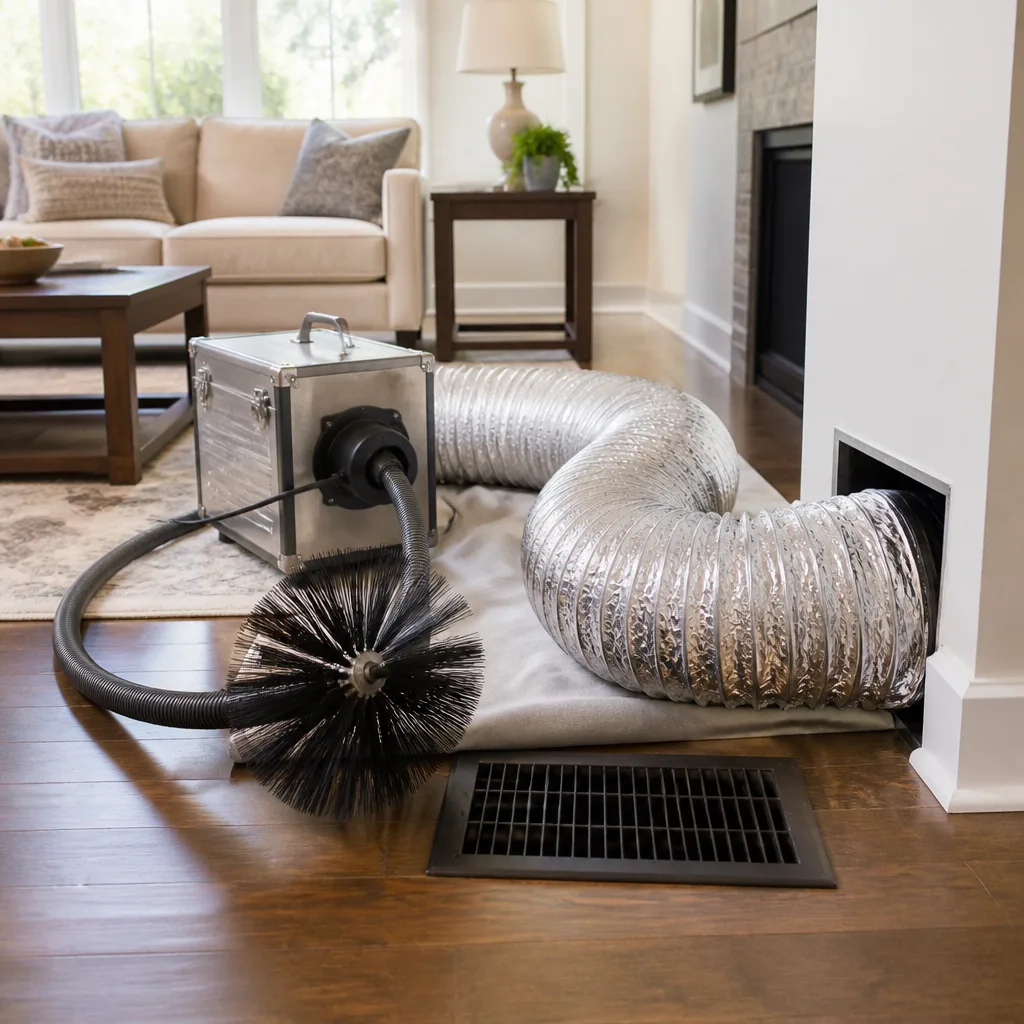 Whole-home duct cleaning
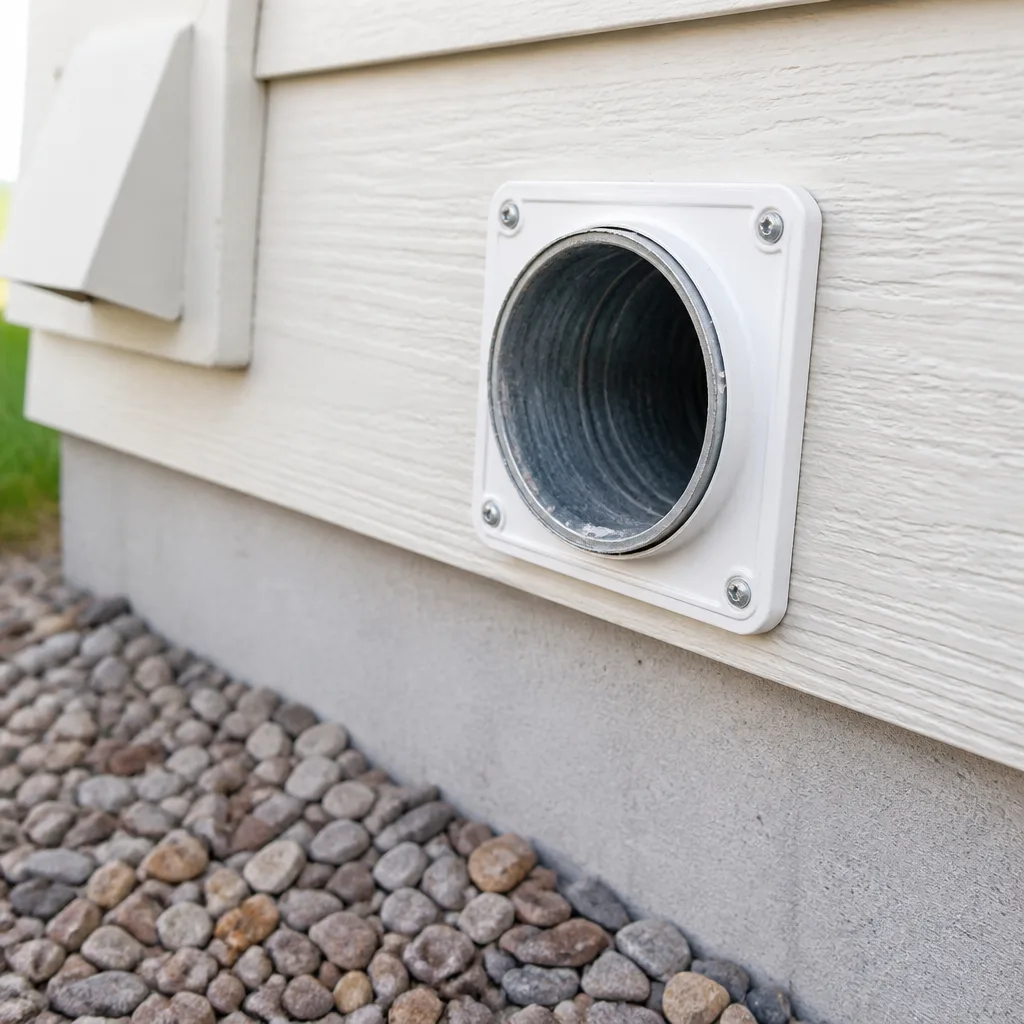 Dryer vent cleaning
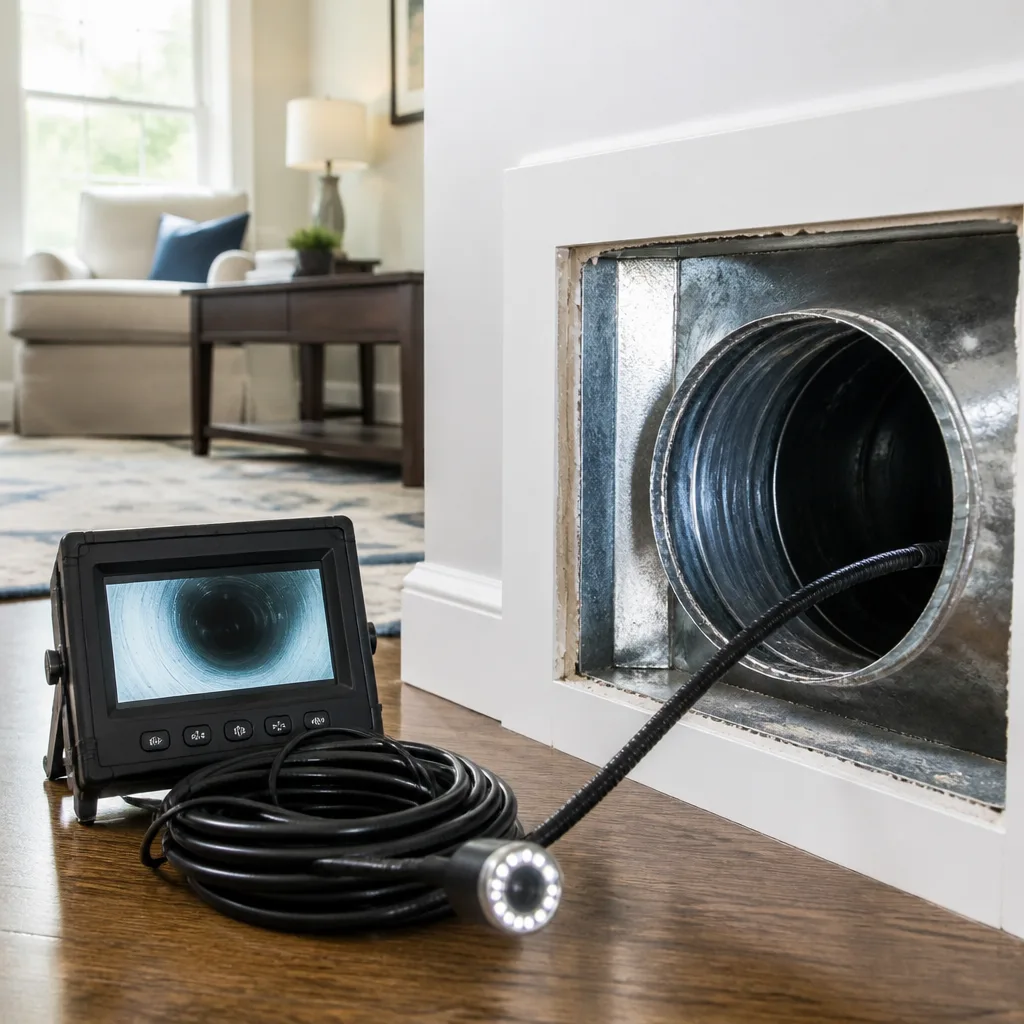 Camera inspection
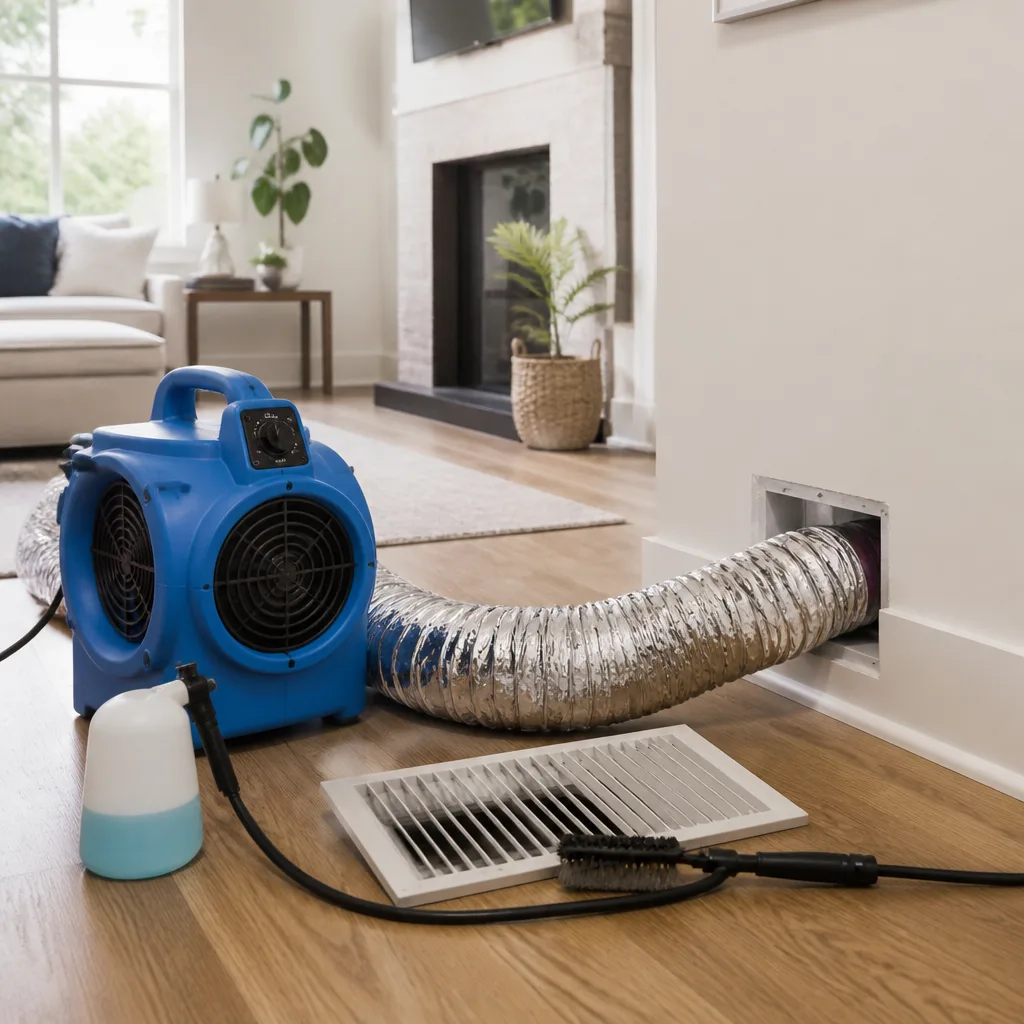 Sanitizing & deodorizing
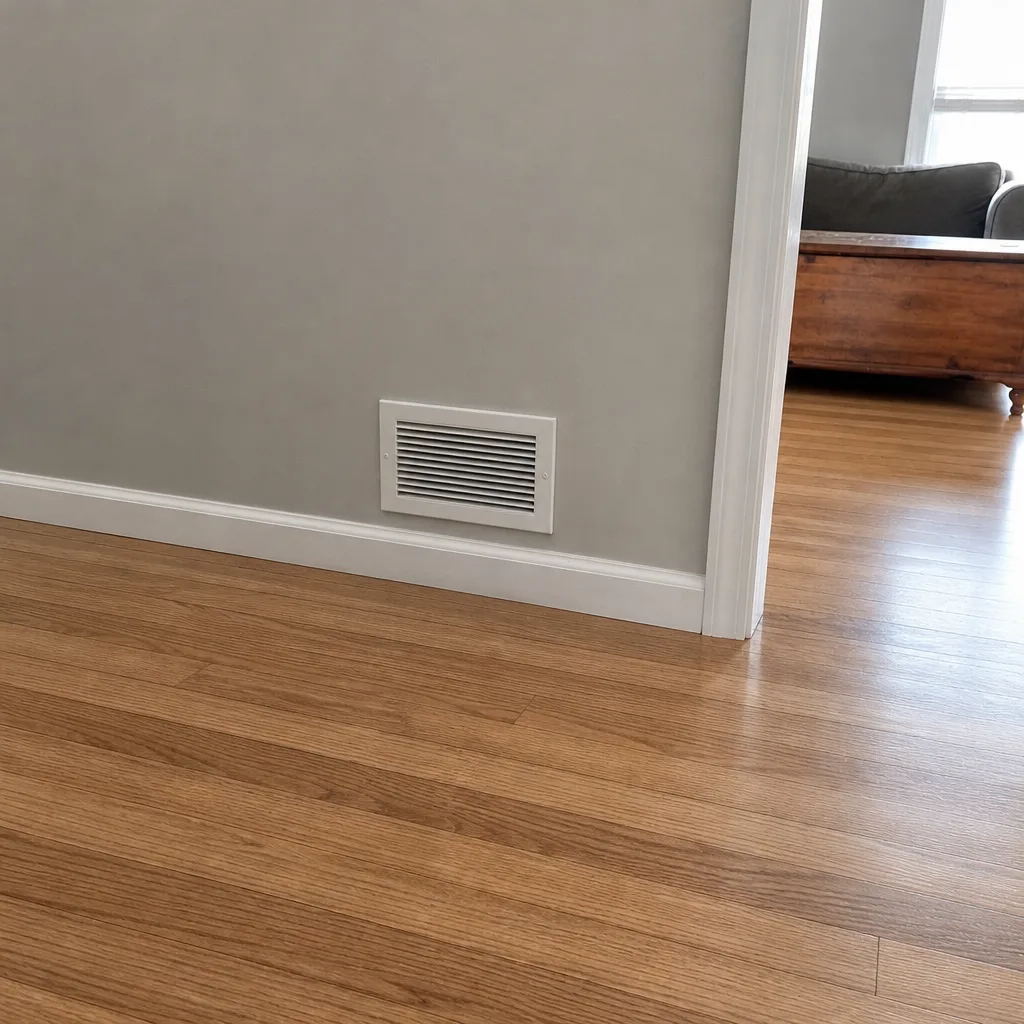
Whole-system duct and dryer vent check with before-and-after photos - you see exactly what came out of your vents
That "$99 whole-house special" is a bait ad - the real number appears once they are in your hallway, or the "clean" is a shop-vac at the register. We photograph the inside of your ducts before and after instead.
How to Hire an Air Duct Cleaning Contractor in Albany: A Step-by-Step Guide
Most homeowners assume the person cleaning their ducts had to pass some kind of test to get there. In New York State, no license is required to clean air ducts. Anyone with a van and a used shop vacuum can legally take your money and leave your system in worse shape than they found it. That’s not a scare tactic, it’s just how the trade is structured here. The vetting a homeowner does before booking is the only quality control that exists. This guide teaches you to evaluate contractors the way an equipment-literate buyer would: what to ask on the phone, what a quote should actually itemize, and what separates a real service from a promise in Albany.
Quick Answer
To hire an air duct cleaning contractor in Albany, verify three things before you book: the specific equipment they use (ask for brand names like Rotobrush or Nikro), whether they can perform duct repair in-house rather than referring it out, and what their written quote itemizes line by line. A contractor who can’t answer equipment questions clearly on the phone, or who quotes a single flat number with no breakdown, is the one to skip. Membership in NADCA is a reasonable starting floor, but not proof on its own.
Styles & brands we work with
- Whole-home duct cleaning
- Dryer vent cleaning
- Camera inspection
- Sanitizing & deodorizing
Table of Contents
- Why New York Doesn’t License Duct Cleaners
- What to Ask on the Phone Before Anyone Comes Out
- How to Read a Written Duct Cleaning Quote
- NADCA Membership: A Floor, Not a Ceiling
- Can They Repair Ducts, or Just Clean Them?
- What a Legitimate Pre-Job Walkthrough Looks Like
- Albany-Specific Factors That Affect the Job
- How to Verify Work Was Actually Done
Why New York Doesn’t License Duct Cleaners
Air duct cleaning isn’t a licensed trade in New York State. There’s no exam, no state registration, no minimum equipment standard, and no bonding requirement imposed by the state on the people who do the work. That’s the core problem. A roofer needs a license in many jurisdictions. A plumber or electrician needs one too. The person who opens the supply trunk in your basement and reaches into the system that moves every breath your family takes? No credential at all.
What this means practically for an Albany homeowner is that the burden of due diligence sits entirely on you. There’s no state database to check against. There’s no central registry of valid licenses, because there are no licenses to register. The industry has filled that gap with voluntary certifications, the most recognized of which is NADCA (the National Air Duct Cleaners Association), but membership is self-reported and not policed by any state agency.
That’s not cynicism, it’s a clear-eyed read of the market. The upside is that a genuinely well-equipped contractor stands out quickly once you know what to ask. The downside is that the homeowner who doesn’t know what to ask becomes the target of the operator with the lowest overhead and the least equipment. The whole guide that follows is built around closing that gap.
If you want to skip the research entirely and reach a contractor who can answer every question below, you can call us directly. But reading through the steps first will make you a sharper buyer no matter who you hire. That’s worth the ten minutes.
What to Ask on the Phone Before Anyone Comes Out
The phone call is where you eliminate contractors, not where you book them. A well-run operation can answer these questions in under three minutes. Fumbling, deflection, or a promise to “have the technician explain when he arrives” is your signal to hang up and dial the next number.
Here are the specific questions that cut through the sales language:
- What brand of equipment do you use? Real answers sound like “Rotobrush,” “Nikro,” or “Abatement Technologies.” Vague answers like “professional-grade” or “commercial-grade” without a brand name are usually a dodge. Ask them to say it again slowly if you need to.
- Do you use a HEPA filtration unit during the job? A properly equipped crew uses negative-pressure containment with HEPA filtration. If they don’t know what HEPA means, they don’t own the equipment.
- Do you perform duct repair yourself, or refer it out? A cleaning-only contractor will hand you a business card for “a guy who does repair.” A full-service contractor can build the repair into the same visit.
- Are you insured? Ask for the certificate. Any legitimate operator can produce one.
- Are you NADCA members? Not the whole answer, but a useful filter. See the NADCA section below.
- Will you show me before-and-after photos of my own ducts? The “my own” part matters. Stock photos prove nothing.
Two questions get a slightly different treatment. When you ask about pricing, listen for a whole-system range, not a per-vent price. A quote of “twenty-nine dollars a vent” is a marketing hook, and the number balloons once the technician is inside and starts pointing at things. When you ask about equipment, listen for a brand AND a reason. A contractor who owns Rotobrush equipment will happily explain why the brush-and-vacuum combination matters more than a shop vac with a long hose.
How to Read a Written Duct Cleaning Quote
A written quote should fit on one page, list what will be done, and state a single flat price for the whole system. If the quote contains the words “starting at,” “as low as,” or “per vent,” treat it as advertising, not a bid. Those phrases are the vocabulary of the bait-and-switch, and they show up in Albany just like anywhere else.
Here’s the anatomy of a quote you can trust:
- System scope listed by trunk and branch count. The quote should say how many supply runs and return runs they plan to clean, not just “all ducts.”
- Equipment named. Look for the brand name (Rotobrush, Nikro, Abatement Technologies) in the quote body. If the quote doesn’t mention it, ask them to add it.
- Component coverage spelled out. Registers, main trunk, branch runs, plenum, air handler cabinet if included. If something is excluded, it should be named as excluded.
- Repair findings handled as a separate item. Cleaning is one price. If the inspection reveals torn flex, crushed runs, or a disconnected joint, that should be evaluated and quoted separately in writing after you see the finding.
- One flat price for the whole system. Not per vent, not per register, not a low number with expectations attached.
- Before-and-after photos stated as part of the deliverable. Not “available on request.” Part of the job.
The single most useful test of any quote is this: could you hand it to a second contractor and have them quote the same job apples to apples? If the language is vague enough that a second bidder can build their price around different assumptions, you don’t have a quote. You have a flyer.
For a broader look at how this service is priced across an Albany home from top to bottom, our air duct cleaning page breaks down what a whole-system job involves from inspection to final walkthrough.
NADCA Membership: A Floor, Not a Ceiling
NADCA membership is the closest thing the duct cleaning trade has to a credential. It signals that a contractor has agreed to a published standard of care and, in most cases, is following the ACR (Assessment, Cleaning, and Restoration) process that the organization publishes. That’s meaningful, and it’s a reasonable filter when you’re comparing bids.
But NADCA is voluntary, self-reported, and doesn’t audit the equipment a member uses. Membership alone doesn’t tell you whether the contractor owns a Rotobrush or rents a rental-yard vacuum when they need one. It also doesn’t tell you whether they can repair the torn flex they find under your floor. So treat NADCA as the starting bid, not the finish line. The questions that come after matter more.
What to look for beyond the certification:
- Named equipment. Ask what they own and what they use. Brand names in the answer, details in the follow-through.
- HEPA containment on every job. The Abatement Technologies line of HEPA units is the kind of equipment serious contractors invest in. Not every NADCA member has one.
- In-house repair capability. If your system needs sheet metal repair, flex replacement, or sealing at the plenum, can they do it, or do they refer it out?
- Compatibility with your IAQ system. If your home runs a Honeywell or Aprilaire whole-house air cleaner or humidifier tied into the duct system, the cleaning contractor should be able to work alongside it without disruption.
- Visible process. Photos of the truck, the equipment, and a documented pre-job walkthrough.
NADCA membership is a good sign that a contractor takes the trade seriously. The rest of the picture is built from what they can show you, not just what they can promise.
Can They Repair Ducts, or Just Clean Them?
Halfway through the inspection, contractors often find something that needs fixing. A crushed flex run behind a finished wall. A disconnected joint in the attic. A torn boot at a supply register. Collapsed or disconnected ducts are surprisingly common in older Albany housing stock, and they’re a big reason some rooms never heat or cool properly, no matter how the thermostat is set.
The question to ask before booking: can the same company that cleans the ducts also repair them? If the answer is “we can refer you,” you’re about to hire a second contractor and coordinate two schedules for one job.
We don’t just clean, we repair. That’s not a marketing line, it’s an operational fact. Our team handles duct repair in-house, which means an inspection finding turns into a fixed system without a handoff. There’s no ambiguity about who’s responsible if the new flex run leaks, no third party to chase down, no follow-up call to a company you’ve never worked with before. Most cleaning-only shops don’t offer that, and it’s the one capability that separates a full-service job from a partial one.
When you ask on the phone whether a contractor can repair, listen for their specific answer. “We work with someone” is the referral answer. “We do it” is the direct one. If it’s a referral, ask yourself whether you want to hire two contractors or one.
What a Legitimate Pre-Job Walkthrough Looks Like
The walkthrough is the most underrated step in the process. A contractor who skips it and jumps to a signed invoice is comfortable with assumptions; a contractor who spends fifteen minutes walking the house with you is signaling that they know what to look for. Here’s the sequence a properly run walkthrough follows.
- Locate the air handler and main trunk. The technician should show you where the system originates and identify the furnace, heat pump, or air handler they’ll be working around.
- Count supply and return runs. Not estimate, count. They should walk from room to room with you and physically locate each supply register and each return grille.
- Check accessibility at each register. Some registers are screwed shut, some are painted over, some are inside a closet with furniture in front of them. All of that should be identified before the truck is unloaded.
- Look for signs of prior trouble. Mold-like growth, pest activity, sagging flex, disconnected joints, standing debris in the plenum. The technician should note any of these out loud.
- Ask about your existing IAQ equipment. If you have a Honeywell or Aprilaire filter, humidifier, or UV system integrated into the ductwork, the technician should identify it and confirm how they’ll work around it.
- Confirm the written scope on the spot. Before work starts, they should hand you a written scope that matches what they just walked through. If something has been added to the plan, it goes on the paper.
- Explain the process in plain terms. How the vacuum is attached, what containment looks like, how long it will take, when photos will be shown.
A walkthrough that skips step 3 or step 5 is a warning sign. A walkthrough that skips all of them is a red flag.
Albany-Specific Factors That Affect the Job
Albany homes aren’t identical to homes in Phoenix or Miami, and cleaning here has local realities that shape what needs to happen. Some of these come from the housing stock, some from the climate, and some from the neighborhoods you’ll be comparing bids across.
Older housing stock is the first factor. Homes in Center Square, the Pastures, and older parts of Pine Hills often have duct systems that were retrofitted rather than designed with the house. That means short runs, cramped chases, and flex tied in ways that work but aren’t optimal. A contractor used to newer construction and clean sheet metal runs may undercount the effort here, which is one reason a written scope before work starts is non-negotiable.
Cold-season heat load is the second factor. Albany winters mean heating systems run heavy, which means the ducts that carry that heat are under constant thermal expansion and contraction. Flex joint failures and seam separation show up more often here than in mild climates, and they’re the kind of thing that needs repair, not just cleaning. When you’re shopping for a contractor in Albany, ask specifically how they handle flex and sheet metal repair during cold months.
Attic and crawlspace duct runs are common in suburban areas around Albany, including parts of Colonie, Guilderland, and Bethlehem. Those runs collect dust, insulation debris, and pest activity far more than interior chases. A contractor who doesn’t count them in the quote or inspect them during the walkthrough is skipping a significant part of the system.
Dryer vent cleaning is the third piece, and it’s often overlooked. A dryer vent that’s clogged isn’t just an appliance that takes too long to dry clothes. It’s the leading cause of household dryer fires. When you’re vetting an Albany duct cleaning contractor, ask whether they handle dryer vent cleaning as well. If they don’t, that’s another contractor you’ll have to find separately, and every separate contractor is another walkthrough, another quote, and another appointment to schedule.
How to Verify Work Was Actually Done
Once the truck pulls away, most homeowners have no way to confirm what actually happened inside the ducts. There are three practical checks that cut through that uncertainty, and any contractor doing serious work should be able to pass all of them.
- Before-and-after photos of your own system. Not stock photos, not “here’s what a typical job looks like.” Yours, taken at the registers or plenum, timestamped with the actual job. Ask to see them at the end of the visit.
- A written service record. The invoice should note the components cleaned, the equipment used, any findings from the inspection, and whether repair was recommended or performed. Yours to keep.
- Visible containment during the job. If you’re home, you should be able to see the vacuum attached to the system and the containment in place. Proper HEPA filtration keeps dust out of your living space during the cleaning process; if there’s dust settling on furniture while the work is happening, the containment isn’t right.
A contractor who offers all three unprompted has nothing to hide. A contractor who offers none is asking you to take the whole job on faith. The difference between those two types of operations is what separates a genuinely professional duct cleaning from a visit that ends with a bill and no proof.
If you want to see what this looks like in practice, our Duct Cleaning Albany page opens with what we bring to a job and why. Between equipment, photos, and a written record, the difference is verifiable in a way that a flyer with a low coupon number never could be.
Common Mistakes to Avoid
- Booking the lowest advertised price without asking what it covers. A low headline number in Albany is usually per-vent pricing dressed up as a system price. The real invoice is bigger, and the work is worse.
- Skipping the phone screen because the contractor has good reviews. Reviews are useful, but they can’t tell you what equipment a company uses. Two contractors with five-star reviews can operate with completely different standards; only the phone questions reveal which is which.
- Not checking whether they handle duct repair in-house. A cleaning-only contractor who finds damage will refer it out, and you’ll be shopping for a second company while the ducts sit open. Ask before the truck arrives.
- Treating NADCA membership as the finish line. It’s a useful filter, but plenty of good operators aren’t card-carrying members, and a few members don’t own the equipment a serious job requires. Ask about both.
- Not asking about dryer vent cleaning during the same call. Central New York dryer vents collect lint all year, and a fire risk doesn’t wait for a separate appointment. Bundle the conversation even if you don’t bundle the visit.
- Believing the “we’ll come back and seal the ductwork after” line. If it isn’t on the written scope, it isn’t happening. Anything the technician promises verbally needs to be added to paper before work starts.
- Not asking how they’ll work alongside existing IAQ equipment. Homes with Honeywell or Aprilaire systems tied into the ductwork need a contractor who knows how to work around them without disturbing the setup. If they don’t know what you’re talking about, they don’t know the job.
See the difference
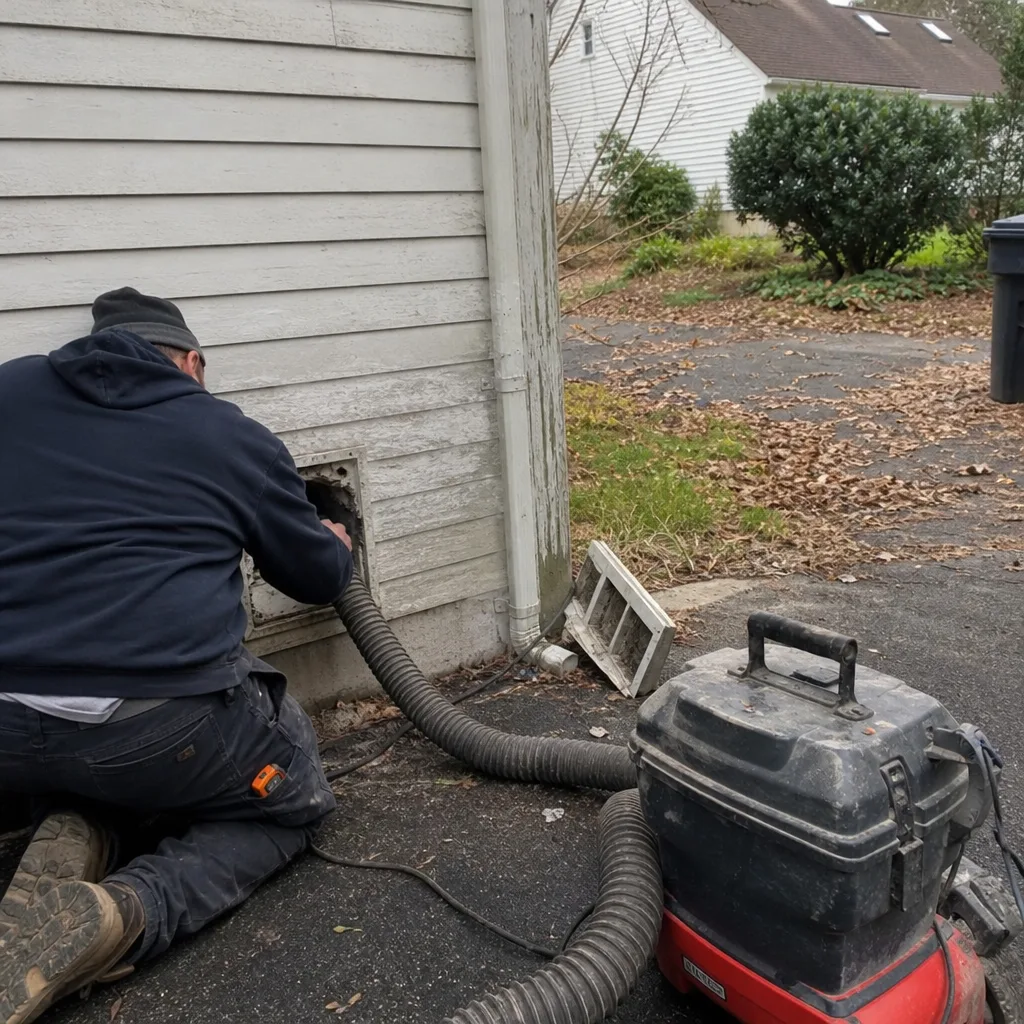 Before
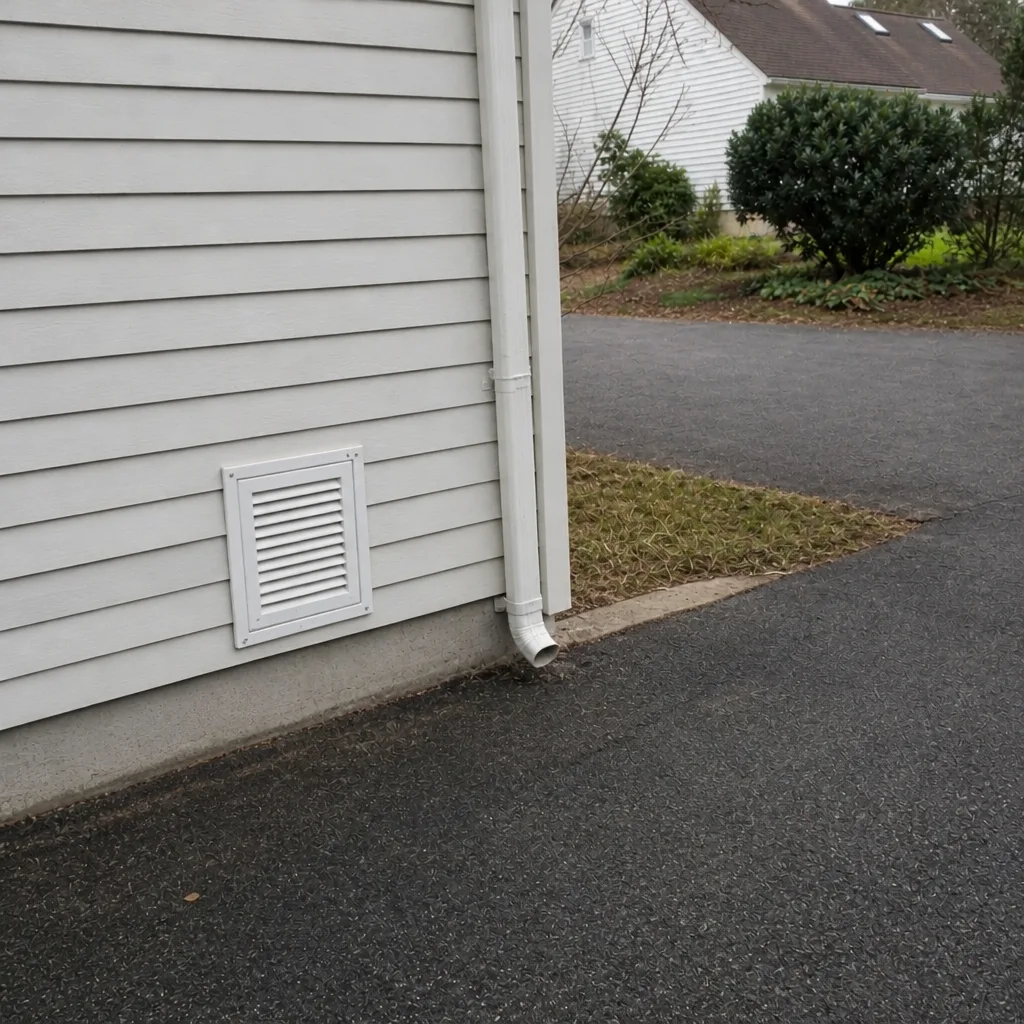 After
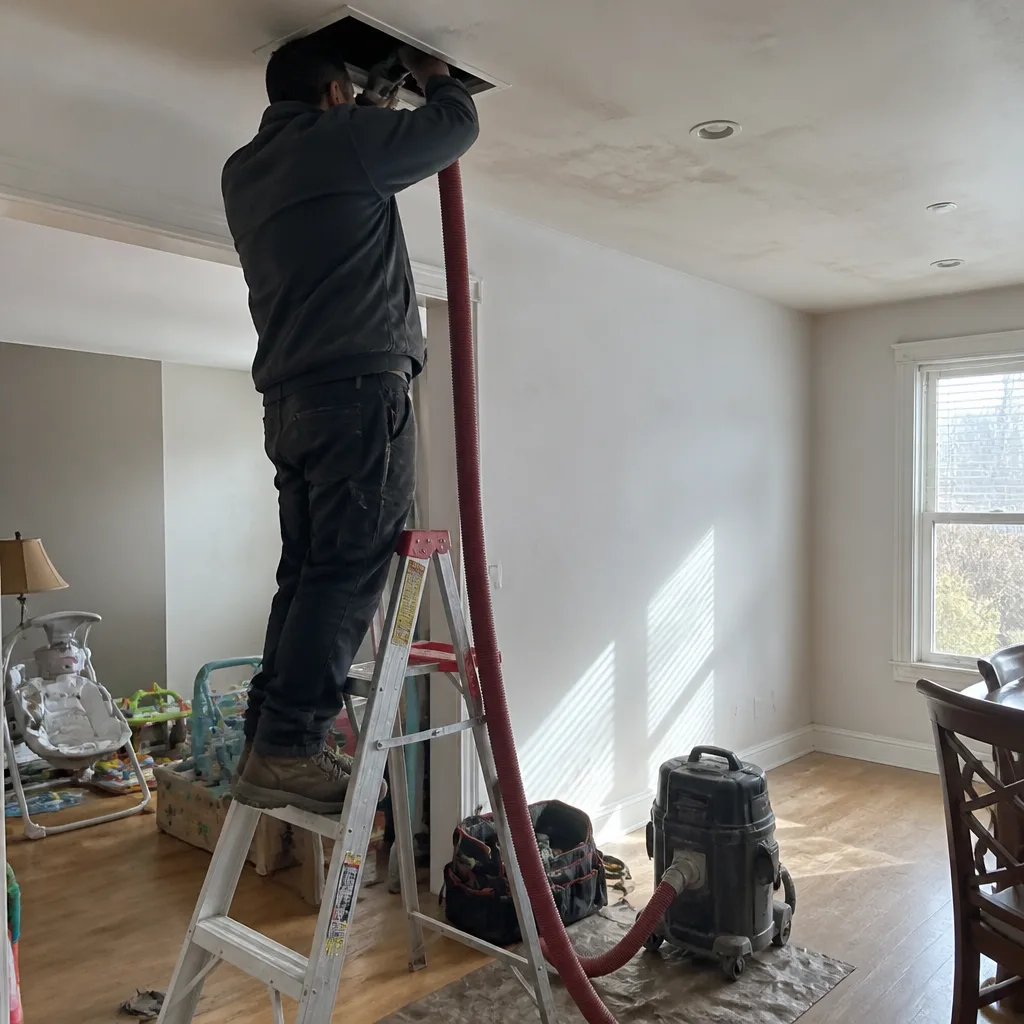 Before
 After
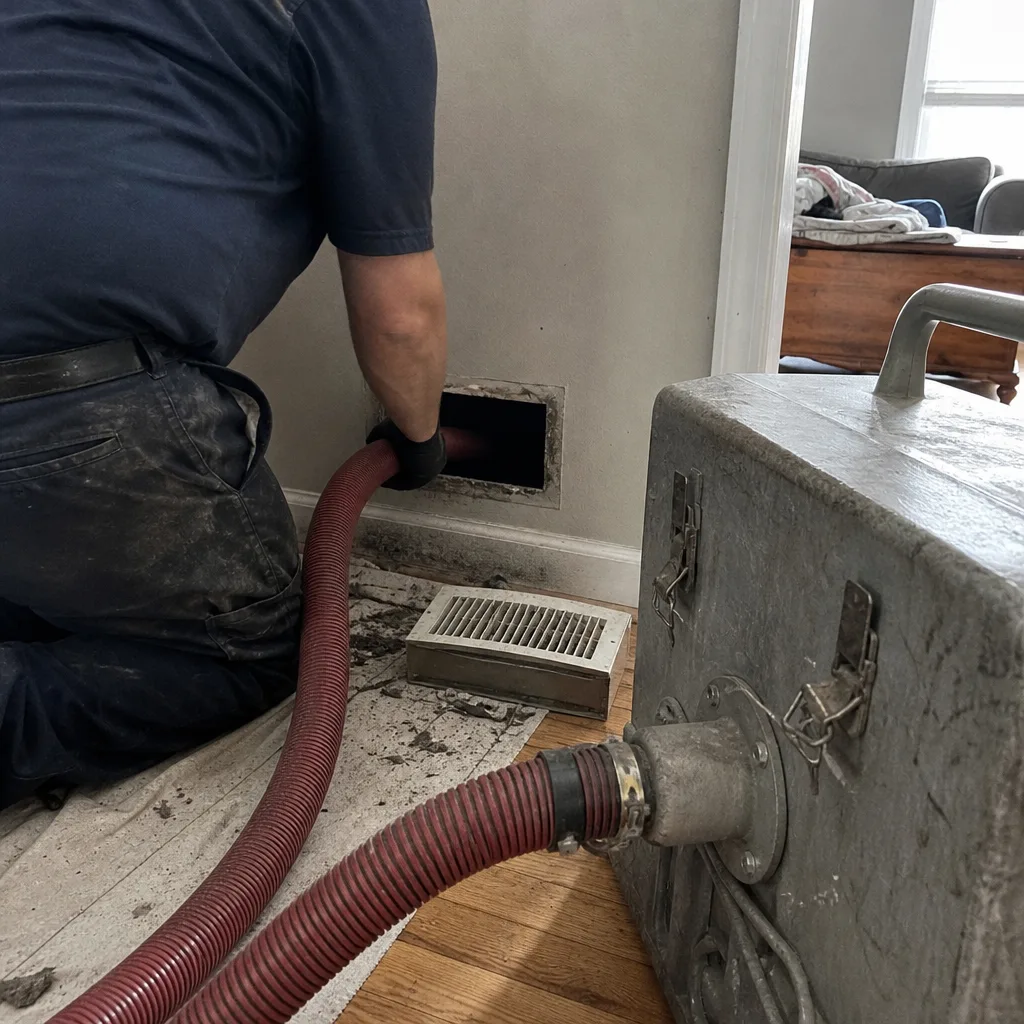 Before
 After
When to Call a Professional
Duct cleaning isn’t something to schedule on a random impulse, and it isn’t something to put off forever either. The genuine triggers are specific: a recent home purchase where you don’t know the service history of the system, allergy or asthma symptoms that have worsened indoors, a heating or cooling system that runs constantly and still leaves rooms uneven, visible dust streaks at the registers, or pest activity you’ve spotted in the attic or crawlspace. A dryer that takes two cycles to dry a normal load is another trigger. So is visible lint buildup behind the dryer or at the exterior vent flap. In all of those cases, a real inspection and cleaning from a contractor who names their equipment is the right call. Duct Cleaning Albany offers free estimates in Albany: call (888) 861-7237 to schedule an inspection and get a written quote before any work begins.
Frequently Asked Questions
No. New York State doesn’t require a license to perform air duct cleaning, which means there’s no state database to verify a contractor against. The best filters are NADCA membership, equipment questions during the phone call, and a written quote that itemizes the scope. Skip any contractor who can’t pass those three. Call (888) 861-7237 for an exact quote from Duct Cleaning Albany, estimates are free.
Look for named professional systems like Rotobrush or Nikro, plus Abatement Technologies HEPA containment equipment on jobs where indoor air quality matters. Consumer-grade shop vacuums are not equipment; they’re a red flag. If a contractor can’t name their equipment on the phone, they’re not running a professional operation. Call (888) 861-7237 to ask us exactly what we use and why.
We can fix them. Air duct repair is one of our three core services alongside cleaning and dryer vent cleaning, so a finding during inspection turns into a fixed system without a handoff. Most cleaning-only companies can’t do this and will refer you out. Call (888) 861-7237 to talk through a repair before it turns into a second appointment.
Pricing varies by system size, number of supply and return runs, attic or crawlspace accessibility, and whether repair is needed. We quote a flat price per system after a walkthrough, agree it with you before any work starts, and set the final price in the written estimate. There’s no per-vent pricing and no surprise invoice at the end. Call (888) 861-7237 for a free estimate.
Cheap quotes are usually built on per-vent pricing with a low teaser number that grows once the technician is inside. The two things you get for a low bid are lower-tier equipment (a shop vac, not a Rotobrush or Nikro system) and a cleaning-only scope with no repair capability. A real bid accounts for the whole system. Call (888) 861-7237 for a quote that will look different from a coupon, and will actually hold.
Most homes don’t need it on a fixed schedule. Recent move-ins, homes with pets or smokers, homes hit by renovation dust, and homes with visible register buildup or allergy symptoms are the real triggers. If you’re unsure, an inspection tells you more than a calendar ever will. Call (888) 861-7237 to book one and find out what your system actually needs.
Yes. Dryer vent cleaning is one of our three services, alongside air duct cleaning and air duct repair. Clogged dryer vents are the leading cause of household dryer fires, so it’s worth asking about during the same call. Call (888) 861-7237 to add dryer vent cleaning to the same visit.
The Bottom Line
The duct cleaning trade in Albany has no license gate, which means the quality of your hire is entirely a function of the questions you ask. The three that matter most: what equipment do you use, can you repair what you find, and will I see photos of my own ducts before you leave. NADCA membership is a helpful floor but not the ceiling. A written quote with line items, a proper walkthrough before work starts, and a contractor who names Rotobrush, Nikro, or Abatement Technologies equipment are the signals that separate a real service from a promise. Read the quote carefully. Ask for the equipment names. And when you’re ready to see what a properly equipped shop looks like in Albany, we’re happy to walk you through it.
Call (888) 861-7237 for a free estimate. We answer 24/7. Fast dispatch from 7am to 7pm, Sunday through Friday. Our technicians have up to 9 years of experience, use professional-grade Rotobrush and Nikro equipment, and handle cleaning, dryer vent work, and duct repair in-house. That’s the whole point of the guide: three services, one relationship, no second contractor to find.
Written by the team at Duct Cleaning Albany.