
Last updated November 16, 2026
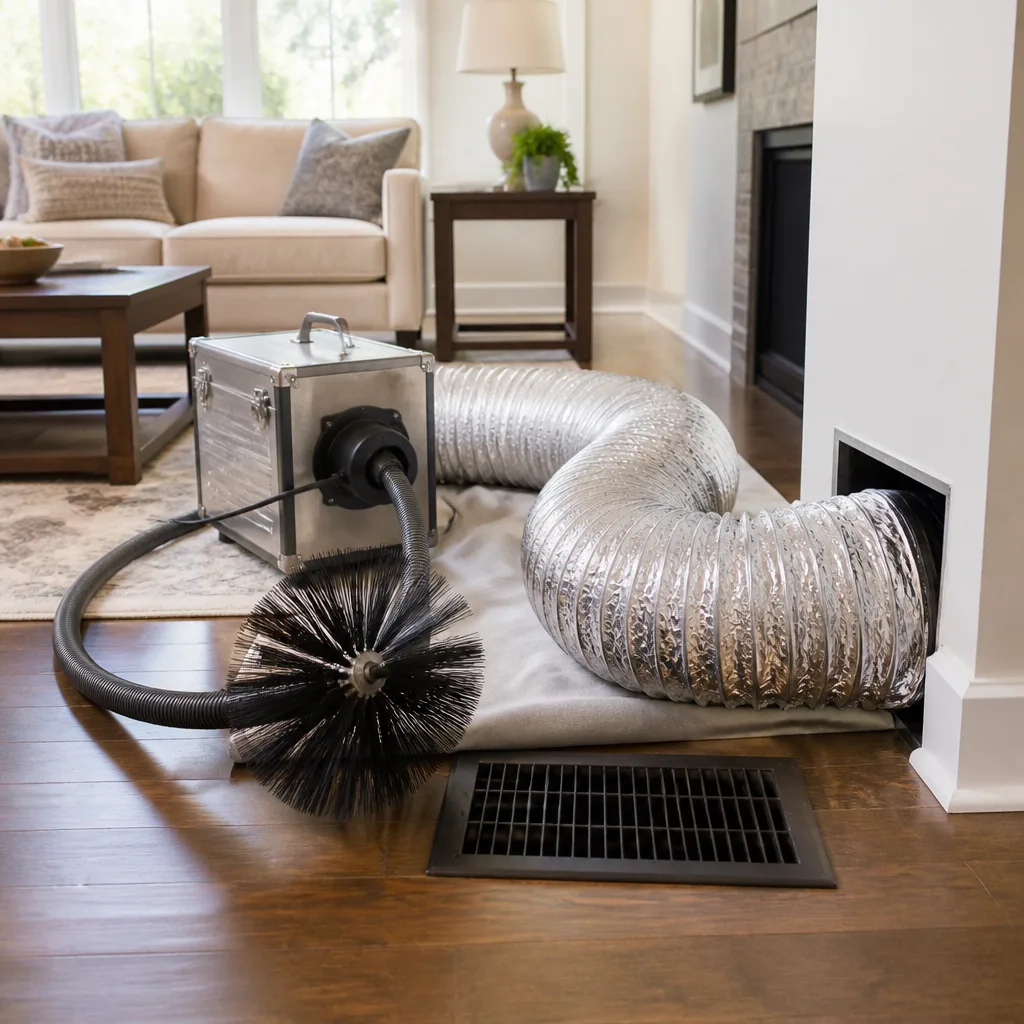 Whole-home duct cleaning
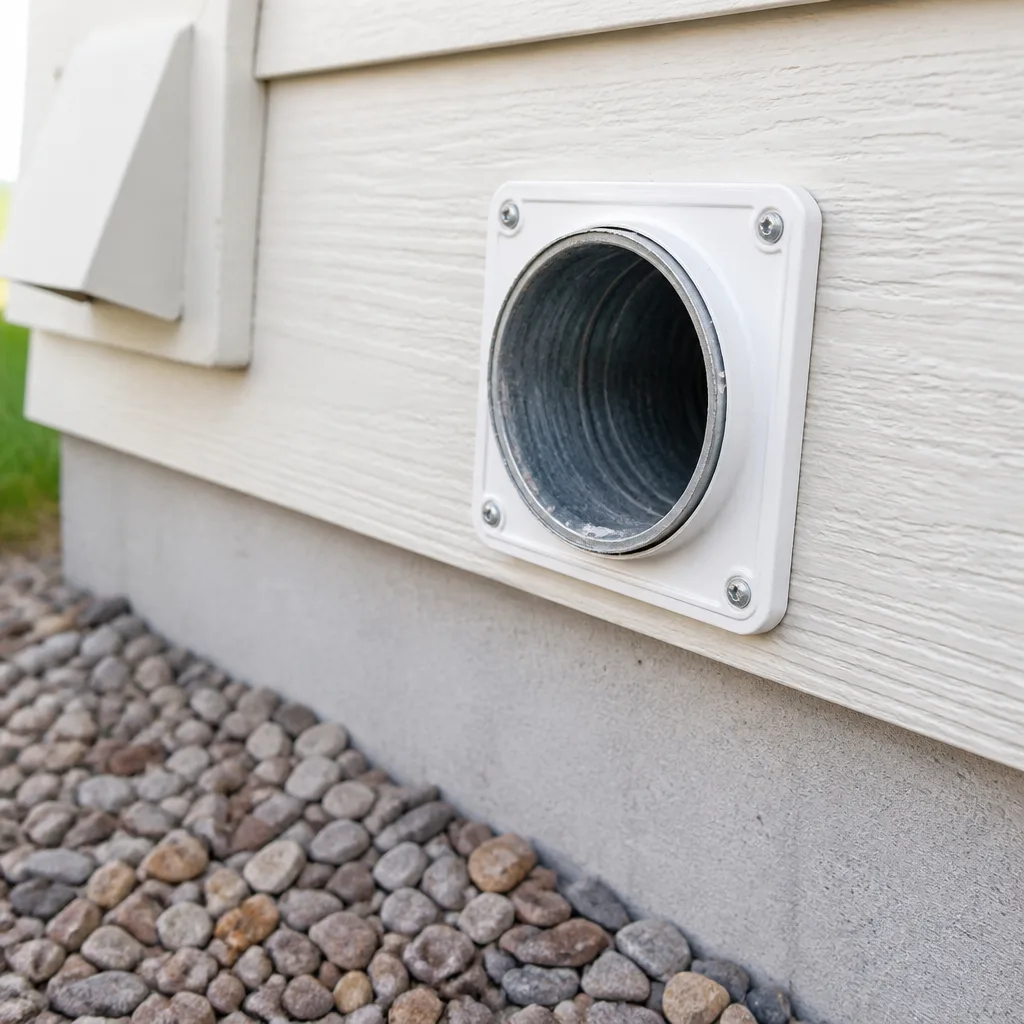 Dryer vent cleaning
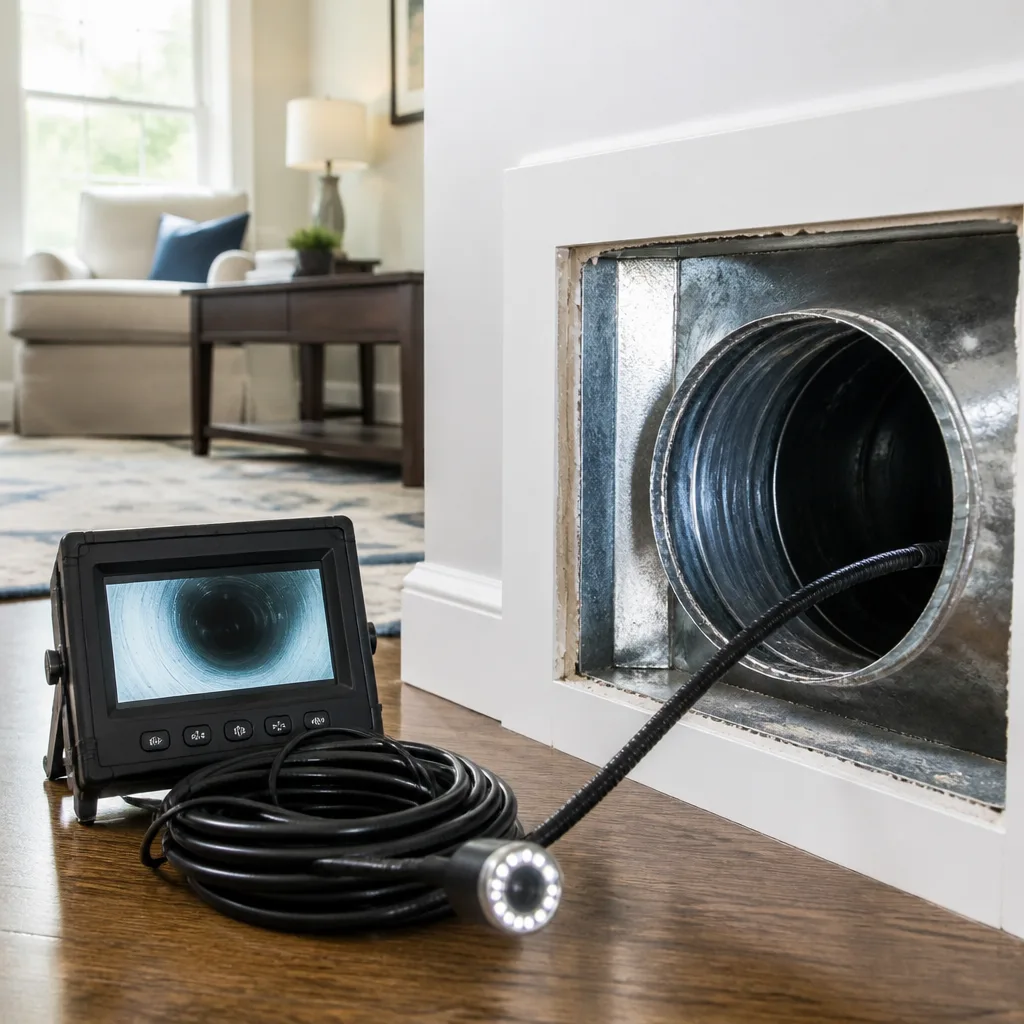 Camera inspection
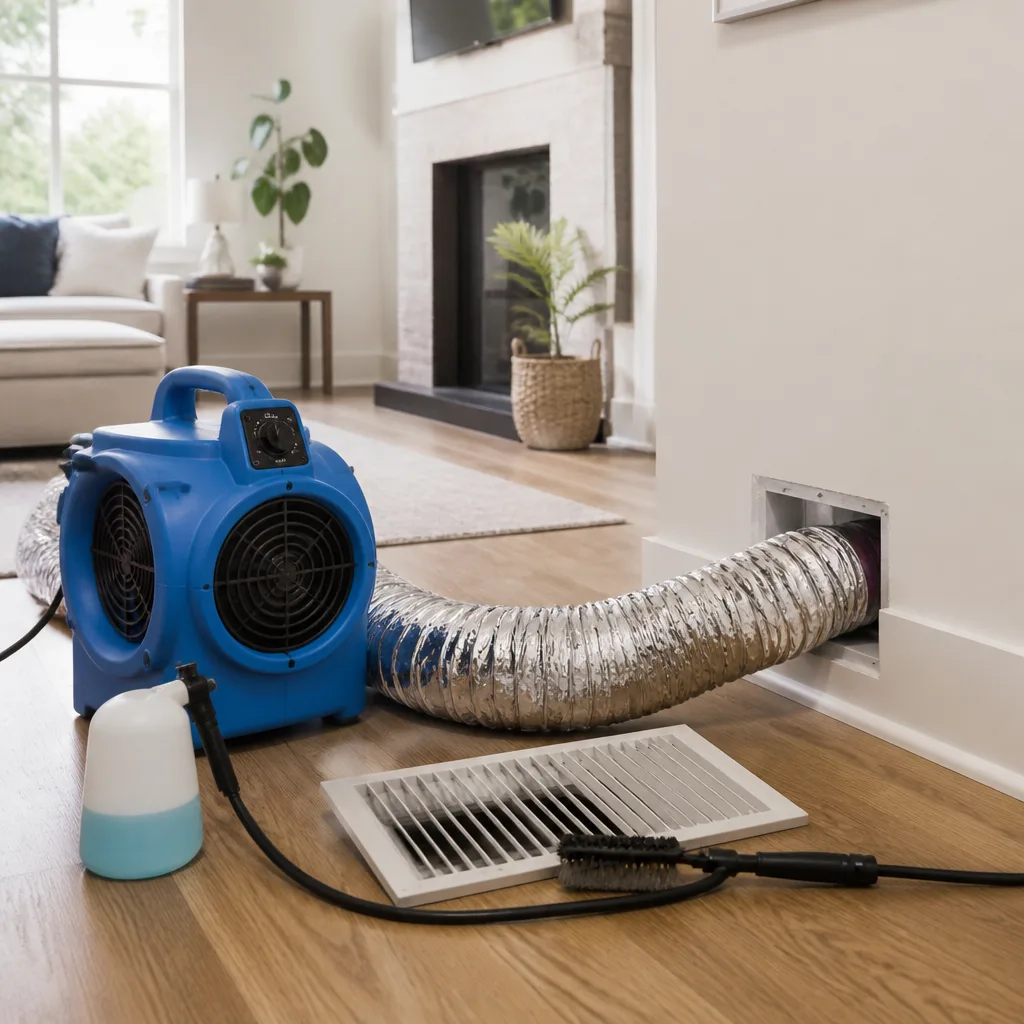 Sanitizing & deodorizing
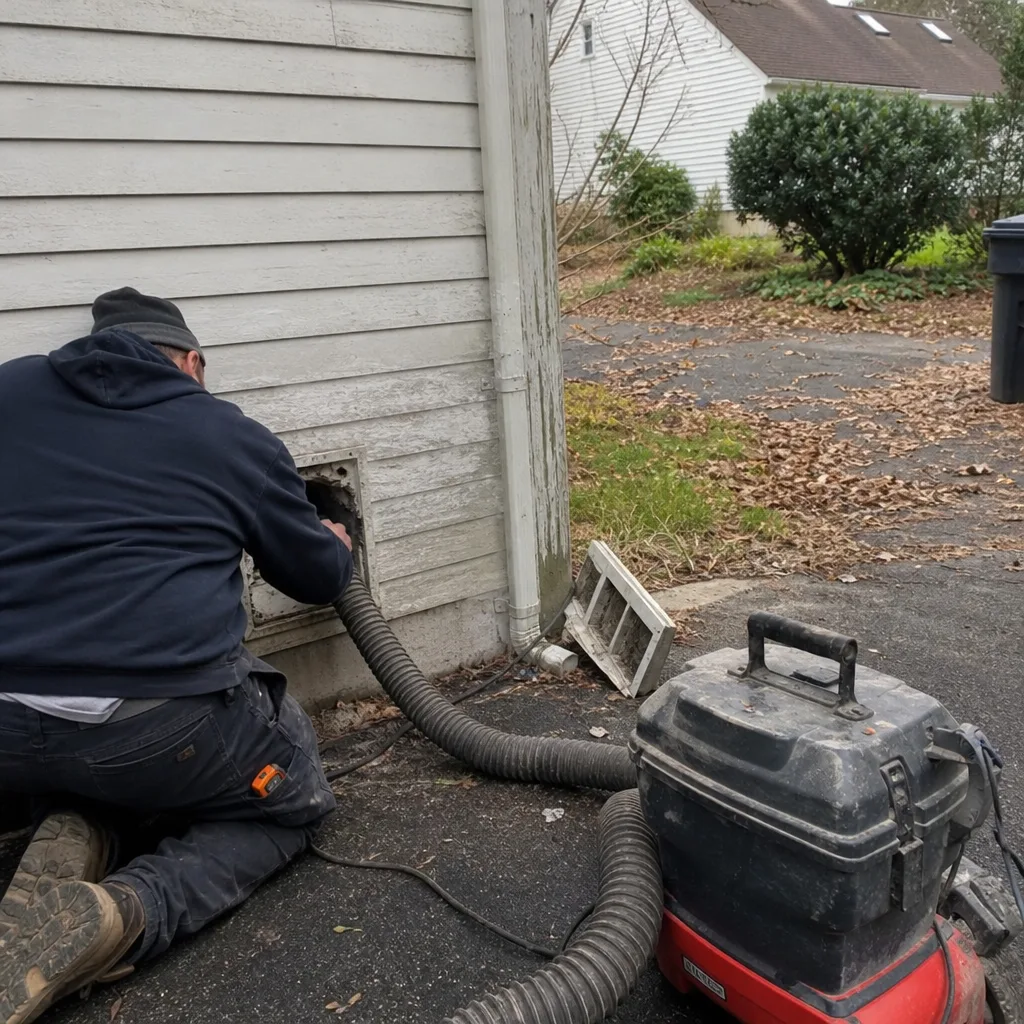
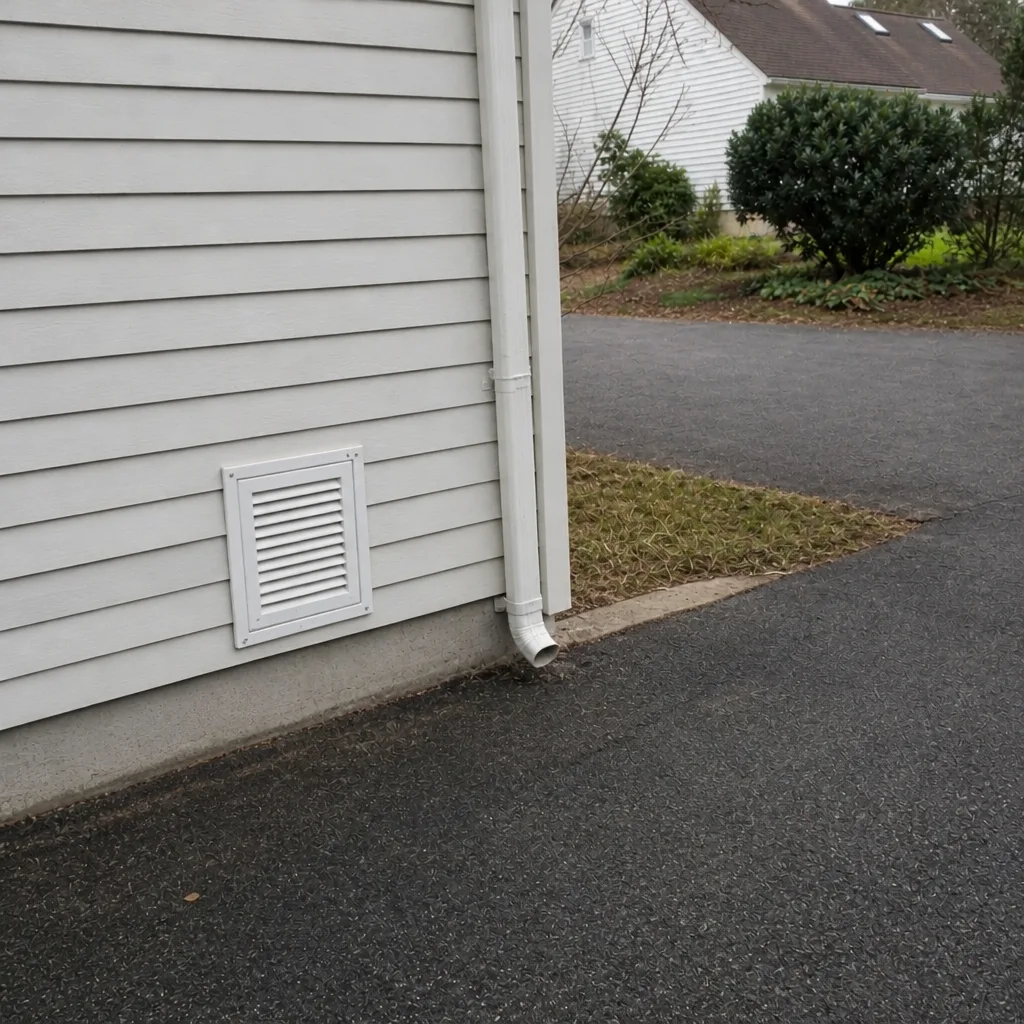
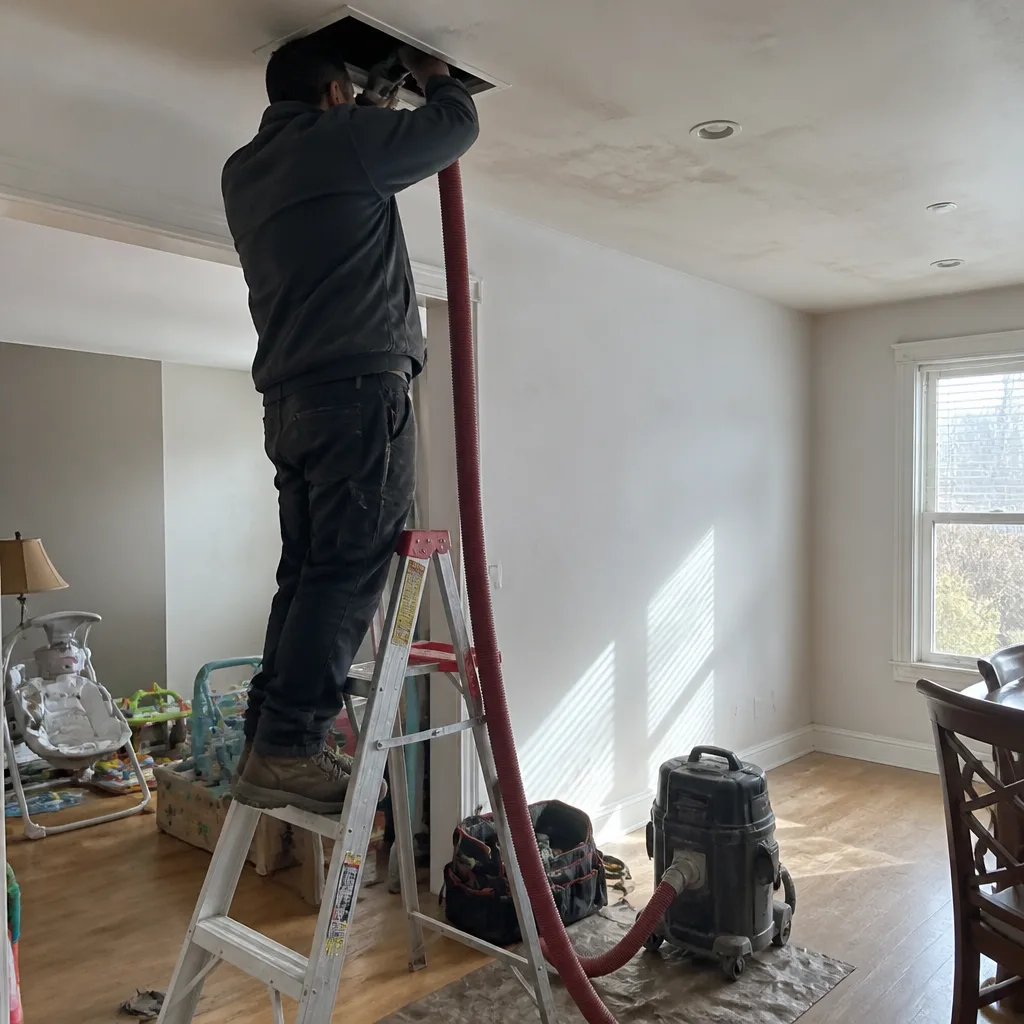
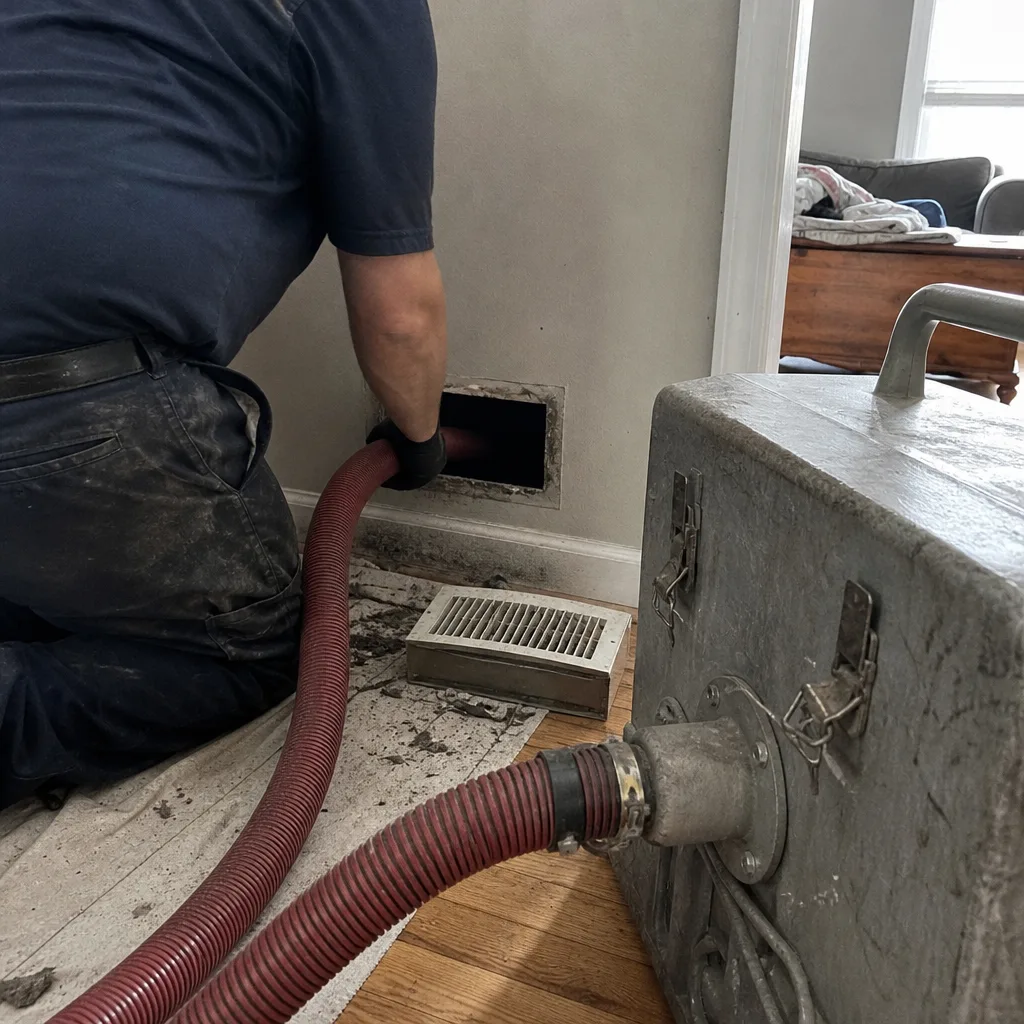
Whole-system duct and dryer vent check with before-and-after photos - you see exactly what came out of your vents
That "$99 whole-house special" is a bait ad - the real number appears once they are in your hallway, or the "clean" is a shop-vac at the register. We photograph the inside of your ducts before and after instead.
Air Duct Cleaning Permits, Codes & Inspections in Albany, NY: What You Need to Know
Here’s the part most homeowners don’t expect: a standard duct cleaning rarely needs a permit, but the repair that follows a cleaning often does. When a technician opens up a system and finds disconnected runs, crushed flex, or a boot that’s pulled away from the floor, those fixes fall under a different set of rules than the cleaning itself. If that repair happens without a permit and without documentation, it can quietly become a problem when you go to sell your Albany home, file an insurance claim, or have an inspector walk your basement. In this guide, we’ll draw the line clearly between maintenance and modification, explain what the New York State Mechanical Code actually covers, and show you what paperwork to ask for.
Quick Answer
Air duct cleaning itself generally does not require a permit in Albany or anywhere in New York State, because routine maintenance is exempt from the mechanical code. But duct modification, replacement, or rerouting usually does require a permit and an inspection through the City of Albany’s building department. If a contractor finds damage and starts repairing it, ask whether the work crosses that line before the tools come out.
Styles & brands we work with
- Whole-home duct cleaning
- Dryer vent cleaning
- Camera inspection
- Sanitizing & deodorizing
Table of Contents
- Maintenance Cleaning vs. Duct Modification: Where the Line Falls
- What the New York State Mechanical Code Covers
- Why Albany’s Older Housing Stock Changes the Equation
- What Documentation to Ask For After Duct Repair
- When You Need an HVAC Engineer vs. a Cleaning Contractor
- What a Duct Inspection Actually Looks Like
- Red Flags in a Duct Repair Quote
Maintenance Cleaning vs. Duct Modification: Where the Line Falls
The simplest way to think about it: cleaning removes what’s inside the duct, modification changes the duct itself. Cleaning is maintenance. Modification is construction. New York treats them differently, and that distinction is the single most useful thing to understand before you hire anyone in Albany.
Cleaning, in code terms, is a service. Nobody tears out a section of duct, changes the routing, or alters how air moves. A contractor pulls debris and built-up dust out of the system, verifies the airflow is unobstructed, and leaves the physical ductwork in the same place it started.
Modification is when the physical system changes. That includes:
- Cutting into a duct to install a new register or return
- Replacing a section of flex duct that has collapsed
- Rerouting a run to serve a new room or finished basement
- Sealing or reconnecting ductwork that was installed incorrectly
- Adding a zone damper or tying in a whole-home humidifier to the return
- Upgrading duct material, for example replacing bare sheet metal sections
Any of those touch the mechanical system in a way that typically needs a permit through the City of Albany’s Department of Buildings and Regulatory Compliance. The permit-and-inspection step matters because the inspection is the only independent record that the work was done to code. Without it, you’re relying on the contractor’s word and a receipt.
The practical takeaway: a cleaning visit should stay a cleaning visit unless it discovers a genuine problem. When it does, ask the contractor to walk you through what fixes are proposed. If the fix changes the physical configuration of the ductwork, treat it as permitted work. We see this often with professional cleaning jobs that turn into repair jobs, which is why having a contractor who understands both is useful. Our air duct cleaning work is scoped as maintenance, and any repair is documented separately so you know where the permit line is.
What the New York State Mechanical Code Covers
The New York State Uniform Fire Prevention and Building Code adopts the International Mechanical Code (IMC) with state amendments, and that’s the document Albany inspectors use when they evaluate ductwork permits. Most of what it says about ducts is about materials, installation methods, and fire safety, not cleaning.
Here’s what actually matters for a homeowner in Albany:
- Material standards. All duct material must meet minimum flame-spread and smoke-developed ratings. Flex duct must be UL-listed. The code does not permit using interior finish materials as duct.
- Support and sealing. Ducts have to be supported at specific intervals and sealed at joints. A sagging or leaky run either falls short of the code or will as soon as an inspector looks.
- Clearance from combustibles. Ductwork passing near a furnace flue or other heat sources needs proper clearance. Older Albany systems sometimes fail this on re-inspection.
- Connection to appliances. Duct connections to HVAC equipment must be made per manufacturer instructions and be accessible for service.
- Return air. The code limits where return air can be drawn from, for example not from a bathroom, kitchen, or garage. Improper returns are a common non-compliance finding in retrofitted systems.
Notice what’s not in that list: routine cleaning. The code has no section that requires a permit to clean a duct. That’s why maintenance cleaning doesn’t need one.
The moment you alter, extend, replace, or add to a duct system, though, you’re in IMC territory. The permit requirement flows from the building department, not the code itself. Albany’s Department of Buildings decides when a mechanical permit is required, and the code tells the inspector what passing looks like.
One caveat worth stating plainly: code language gets updated, amendends, and reinterpreted. What we’ve described here is the general structure. For anything unusual on your property, call the City of Albany directly and ask about your specific address. A five-minute phone call to the building department is worth more than any online summary.
Why Albany’s Older Housing Stock Changes the Equation
A lot of homes in Albany predate modern duct systems entirely. The city’s row houses and center-hall colonials in neighborhoods like Pine Hills, Center Square, and Delaware Avenue often started out with radiators, hot water, or gravity furnaces. When central air and forced hot air were retrofitted in the 1970s and 1980s, the ductwork followed whatever space was left in the basement, attic, or wall cavities.
That history creates specific compliance issues:
- Undersized or improvised ducts. Older retrofits sometimes used duct material that doesn’t meet current flame-spread standards. When a repair involves replacing that material, the code now requires a code-compliant product.
- Asbestos-containing duct wrap and duct board. Some pre-1980 duct insulation and duct board contains asbestos products or asbestos-containing materials. Cleaning crews and repair crews need to know this before working, and any disturbance may require an abatement contractor rather than a duct technician.
- Compromised flex duct in tight spaces. Flex duct installed through a kneewall or soffit often collapses or tears over decades. Repair means running new duct through paths that never met today’s support and clearance requirements.
- Disconnected boots and gaps. In any older Albany home, openings where ducts meet floors, walls, or registers tend to loosen. Sealing them is part of a proper repair, but only when permitted, because resealing is technically an alteration.
- Finished basements and damp closets. Albany’s humid summers and cold winters stress building envelopes. Flex duct running through unconditioned basement spaces sags, collects condensation, and molds. Repair here is often more than patching a joint.
If your home is in Pine Hills, the Helderberg, or one of Albany’s Victorian neighborhoods, assume your duct system isn’t what the original plan called for. When a contractor proposes repair work, the question to ask is: “Is this material and this installation compliant with the current code, and does that require a permit?”
Fixing old duct problems also brings an air-quality opportunity. When we work in these historic homes, our crews carry professional-grade equipment like Rotobrush and Nikro systems and Abatement Technologies HEPA containment gear. That equipment matters more in older homes, because decades of dust, material debris, and sealed-up air paths mean there’s more to capture and less margin for recirculation.
What Documentation to Ask For After Duct Repair
This is the part homeowners regret not doing. If a duct repair happens in your home and nobody keeps a record of it, that missing record follows the house. A subsequent buyer’s inspector will look at the ductwork. An insurance adjuster will ask when work was done. A future contractor will need to know what was changed. Here’s what to collect:
- The signed contract and estimate. Note the scope of work, materials used, and the date. A one-page record beats nothing.
- The permit number and inspection result. If a permit was pulled, get the permit card and the final inspection sign-off. Keep a photo of both, and file it with your deed and disclosure documents.
- Photographs of the work. Before-and-after photos of the actual duct sections being repaired are standard for professional crews. Ask for them by email so you keep a copy.
- Manufacturer specification sheets for duct materials used, including the UL listing or flame-spread rating.
- A written statement on what was found, specifically. “Disconnected boot in second-floor hallway, resealed” is worth far more than “minor duct repair completed.”
- Any asbestos-adjacent documentation. If materials were tested or if work avoided a known asbestos-containing area, record that in writing.
Where to file it: an accordion folder with your home’s deed, mortgage, and insurance documents. If you ever sell the home, that folder goes to your buyer’s attorney as part of the property record. If a claim arises, your insurer wants to know the work was done and by whom.
We treat documentation as part of the service, not an add-on. Our duct repair work produces the paper trail for you. If you need help getting started on the maintenance side, duct cleaning in Albany is where most homeowners begin.
When You Need an HVAC Engineer vs. a Cleaning Contractor
Not every duct problem needs an engineer, and not every duct repair needs one either. But there’s a clear dividing line, and knowing where it sits saves homeowners from both overpaying and under-solving.
A duct cleaning and repair contractor handles the physical duct system. They clean it, find damage, fix what’s fixable in place, document the work, and coordinate permits. That covers most of what Albany homeowners actually face: dirty ducts, disconnected boots, crushed sections, loose joints, and compromised flex.
An HVAC engineer (or a licensed mechanical engineer working with a design-build firm) becomes necessary when the question is bigger than the duct itself. Consider an engineer when:
- The whole system seems to underperform, and the question is whether the ducts are undersized for the equipment.
- You’re adding ductwork for a new room, finished attic, or basement remodel.
- You want a full Manual D duct design, which is the industry standard for sizing.
- You’re choosing between repairing existing ducts and replacing them, and you want an energy analysis first.
- A permit application requires stamped drawings, which is common for larger alterations.
- The system is connected to a commercial or multi-unit building, where code compliance is more complex.
For the repair work itself, one reason we emphasize air duct repair as a standalone capability is that most cleaning companies can’t do it. We’d rather fix a duct than hand you off to a second contractor who wasn’t present when the problem was found. Our crews use the same Nikro and Rotobrush systems on every job, and our HEPA-level Abatement Technologies gear keeps containment tight during repairs. That’s not the same as engineering. It’s the repair part of the job, documented and done right.
What a Duct Inspection Actually Looks Like
There are two kinds of duct inspection Albany homeowners encounter, and they’re not the same thing. Knowing which one you’re getting matters.
Municipal code inspection. This happens after a permitted duct modification. An inspector from the City of Albany’s Department of Buildings visits, confirms the installation matches the permit, checks material ratings, and signs off. The homeowner doesn’t need to do anything except make sure the contractor scheduled it and that you keep the paperwork.
Pre-cleaning assessment. This happens before any cleaning job. A technician examines accessible ductwork, plans the cleaning route, and identifies damage or access issues. It’s usually free with a written estimate. It’s also the moment to ask questions about your system.
What the pre-cleaning assessment should check:
- Accessibility to every register, return, and the main trunk
- Condition of flex duct, boots, and connections (photos welcomed)
- Signs of moisture, mold, or pest activity
- Material type (sheet metal, flex, duct board) and approximate age
- Whether any insulation or duct wrap might be hazardous
- Whether any section you can see is already non-compliant with code
Ask for that assessment in writing. A contractor who can tell you exactly what they saw is a contractor you can hire confidently.
If your ducts are in reasonable shape, the maintenance work is a scheduled, methodical job: cleaning the entire system with professional-grade equipment, capturing what it dislodges, and showing you before-and-after photographs so the work is verifiable. That’s the expectation we set. It’s why dryer vent cleaning goes hand in hand with duct work in our service set, since the dryer vent is another air path that can be clogged, compromised, or fire-dangerous.
Red Flags in a Duct Repair Quote
Most duct repair quotes are honest. The industry’s problem is the ones that aren’t, so here’s what to watch for in Albany.
- Per-vent pricing. Duct cleaning and repair are priced by system and scope, not per register. A per-vent quote invites upselling and often means the technician will find “surprises” once on site.
- A low coupon price that balloons. If a quote starts with a small coupon number, ask for the total, written, and ask what’s excluded.
- No written scope. A legitimate repair quote describes what’s being fixed, what materials will be used, and whether a permit is needed.
- Promise of same-day work with no assessment. Duct repair shouldn’t happen without a pre-cleaning assessment.
- No photographs. If a contractor can’t show you what they found, don’t pay for repair.
- Consumer-grade equipment. If the truck-side gear looks like a home improvement store vacuum, the work will not match professional standards.
- Unwillingness to discuss permits. A contractor who brushes off the permit question is a contractor who plans to skip the inspection.
Common Mistakes to Avoid
- Assuming a cleaning visit will wrap in any repair work. Repairs that change duct configuration need a permit, and skipping it creates a record problem for your home later.
- Not asking whether an older Albany house has asbestos-containing duct wrap. Pre-1980 homes in the city deserve that question before any duct disturbance.
- Accepting a verbal “we fixed it.” Without photos and a written scope, you have nothing to file.
- Hiring on price alone. A per-vent coupon does not reflect the real cost of doing the work to code with professional equipment.
- Skipping the “is this permitted work?” conversation. It’s the single most overlooked step before duct repair.
- Filing repair paperwork nowhere. Documentation that isn’t with your home records is documentation you don’t have.
- Forgetting the dryer vent. It’s the leading cause of household dryer fires, and it’s often the duct that actually needs the most attention.
See the difference
 Before
 After
 Before
 After
 Before
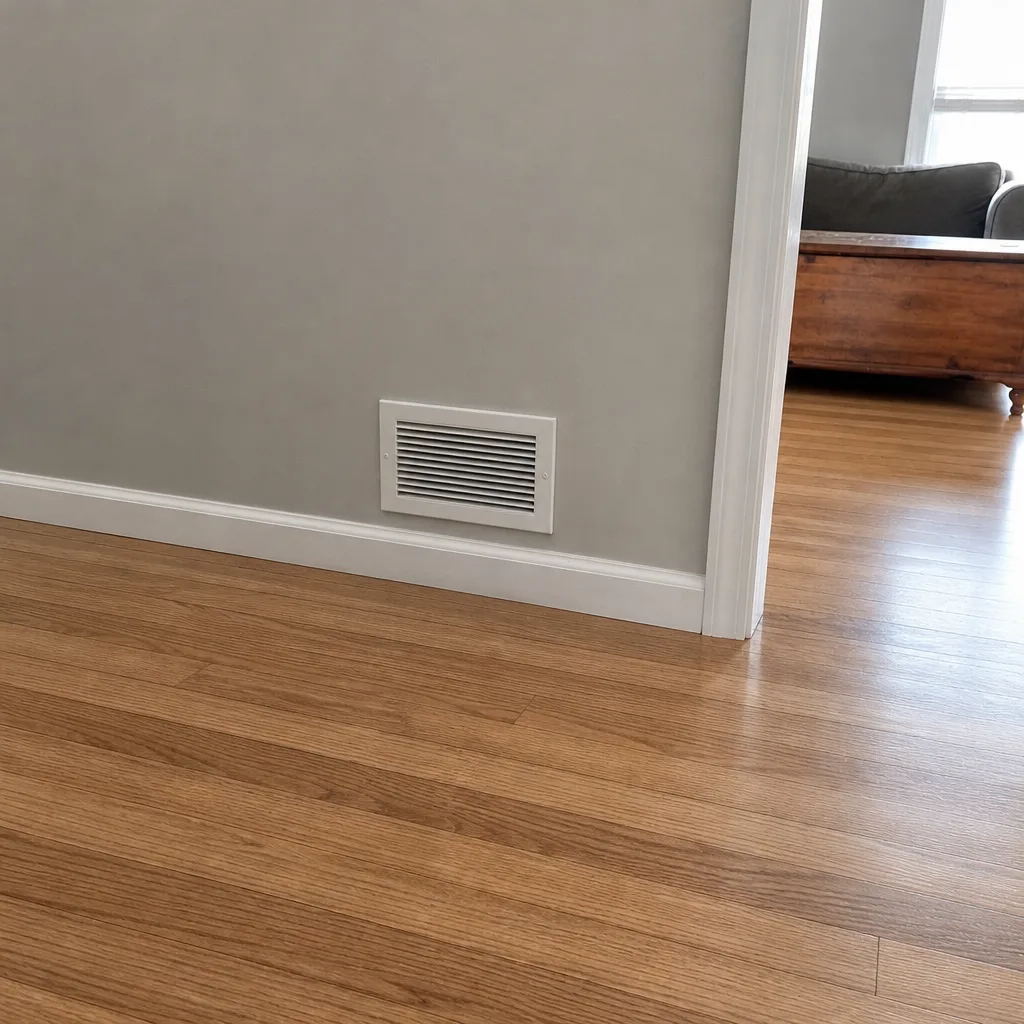 After
When to Call a Professional
Call for professional help if a duct repair has been done in your Albany home and you can’t produce any record of it, or if a quote arrived without a written scope. Call if you’re older-home shopping and the inspector flagged ductwork you don’t understand. Call if your dryer is taking longer than it used to, or if any register feels warm and slack. Call before any repair begins if you haven’t confirmed whether the work crosses into permit territory. Duct Cleaning Albany offers free estimates in Albany, and we’ll walk through your system, show you what we find, and clarify what needs a permit versus what doesn’t. Call (888) 861-7237. We answer 24/7. Fast dispatch from 7am to 7pm, Sunday through Friday. Estimates are free, and the price is set per job by the written estimate.
Frequently Asked Questions
No. Standard air duct cleaning is maintenance and does not require a permit in Albany or anywhere in New York State. The mechanical code covers installation and modification of duct systems, not routine cleaning. If a cleaning discovers damage that needs repair, though, the repair may require a permit through the City of Albany’s Department of Buildings. Call (888) 861-7237 for an exact quote on the cleaning side, since estimates are free.
Cleaning removes debris from the ducts. Modification changes the physical duct system by cutting in, replacing sections, rerouting, or adding new runs. Modification is permitted work and gets a code inspection; cleaning is not. That’s the dividing line, and it’s worth asking about before any repair starts. Call (888) 861-7237 to schedule a pre-cleaning assessment and get a clear scope in writing.
Duct cleaning in Albany is priced per system, not per register, with the written estimate setting the final number. Pricing depends on the number of systems, the condition of the ducts, and whether the job includes a repair. A per-vent quote or coupon price is a red flag in this industry, so ask for a whole-system scope in writing before you commit. Call (888) 861-7237 for a free estimate and an honest range.
Ask before any duct work is disturbed. Homes built before 1980 in Albany may have duct board or duct wrap that contains asbestos-containing material, and a pre-cleaning assessment can flag that. If the material is present, an abatement contractor handles it before any duct repair work. Call (888) 861-7237 to schedule an assessment that answers this question in writing.
Low quotes are usually priced per vent or sketched out before anyone sees the system. Professional-grade work uses Rotobrush, Nikro, and Abatement Technologies equipment and cleans the whole system to a verifiable standard, which a coupon price doesn’t reflect. Ask what equipment is used and what the total written scope says. If the answers are thin, the quote is thin too. Call (888) 861-7237 for a clean, whole-system estimate.
Most homes benefit from professional cleaning every few years, with a shorter interval in older Albany properties with pet dander, recent renovation dust, or known duct issues. Homes built before 1980 in this city often need closer attention because the ductwork itself may have been improvised. If your system has never been assessed, start there. Call (888) 861-7237 for a free pre-cleaning assessment.
FAQ: Repair and Documentation
Usually not. A cleaning and repair contractor handles cleaning, damage repair, and documentation. An HVAC engineer is worth it when you’re redesigning, adding a room, or sizing a new system. For most Albany duct problems, a repair contractor is the right first call.
Keep the permit number and inspection sign-off, the written scope, before-and-after photos, manufacturer spec sheets, and any note about hazardous materials the crew avoided. File them with your deed and home record. If you sell your Albany home, that folder answers the buyer’s questions.
No, cleaning a dryer vent doesn’t require a permit. Replacing or rerouting a dryer vent, though, can be a permitted alteration, so ask if the work involves relocation. Routine cleaning is a fire-safety service, not a code matter.
Professional cleaning uses a truck-mounted or high-powered commercial system, typically Rotobrush and Nikro gear, with HEPA-level containment from Abatement Technologies for sensitive homes. If the equipment is consumer grade, the work will be too. Compatible setups can work alongside Honeywell or Aprilaire whole-home air-quality systems without conflict.
The Bottom Line
Cleaning doesn’t need a permit in Albany. Repair often does. The line between the two is what this guide is about, and it’s the question most homeowners never think to ask until a sale, an insurance claim, or an inspector turns it into a problem. Get a written scope before any work. Confirm whether the repair stays maintenance or crosses into modification, and if it does, make sure a permit is pulled and the inspection is filed. Keep the before-and-after photos, keep the spec sheets, and keep the paperwork with your home record. If you’re not sure where your system stands, start with an assessment. Duct Cleaning Albany serves Albany with professional-grade equipment and a clear scope, and we don’t just clean, we repair. Reach out, and we’ll show you exactly what’s going on in your ducts.
Contact Duct Cleaning Albany for a free estimate. Call (888) 861-7237. We answer 24/7. Fast dispatch from 7am to 7pm, Sunday through Friday.
Written by the team at Duct Cleaning Albany.