
Last updated November 16, 2026
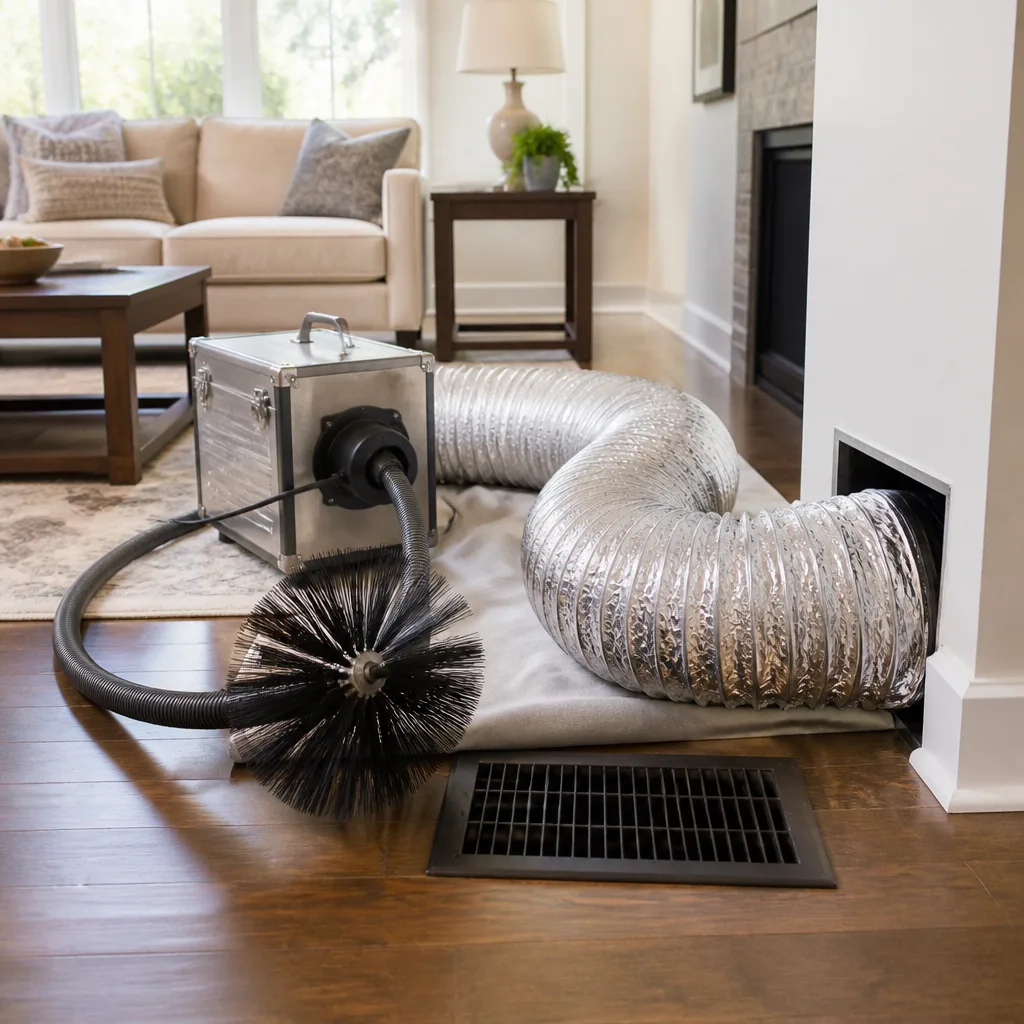 Whole-home duct cleaning
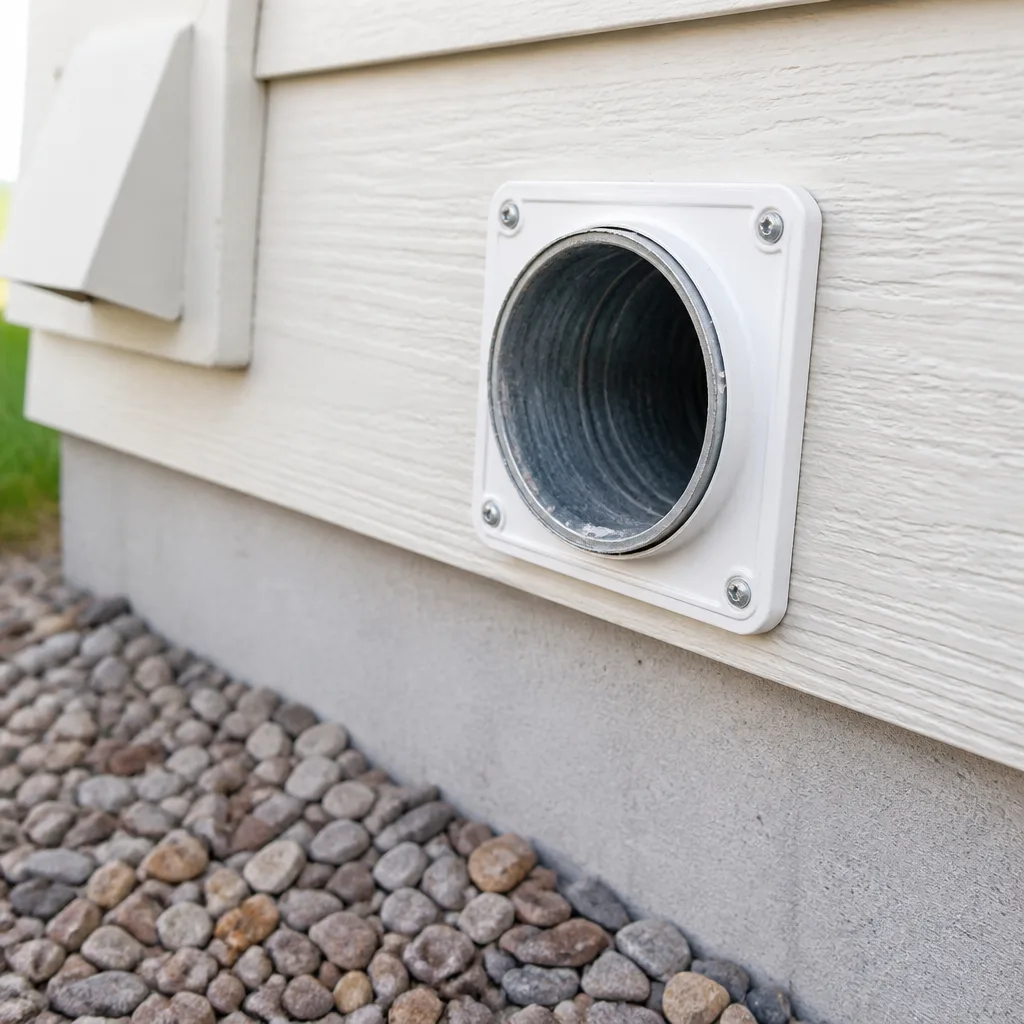 Dryer vent cleaning
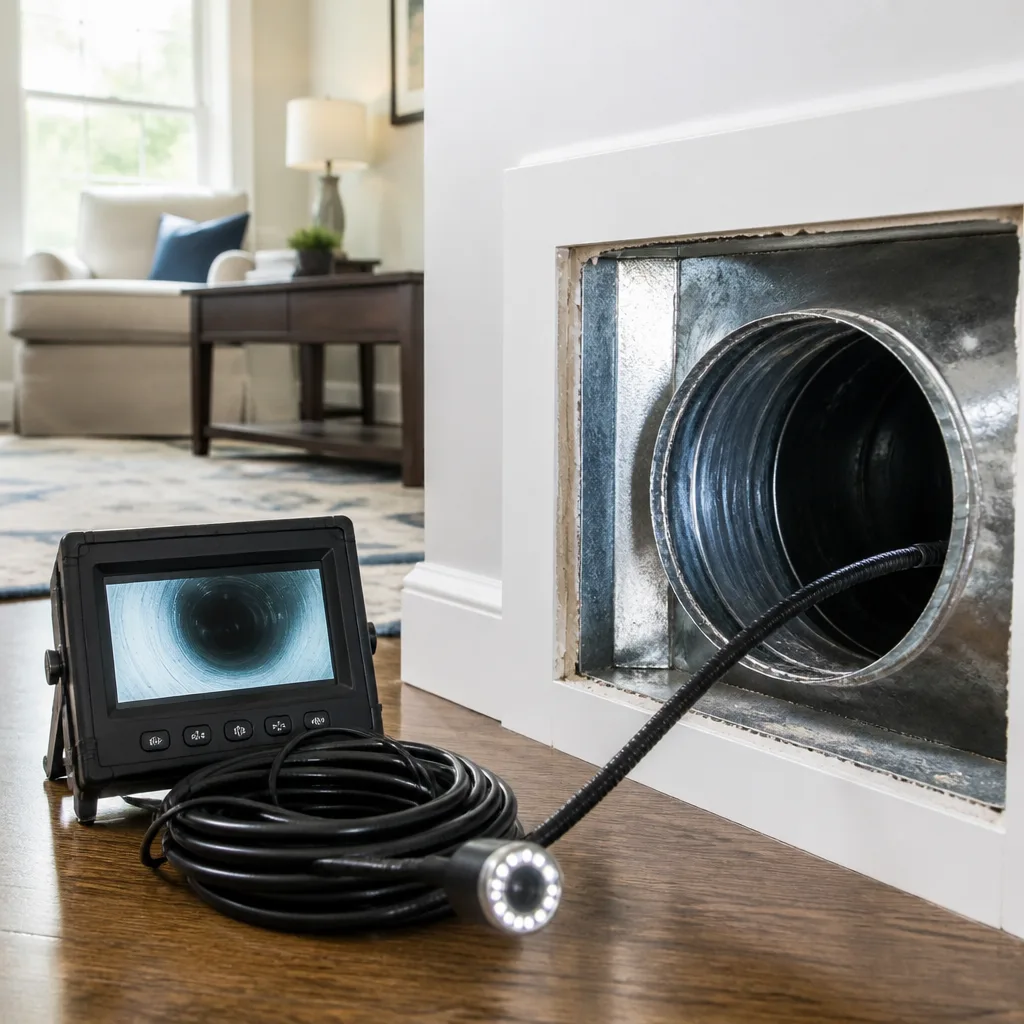 Camera inspection
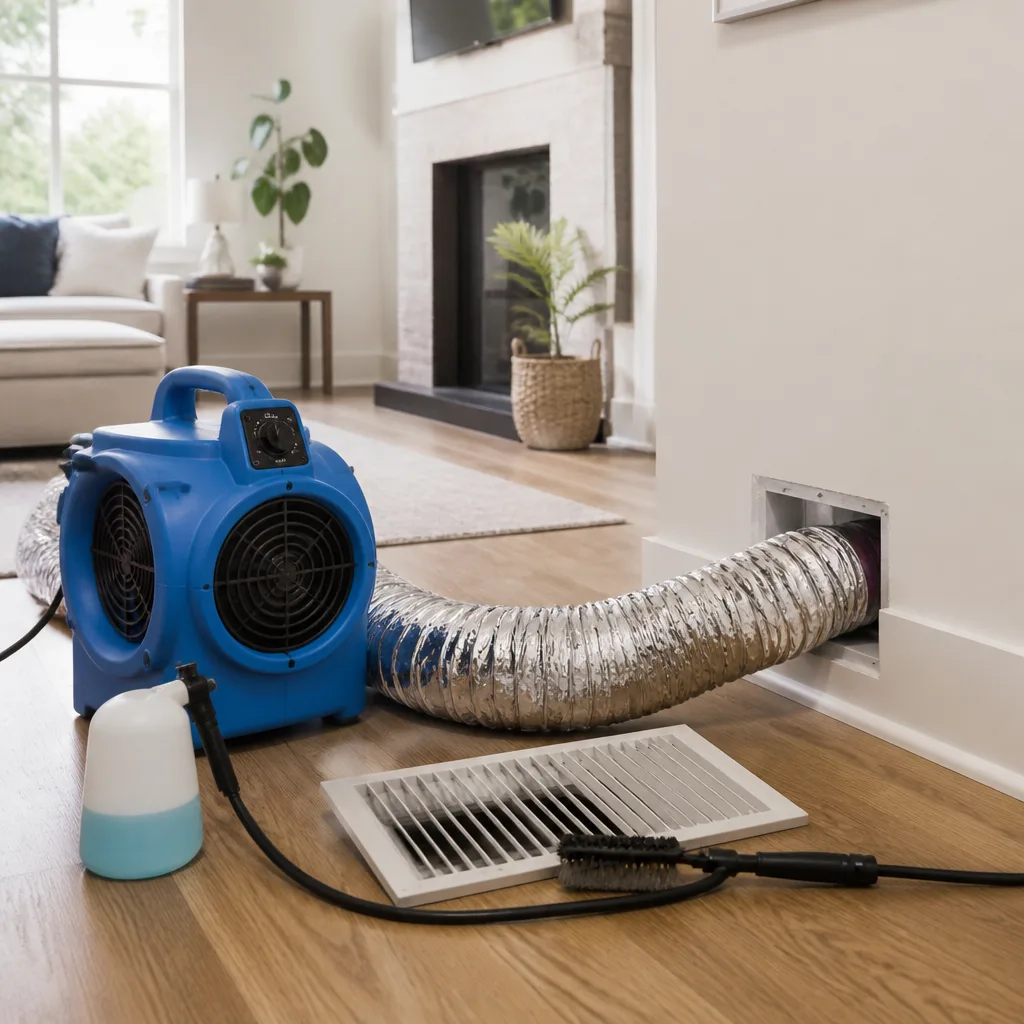 Sanitizing & deodorizing
Whole-system duct and dryer vent check with before-and-after photos - you see exactly what came out of your vents
That "$99 whole-house special" is a bait ad - the real number appears once they are in your hallway, or the "clean" is a shop-vac at the register. We photograph the inside of your ducts before and after instead.
The Complete Guide to Air Duct Cleaning in Albany
A shop vac pulls a fraction of the negative pressure of a truck-mounted or HEPA-contained negative air machine, yet the contractor with the shop vac and the contractor with the containment unit can hand you a nearly identical invoice for “professional duct cleaning.” That gap between what gets billed and what actually happens inside your ductwork is the single most useful thing to understand before you hire anyone in Albany. This guide walks through why method matters more than marketing, how Albany’s climate shapes what’s sitting in your ducts, what the NADCA ACR standard actually requires, and the red flags hidden in contractor proposals. You’ll finish knowing what a real cleaning looks like and how to tell the difference.
Quick Answer
Air duct cleaning in Albany removes accumulated dust, debris, and biological growth from the supply and return network using source removal: mechanical agitation under continuous negative pressure, so loosened material leaves the system rather than resettling in it. A real job follows the NADCA ACR standard, includes opening access points, and pairs cleaning with an inspection for leaks so you aren’t paying to clean ducts that will immediately pull in the same debris again. Equipment grade and process control, not price or speed, are what separate a cleaning that works from one that only looks like it on paper.
Styles & brands we work with
- Whole-home duct cleaning
- Dryer vent cleaning
- Camera inspection
- Sanitizing & deodorizing
Table of Contents
- Why Albany Ducts Accumulate What They Do
- How Albany’s Climate Creates a Specific Debris Profile
- Contact Cleaning vs. Air Sweep: Which Method Applies
- What the NADCA ACR Standard Actually Requires
- Why Pre-Inspection and Repair Change the Value Equation
- Red Flags in Contractor Proposals
- How a Proper Cleaning Job Runs, Step by Step
- Dryer Vents: The Safety Side of the Same Visit
Why Albany Ducts Accumulate What They Do
Most homes in Albany run on forced-air heat, which means the same ductwork that delivers warm air in January is the ductwork moving cooled air in July and pulling in household dust year-round. Every furnace filter change you skip, every return grille you never pull, and every renovation that scattered fine gypsum dust adds to the load inside the system. In older housing stock, particularly the tightly built homes around Center Square and the Washington Park area, duct runs were often added, modified, or sealed with whatever was on hand decades after the house was built. That history leaves irregular joints and gaps that collect debris and leak conditioned air.
Ductwork also acts as a slow settling chamber. Air moving through a properly sized duct keeps dust suspended, but where a run widens, turns, or drops into a branch, velocity falls and particles land. Return ducts are the worst offenders because they carry the dirtiest air in the house. Over time, a light film becomes a visible layer, and gravity works that layer into the corners and the runs furthest from the air handler.
What this means practically: the ducts you can’t see are usually dirtier than the ones you can. The visible grille is the cleanest part of the run. A real inspection opens the system at multiple points, not just the register.
How Albany’s Climate Creates a Specific Debris Profile
Albany summers are humid in a way that matters inside ductwork. When cooled air moves through a duct that passes through unconditioned space like an attic or a crawlspace, the metal sweats. That condensation doesn’t drain; it sits on the interior surface and turns settled dust into a paste that clings harder than dry dust ever would. By the time the heating season arrives, you have a film that agitation has to physically break loose rather than a loose load a vacuum alone could lift.
Then forced-air heating runs for months. Warm, dry air cycles through the same ducts, and the temperature swings between heating and cooling seasons expand and contract the duct walls. That flexing opens small gaps at seams and joints, which is where outdoor air, attic insulation fibers, and crawlspace moisture enter. Homes with ductwork routed through a cold attic end up pulling in a fine, insulating-fiber-laden dust that settles into the same low-velocity corners as the ordinary household dust.
- Humid summers drive condensation inside ducts passing through unconditioned space, cementing dust into a film.
- Long heating seasons cycle dry air through the same runs, stressing tape and mastic at seams.
- Attic and crawlspace routing pulls in insulation fibers and outdoor dust through gaps that leak.
- Renovation dust from older Albany homes settles deep in return runs and stays there.
This is the reason a purely vacuum-based air sweep underperforms in Albany. The material inside a typical duct here is stuck, not loose, and stuck material has to be mechanically agitated before pressure can carry it away.
Contact Cleaning vs. Air Sweep: Which Method Applies
There are two main approaches to interior duct cleaning, and they aren’t interchangeable. Air sweep uses high-velocity air, sometimes boosted by a compressed-air whip, to push material toward a vacuum collection point. Contact cleaning uses a rotary brush or air-driven agitation tool that physically contacts the duct wall, scrubs material loose, and works in tandem with continuous negative pressure so it exits the system. The right tool depends on what’s stuck to the interior surface and whether the duct is lined or bare metal.
- Assess the debris type. Light, dry dust in smooth rigid duct can respond well to air sweep. Caked film, biological growth, or construction debris needs contact agitation.
- Match the tool to the duct material. Rigid metal takes rotary brushes; flex duct needs gentler agitation so the liner isn’t torn; ductboard requires careful contact tools so the interior face isn’t damaged.
- Maintain containment throughout. Whichever method you use, an Abatement Technologies containment setup or equivalent here is what keeps loosened debris out of the living space during the work.
- Verify before sealing. A pre-cleaning camera look and a post-cleaning confirmation are what separate a documented job from a promise.
Professional-grade equipment changes what the contact method can actually achieve. We use Rotobrush and Nikro systems built for commercial and industrial work, not consumer-grade gear, because those systems provide the agitation force and reach that residential entry-level tools don’t. That’s the practical difference a homeowner feels: a run that gets genuinely scrubbed rather than briefly blown out.
What the NADCA ACR Standard Actually Requires
The NADCA ACR standard (Assessment, Cleaning, and Restoration) is the industry benchmark for what a legitimate duct cleaning job involves. It’s not a law and it’s not enforced by any inspector, but it is the reference point that separates a documented cleaning from a marketing visit. Under ACR, a job includes opening access to the full system, cleaning source-to-source with continuous negative pressure, protecting the HVAC components, and confirming results. Most low-bid companies skip large parts of it because those parts cost time.
- Documented assessment before work begins, so the scope is defined by what’s in the system, not by a flat brochure offer.
- Source removal, meaning material is physically removed from the ducts and collected, not just dislodged and left to recirculate.
- Negative pressure maintained throughout the cleaning so loosened debris moves toward the collection point and out of the system.
- Protection of system components like the air handler and coils during agitation and vacuuming.
- Verification that the work achieved what it set out to do, which is where before-and-after documentation earns its keep.
In our experience, the biggest gap between what ACR asks for and what low-bid work delivers is containment. A shop vac creates a weak pressure difference and no real containment, so the moment a technician opens a duct, loosened dust has more paths into the house than out of it. A contractor running a Rotobrush agitation system tied to a truck-mounted or HEPA-contained negative air setup is doing the work ACR describes. One with a portable vac is doing something else and calling it the same thing.
Why Pre-Inspection and Repair Change the Value Equation
Cleaning a duct system that has leaks is money spent on a temporary result. If gaps at joints, disconnected runs, or failing mastic allow attic air or crawlspace dust back into the system, the ducts refill with the same debris the cleaning removed. The pre-inspection is what catches this before the cleaning invoice is written, and repair capability is what closes the loop after. That combination is why we don’t just clean: we repair, so you don’t hire a second contractor to fix what the first one found.
The inspection itself is straightforward. We look at accessible runs for gaps and disconnections, check the air handler and coil cabinet for separation, examine the return path for common leaks, and look at the duct material so the cleaning method matches it. If we find damage, we quote the repair alongside the cleaning. If the ducts are sound, you get the cleaning and nothing more.
This matters more in Albany’s older housing stock than in newer construction, where duct systems were designed as a complete unit from day one. In a house where the ducts were retrofitted or modified, seams are the place to look first. The homeowner who understands this doesn’t ask “how much per vent?” They ask “how will you verify the ducts aren’t leaking before you clean them?”
Red Flags in Contractor Proposals
Read the proposal as carefully as the invoice. Most of the problems in this trade are visible before anyone shows up, hidden in the wording or the absence of it. Here’s what to watch for in an Albany duct cleaning quote.
- A price quoted per vent or per register. Duct cleaning is a whole-system job, and a per-vent figure treats it like a commodity. It’s also the setup for a bigger invoice once the technician is on site.
- No mention of equipment. If the proposal doesn’t tell you what system is used for agitation and containment, the default assumption is the cheapest available gear.
- No pre-inspection described. Cleaning without inspection is cleaning blind, and the discovery of damage mid-job is how a small quote grows into a large invoice.
- No before-and-after documentation offered. If you can’t see what came out, you can’t confirm the work happened.
- No access-point plan. A real job opens the system at multiple points. A single-register vacuum-and-go isn’t a full cleaning.
- Containment mentioned only as a phrase. Ask what containment equipment is used. HEPA-level handling or an Abatement Technologies-grade setup is the answer you want.
- Repair capability not offered. If the company can’t repair what it finds, you’ll either be quoted a separate repair by someone with no stake in the cleaning, or the damage goes unaddressed.
One clean answer to all of it: one flat price per system, agreed before work starts, with before-and-after photos of your own ducts. That’s the standard we hold ourselves to, and it’s the standard worth asking every contractor to meet.
How a Proper Cleaning Job Runs, Step by Step
A full residential cleaning in Albany follows a defined sequence. Time estimates vary with the size of the system, but the steps don’t. Here’s the general flow.
- Walk-through and assessment. We look at the system, note duct material, count and locate the runs, and inspect accessible joints for leaks or disconnections.
- Establish negative pressure. Containment and vacuum collection are set up before any duct is opened, so loosened material has an exit path and no route into the living space.
- Open access. The system is opened at the air handler and at strategic points in the runs, not just at the grilles, so the full path can be reached.
- Agitate with Rotobrush or Nikro equipment. Contact cleaning scrubs the duct walls free of the stuck film that air sweep alone can’t lift.
- Pull loosened material to collection. Continuous negative pressure carries the debris to the vacuum and out of the system.
- Protect and clear the components. Air handler, coil cabinet, and any components in the path are protected during the work and checked clean after.
- Repair any gaps found. If the inspection turned up leaks or disconnections, we quote the repair and either close it during the same job or schedule it directly.
- Confirm results. Before-and-after documentation confirms what came out and how the ducts look afterward.
Depending on what the system needs, we may also service components that work with whole-home air-quality systems, since our work is compatible with Honeywell and Aprilaire setups already installed in Albany homes. If you have one of those systems, it makes sense to talk about how the cleaning and the air purifier or humidity control fit together before we start.
Dryer Vents: The Safety Side of the Same Visit
Dryer vent cleaning belongs in the same conversation as air duct cleaning for a plain reason: a clogged dryer vent is a recognized cause of household dryer fires, and the lint that builds up is no different in nature from the lint that collects in the ducts feeding the dryer. When we’re already at the house, checking the dryer vent is one of the highest-value things a homeowner can do. A dryer that takes two cycles to dry a load isn’t inconvenient, it’s telling you the exhaust path is restricted.
The cleaning itself is direct: we clear the vent run from the back of the dryer to the exterior termination, remove the lint and debris, and confirm that the exhaust path is open. Where the vent routes through a wall or up through a roof, the containment setup matters just as much as it does in the duct cleaning, because loosened lint needs somewhere to go besides the wall cavity. Between the duct cleaning and the dryer vent work, you’re addressing the two indoor air and fire-safety concerns that live inside the same system.
Common Mistakes to Avoid
- Hiring on price alone. The cheapest quote in Albany tends to sit at the bottom of a range that starts low and climbs once the technician is inside. A written, whole-system price agreed before work starts is what you’re after.
- Accepting a per-vent quote. It sounds transparent and it moves the goalposts. Ask instead for one flat price per system.
- Skipping the pre-inspection. Cleaning without checking for leaks means you may be cleaning ducts that need repair to hold the result. The inspection is part of the job, not an upsell.
- Believing the job is done because a grille looks clean. The visible register is the cleanest part of any system. Ask for before-and-after photos of the interior runs.
- Ignoring the dryer vent. If the dryer climbs in drying time, the vent is restricted, and lint in the exhaust path is a fire risk in any Albany home. Bank the vent cleaning on the same visit as the ducts.
- Letting a contractor clean without containment. If the setup doesn’t include source containment and negative pressure, loosened debris is going into the house, not out of it.
- Assuming damage will look obvious. A disconnected run or leaking joint won’t announce itself. It shows up in the inspection, on a pressure check, or when you notice that some rooms never really heat the way the others do.
See the difference
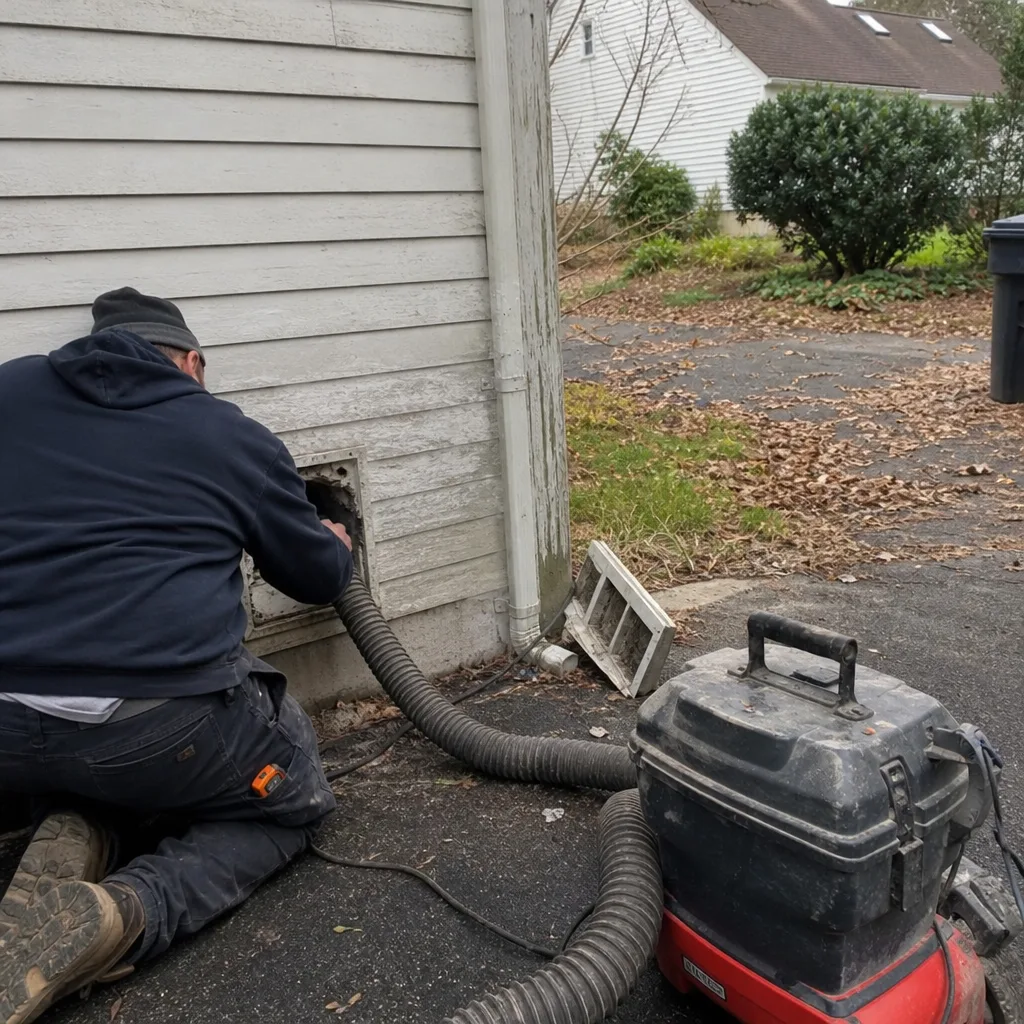 Before
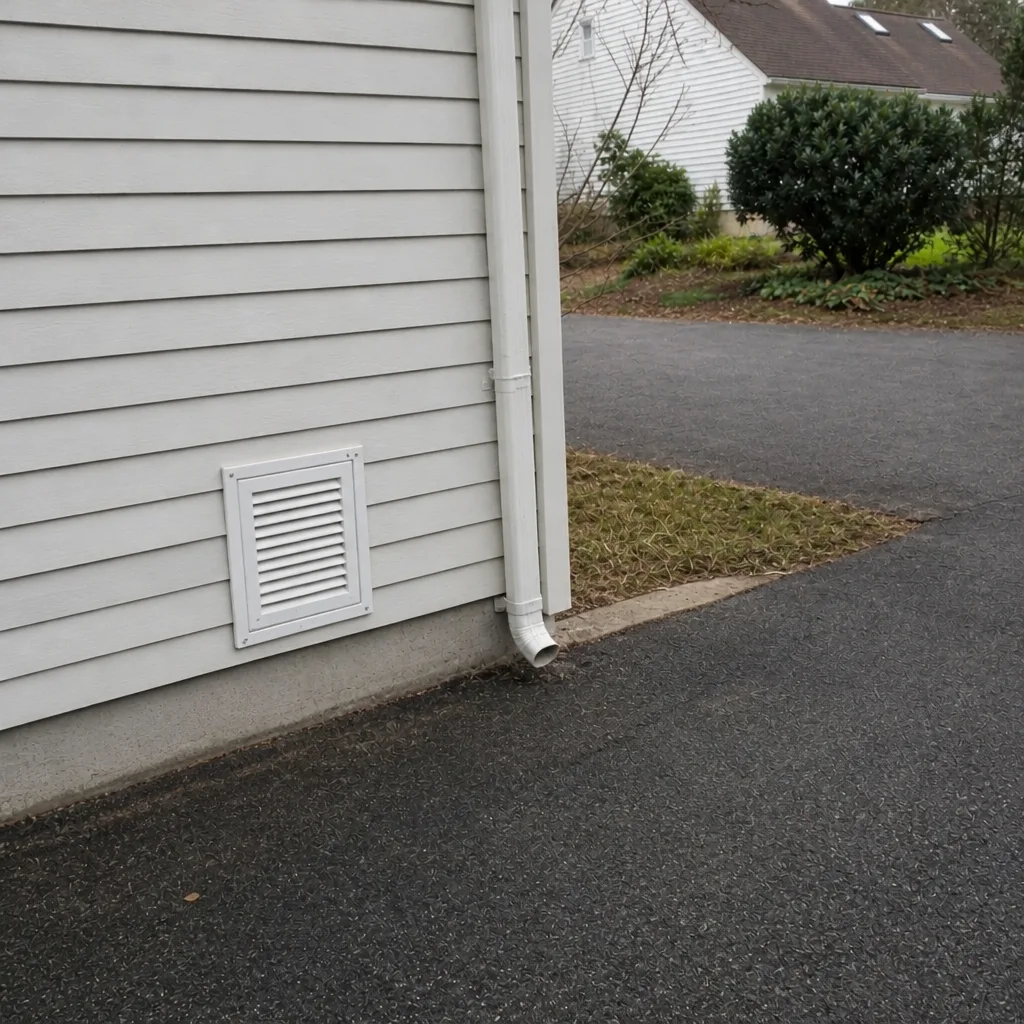 After
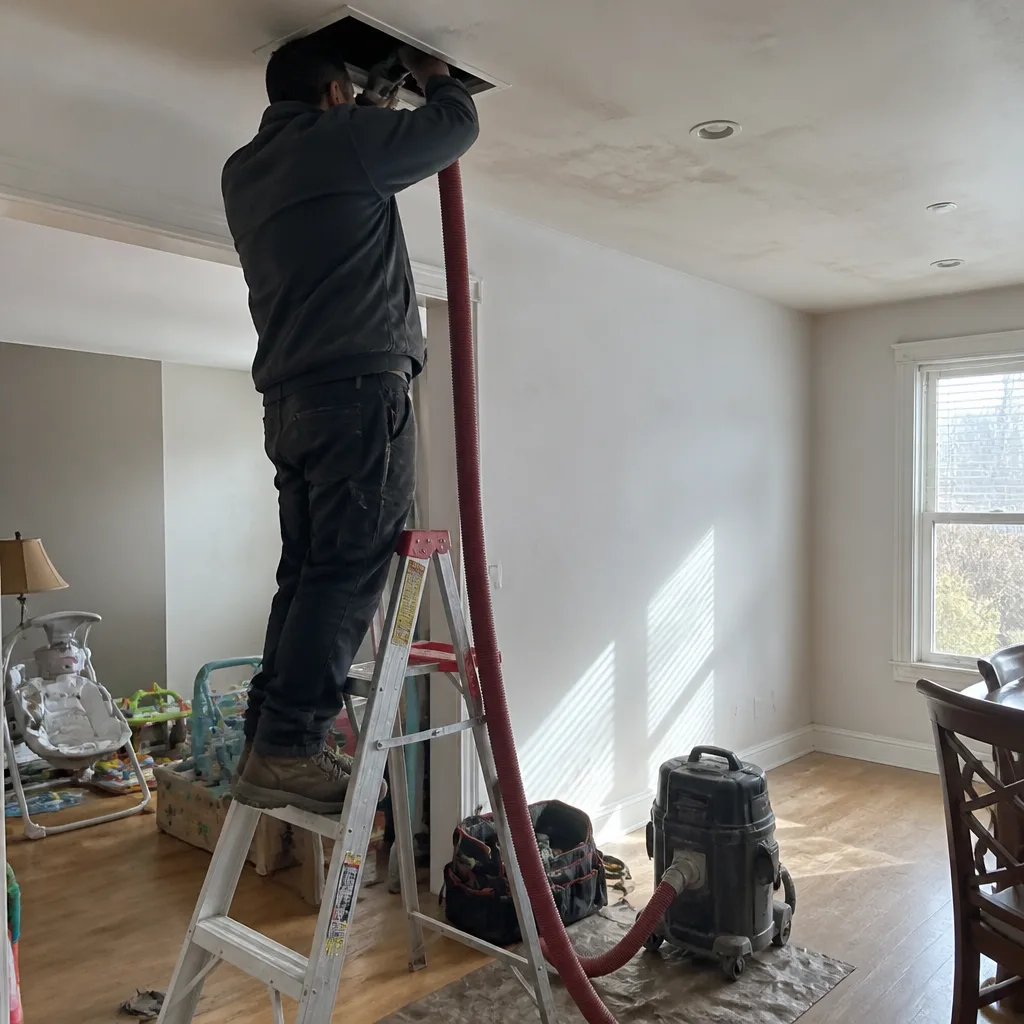 Before
 After
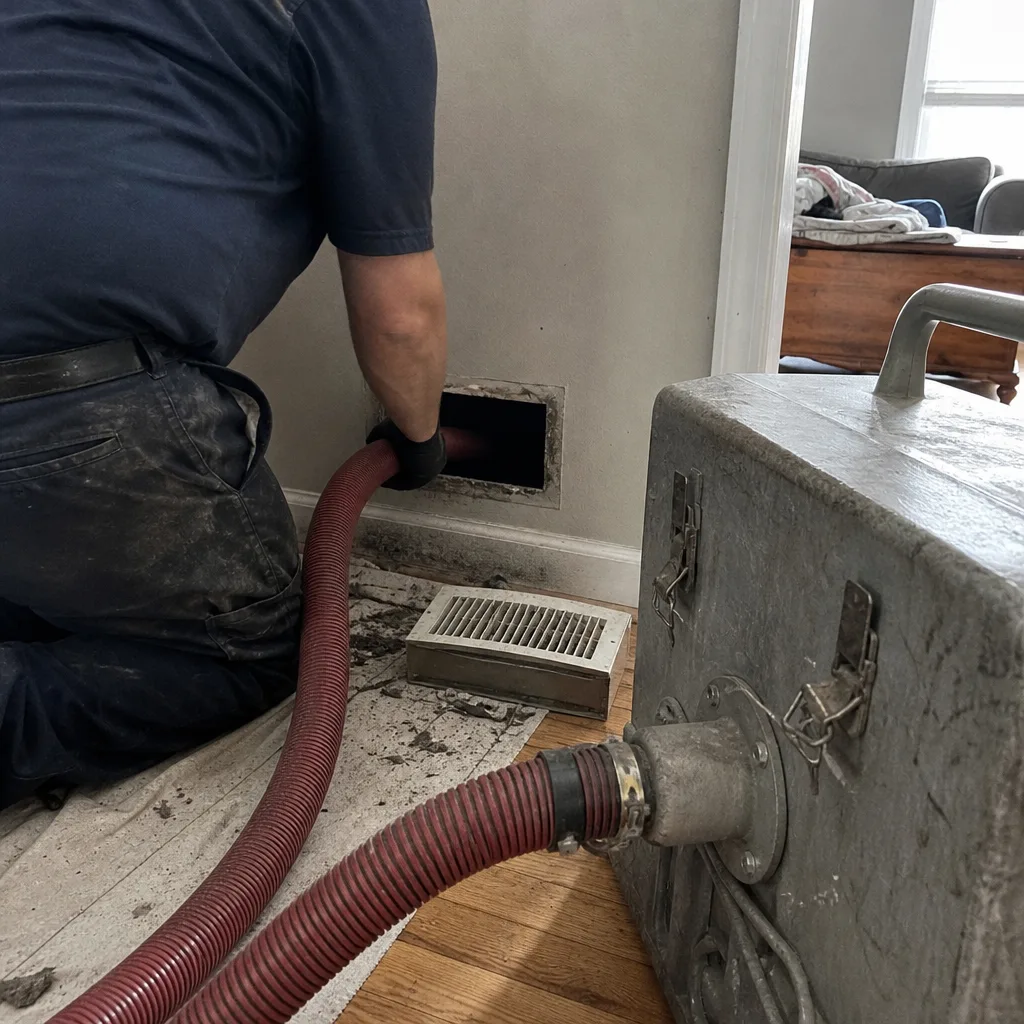 Before
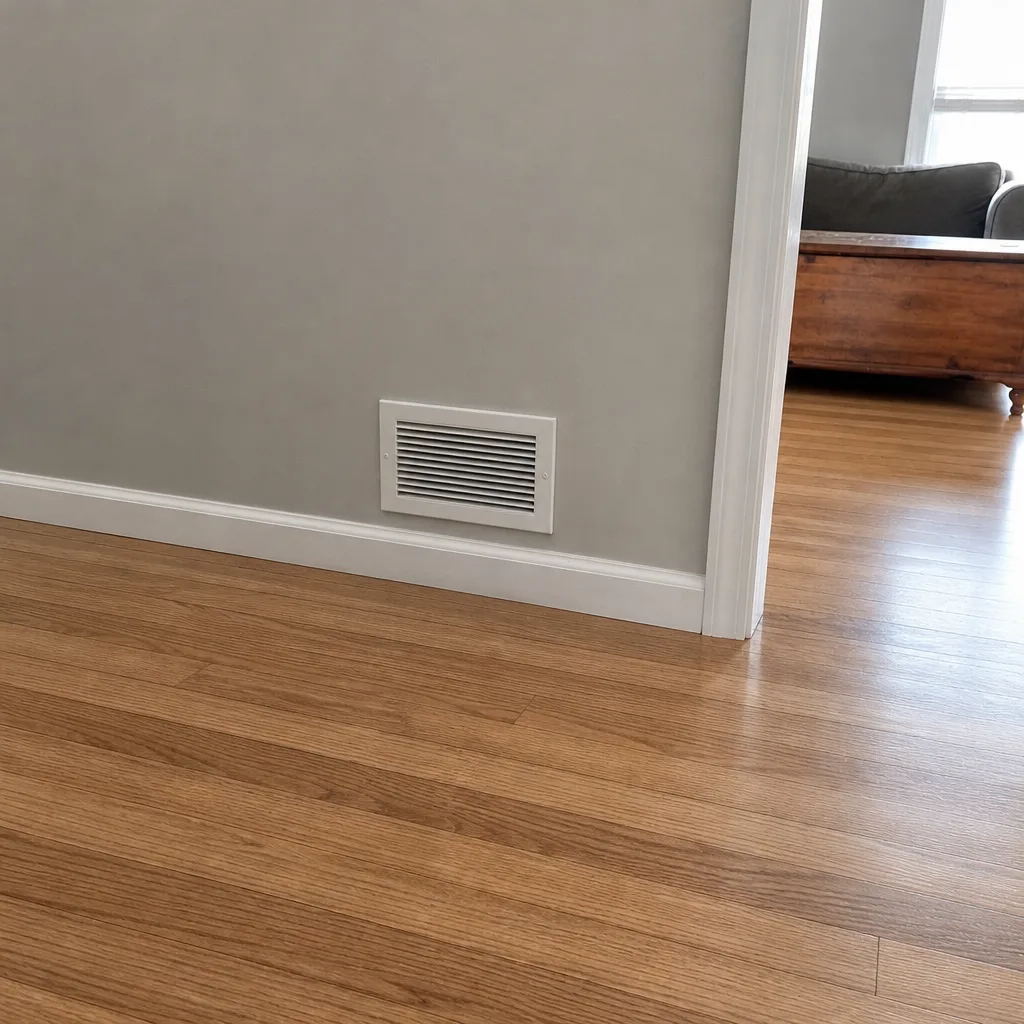 After
When to Call a Professional
Call a professional when the evidence points at the duct system itself. Visible dust blowing from the supply registers when the furnace kicks on, a persistent musty or dust smell that doesn’t go away with cleaning, and a return grille with a noticeable film are the obvious candidates. So is a recent renovation that stirred up fine dust, a move into a home where you don’t know the duct history, or a family member with allergy symptoms that seem to track with the heating and cooling season. And a dryer that’s taking noticeably longer to dry a load is its own signal, separate from the duct work and worth the same call. If any of these describe your Albany home, an inspection costs nothing to request and tells you where you actually stand. Duct Cleaning Albany offers free estimates in Albany – call (888) 861-7237. We answer 24/7. Fast dispatch from 7am to 7pm, Sunday through Friday.
Frequently Asked Questions
Air duct cleaning in Albany is priced per system, not per vent, and the written estimate sets the final price before any work starts. The estimate is free, and the flat price per system is one of the main differences between a straightforward job and one that grows once the technician is inside. Call (888) 861-7237 for an exact quote – estimates are free.
You confirm it with before-and-after documentation of your own ducts. A legitimate cleaning shows what came out of the runs and how the interiors look afterward, and that documentation is worth more than any claim on a brochure. Ask for it before you hire, and call (888) 861-7237 to see the process we use.
There’s no universal calendar interval that fits every Albany home. Homeowners who’ve had a renovation, moved into a house with unknown duct history, or are managing allergies tend to clean more often than households with no such history. The honest answer is to have the system inspected and let the inspection decide, rather than defaulting to a fixed schedule. Call (888) 861-7237 to get that inspection started.
Cheaper quotes usually mean less equipment and less scope: a shop vac rather than a truck-mounted or HEPA-contained negative air system, a single-register vacuum rather than full access and contact agitation, and no pre-inspection. You’re often buying a fraction of the work. Call (888) 861-7237 for a quote that includes the whole process, pricing agreed in writing before we start.
We repair what we find. Air duct repair is one of our core services, done in-house with no subcontracting, because a cleaning on a leaking system gets undone by the same leaks. If the inspection turns up a gap or disconnected run, we quote the repair directly and either close it during the same job or schedule it with you. Call (888) 861-7237 to book an inspection.
We use Rotobrush and Nikro professional-grade cleaning systems, the same class of equipment commercial and industrial contractors rely on, along with Abatement Technologies containment equipment. It matters because equipment grade determines how much of the debris a job can actually remove. A consumer-grade vacuum can’t do what a containment-based system can, no matter what the invoice says. Call (888) 861-7237 if you’d like to see exactly what we use and why it matters.
The Bottom Line
Air duct cleaning in Albany comes down to method and equipment, not the size of the invoice or the sales pitch. Stuck, humid-season dust needs contact agitation under continuous negative pressure, not a shop vac pass. The NADCA ACR standard is the reference point for what a real job includes, and a pre-inspection for leaks is what keeps the cleaning from being undone by the same gaps in the following months. One flat price per system, agreed before work starts, with before-and-after photos of your own ducts, is the version of this service worth paying for. And the dryer vent deserves a look on the same visit, because lint in the exhaust path is a fire risk in any Albany home. If you want the technical version rather than the brochure version, that’s what we do.
If you’re ready to see where your Albany home’s ducts actually stand, call (888) 861-7237 for a free estimate. We answer 24/7. Fast dispatch from 7am to 7pm, Sunday through Friday.
Written by the team at Duct Cleaning Albany.