
Last updated November 16, 2026
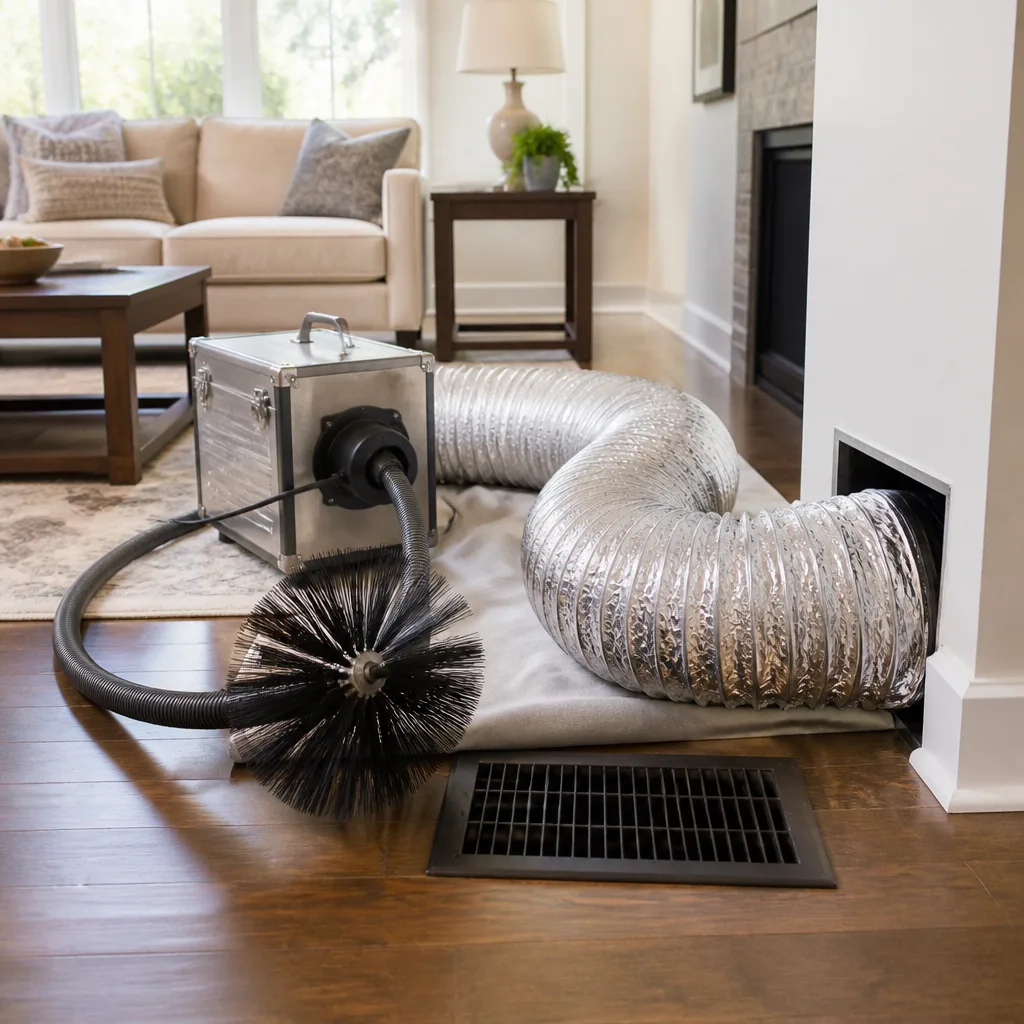 Whole-home duct cleaning
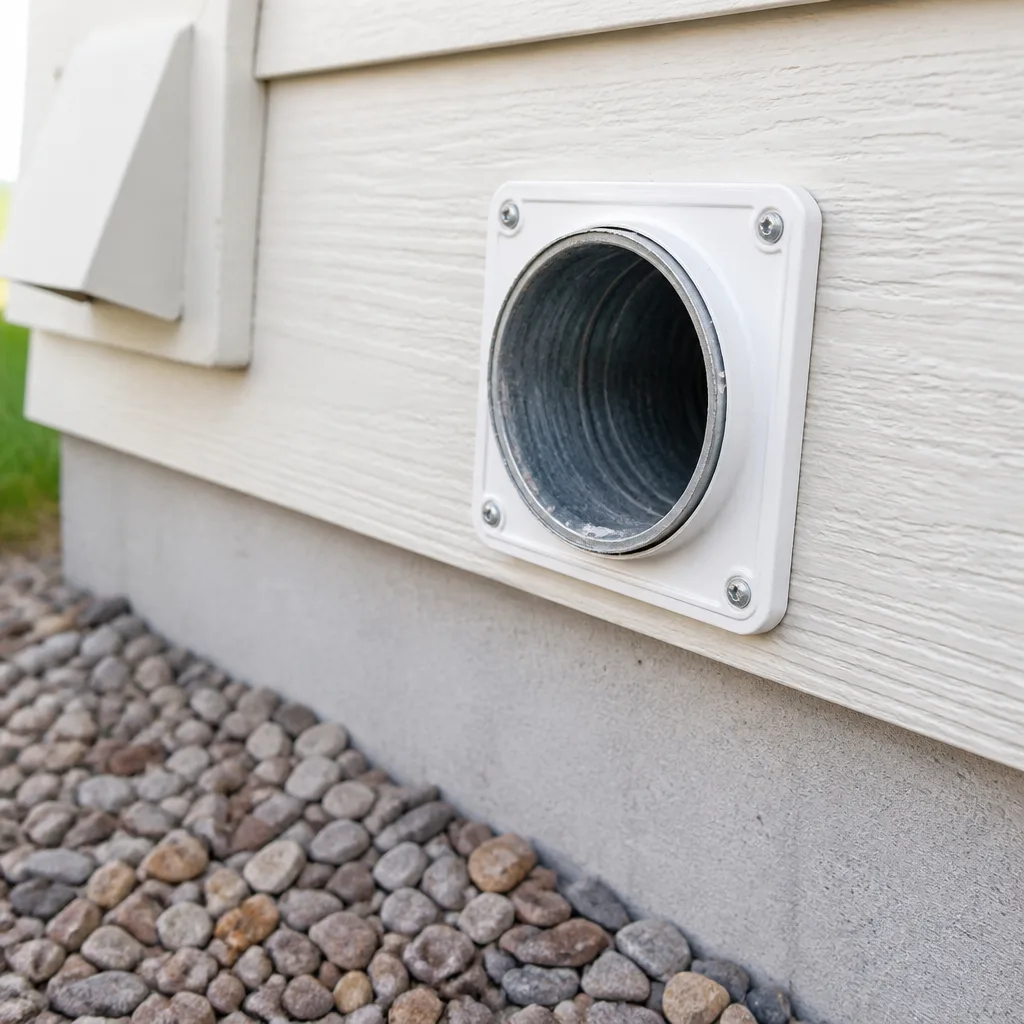 Dryer vent cleaning
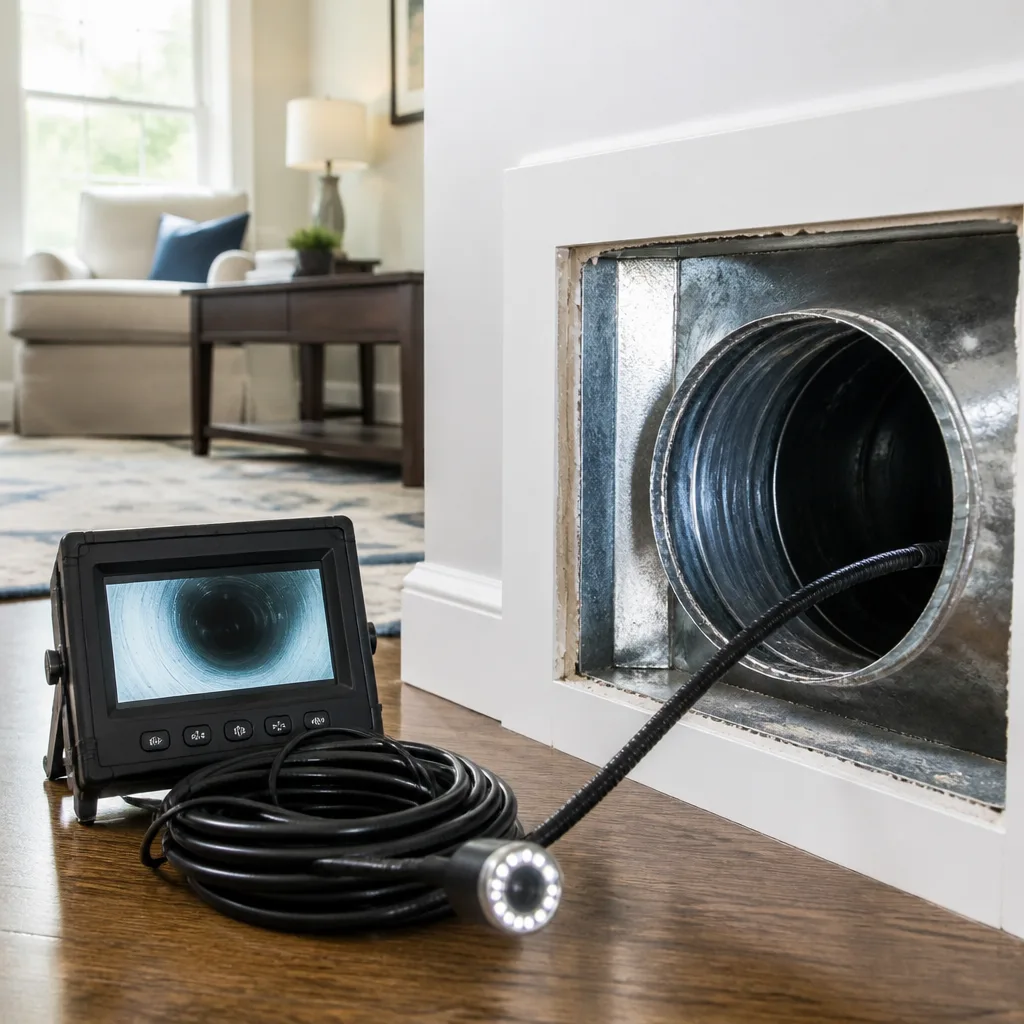 Camera inspection
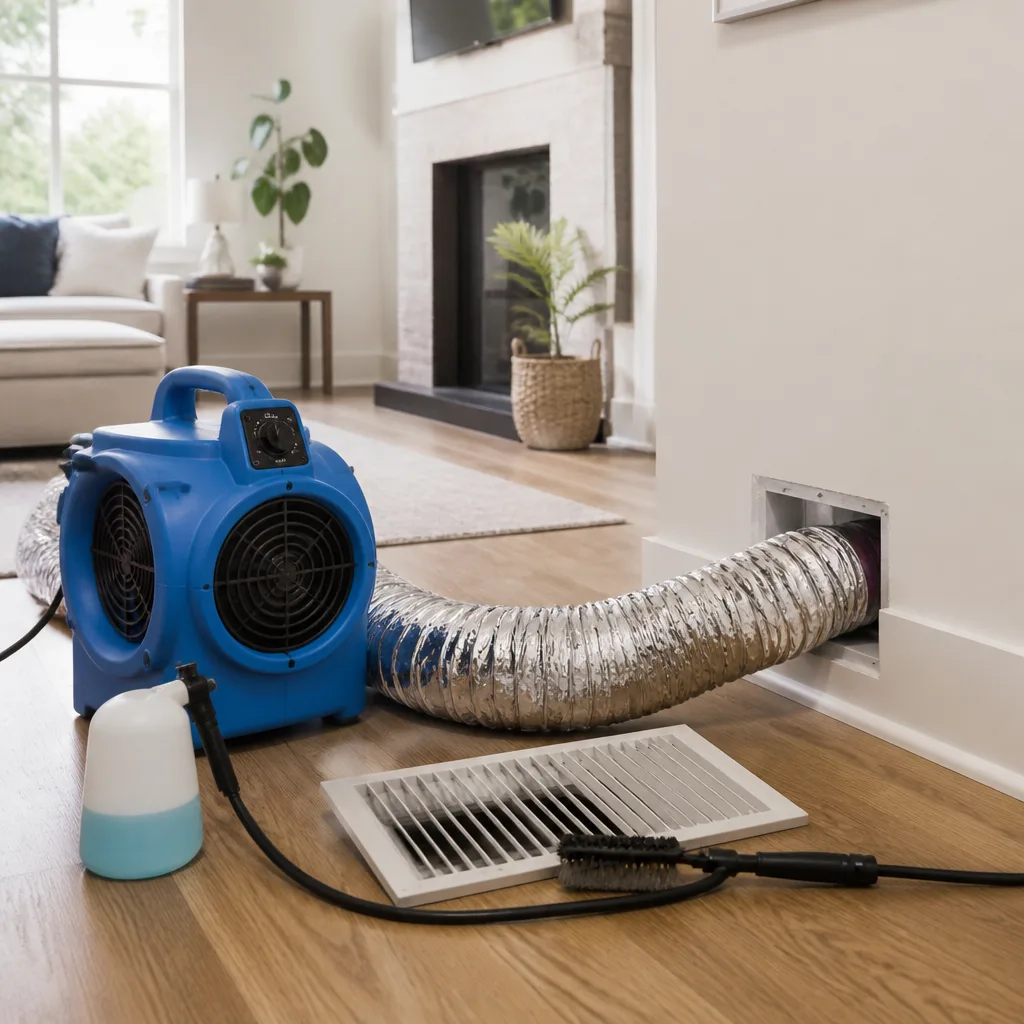 Sanitizing & deodorizing
Whole-system duct and dryer vent check with before-and-after photos - you see exactly what came out of your vents
That "$99 whole-house special" is a bait ad - the real number appears once they are in your hallway, or the "clean" is a shop-vac at the register. We photograph the inside of your ducts before and after instead.
Air Duct Cleaning Maintenance Checklist for Albany Homeowners
The filter you change every month tells you almost nothing about what’s happening fifteen feet deeper in your trunk line. Most homeowners assume a clean filter means a clean system, but the filter only catches what reaches it. Dust that settles on the interior walls of the supply runs, debris that collects at the base of a return drop, and the slow separation of a joint behind a finished ceiling all happen downstream of the filter and stay invisible until something changes in how the house feels. What follows is a repeatable, inspection-grade checklist you can run yourself between professional visits. It covers what to look at, what to write down, and the specific conditions that mean you’ve found something a shop vac can’t fix. We’ll keep the Albany details concrete, because the local seasons shape what you’re checking for.
Quick Answer
A workable air duct maintenance checklist for Albany homeowners covers four things: quarterly register and grille inspections you can do without tools, room-by-room airflow comparison to catch balance problems early, filter changes timed to Albany’s pollen and heating seasons, and written documentation after every professional cleaning so future inspections have a baseline. Serious issues, like crushed flex duct or separated joints inside a wall cavity, need professional equipment such as a Rotobrush or Nikro system rather than a homeowner tool kit.
Styles & brands we work with
- Whole-home duct cleaning
- Dryer vent cleaning
- Camera inspection
- Sanitizing & deodorizing
Table of Contents
- Register and Grille Checks You Can Do Without Tools
- How to Track Airflow Balance Room to Room
- Filter Timing for Albany’s Pollen and Heating Seasons
- What to Document After a Professional Cleaning
- A Seasonal Maintenance Calendar for Albany Homes
- When a Check Reveals Something Bigger
- Why Equipment Grade Matters More Than Price
Register and Grille Checks You Can Do Without Tools
Start at the supply registers, the grilles that push conditioned air into each room. You don’t need any tools for this pass, and it takes about ten minutes in a typical Albany home. What you’re looking for is a pattern, not a single speck of dust. Dust on a register face is normal. What’s worth noting is how quickly it comes back after you wipe it, and how the buildup differs from one register to the next.
Work through each register in the house and note four things:
- Louver condition: Are the angled slats straight and movable, or bent and stuck? A seized louver changes where air actually goes, which throws off the whole room’s balance.
- Visible interior surface: Shine a phone flashlight into the gap behind the grille face. You should see metal or flex duct wall. Heavy dark buildup, fuzzy growth, or debris settled at the bottom edge of the duct is worth writing down.
- Film on nearby surfaces: A dark ring or soft smudge on the wall or ceiling around a register usually means air is escaping sideways rather than flowing out, often from a poor seal between the boot and the drywall.
- Rattles and whistles: A whistle means restricted flow. A rattle can mean a loose boot or a gap that’s letting return air pull through the wall cavity.
Do the same at the return grilles, which are usually larger and often centrally located. Return grilles collect more dust than supply registers because they’re pulling air in rather than pushing it out. In older Albany homes, especially the brick and plaster stock in neighborhoods like Center Square and the Ten Broeck Triangle, return chases are sometimes original wood framing rather than metal duct, and those channels collect dust differently. Note anything that looks like it’s accumulating faster than the rest of the house, and photograph it with a measurement reference like a coin or tape for scale.
How to Track Airflow Balance Room to Room
Airflow balance is the fastest early-warning system a homeowner has, and almost nobody uses it. The idea is simple: every room should feel conditioned air at roughly the same relative strength when registers are open and unobstructed. When one room falls behind, it’s usually a sign of a blockage, a closed damper, a crushed section of flex duct, or a joint that’s separated somewhere between the air handler and the register.
Here’s the test. Do it once now, and then the same way each season so the comparison is fair:
- Set the thermostat to fan-only so the blower runs without heating or cooling. This isolates airflow from temperature.
- Hold a strip of tissue or a light piece of paper about two inches in front of each supply register. Note how far it deflects. Or use a cheap handheld anemometer if you want a number.
- Write the result down room by room, along with a note about how far each register is from the air handler.
- Repeat in the same order next season and compare the notes.
A register that was strong last season and is weak now is the interesting one. Ductwork moves. Flex duct can sag or kink over time. A joint taped years ago can lift. In Albany, homes with ducts running through unconditioned attic space take on a lot of temperature swing across the year, and the condensation and contraction that come with it can loosen connections that were fine before. Call us if a room drops off noticeably between seasons; that pattern is worth a look with professional equipment rather than a guess.
Filter Timing for Albany’s Pollen and Heating Seasons
Most homeowners change filters on a fixed reminder, either monthly or every three months, and that’s better than nothing but not quite right for this climate. Albany has a pronounced spring pollen load, driven by the maple, oak, and birch canopy that surrounds much of the city and the surrounding hills. Then it has a long, dry heating season, where the furnace or heat pump fan runs hard for months and pulls a steady stream of fine dust through the return.
Those are two different kinds of loading, and they argue for different filter timing:
- Spring (roughly April through early June): Pollen particles are fine and plentiful. This is when a slightly higher MERV rating earns its keep, but it also loads faster. Check the filter every three to four weeks and replace when you can no longer read a number written on it in permanent marker.
- Late June through August: Pollen drops, window use picks up, and dust and outdoor debris load the filter more slowly. A standard change interval generally holds here.
- Heating season (October through March): The blower runs the most hours per day of the year, which means the filter is doing the most work. Monthly checks are worth the two minutes.
One caution on filter upgrades: don’t jump to the highest MERV rating available. Very dense filters restrict airflow, and a restrictive filter in a system that wasn’t designed for it can make the airflow problems you’re tracking worse. If you’re working alongside a whole-home air quality system from Honeywell or Aprilaire, follow the filter spec that came with the system rather than guessing. When in doubt, match the filter to the equipment, not to the marketing on the package.
What to Document After a Professional Cleaning
The single biggest gap in most home maintenance records is what happens after a duct cleaning. Homeowners get a receipt and move on. Then two years later, no one remembers what the interior of the trunk line looked like, and any future inspection is a comparison against nothing.
A proper after-cleaning record solves that. After a professional job, ask for and keep the following:
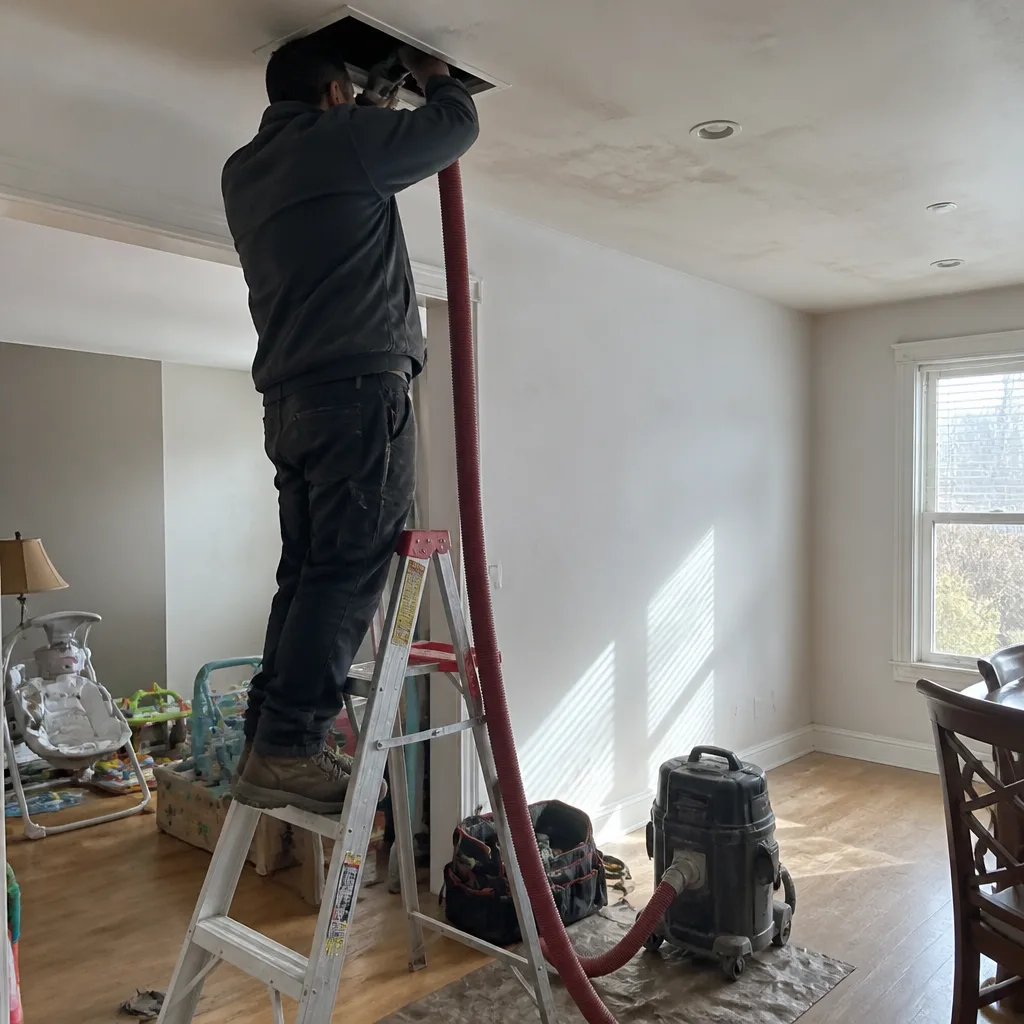
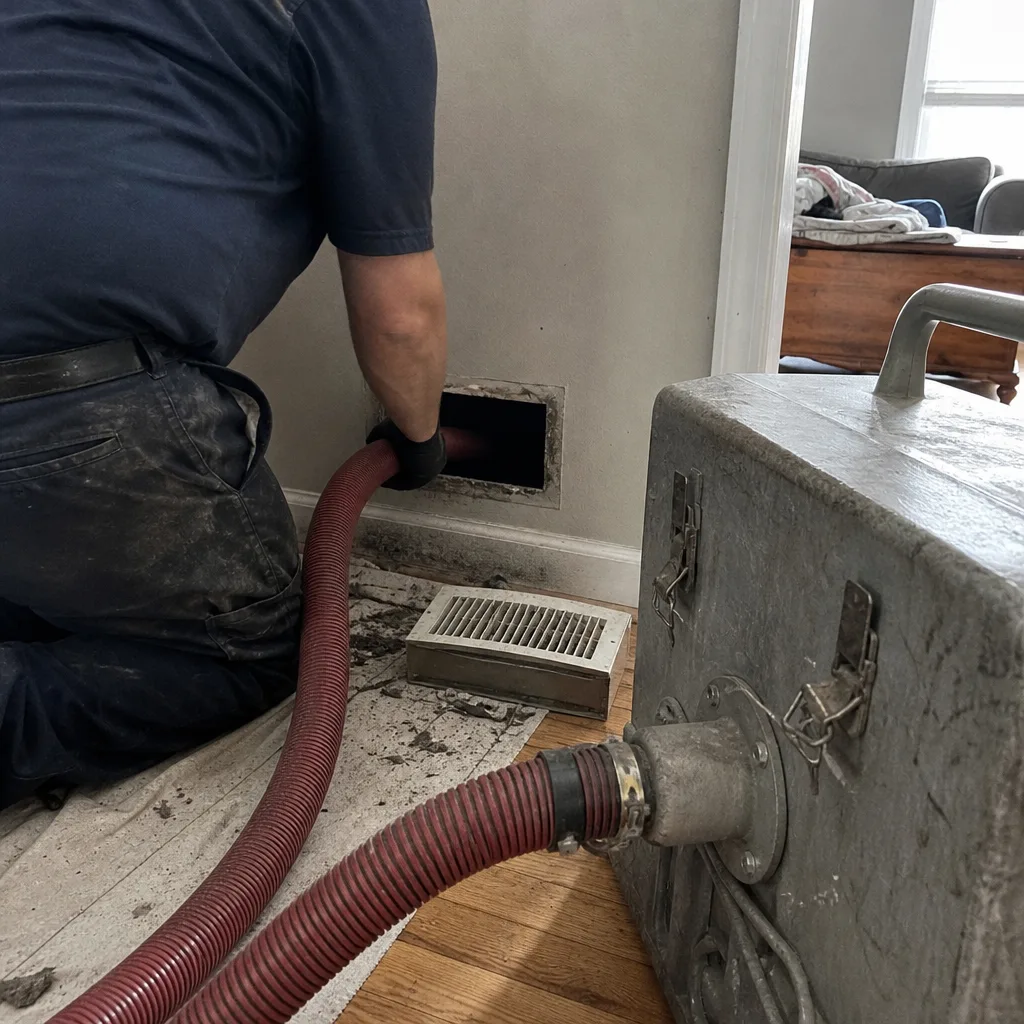
- Before and after photographs of the ducts themselves, not just the register faces. Ask for shots looking down the trunk and into at least two supply runs.
- Written notes on any condition found during the cleaning: tears in flex, separated joints, sagging runs, or signs of moisture.
- Confirmation of the equipment used. Ours is Rotobrush and Nikro, and equipment grade matters for interpreting what got removed. Ask what was used so you understand what was actually possible on that visit.
- The date and any treatment or repair performed.
- Your own notes on filter type and change interval going forward, so the next professional picks up where this one left off.
Take your register photographs from your own checklist pass on the same day and file them together. In two years, when a room starts feeling stale or a family member’s allergies worsen, you’ll have a real baseline instead of a vague memory. If you haven’t had a cleaning yet, this is reason enough to schedule one; see what our air duct cleaning visit involves and what documentation comes with it.
A Seasonal Maintenance Calendar for Albany Homes
Rather than one annual visit and a vague sense that things are fine, it helps to think in four checkpoints across the year. This is a homeowner checklist, not a service schedule: nothing here requires a professional unless you spot something.
Spring
Airflow test with the fan-only setting. Walk all registers and returns. Check the filter every three to four weeks while pollen is heavy. Note any register that’s accumulating dust faster than the others.
Summer
Repeat the airflow test and compare to spring. This is the season for dryer vent attention because the appliance is running often and lint accumulation is fastest. Dryer vent cleaning isn’t duct cleaning, but it belongs on the same list because the risk profile is different. Lint is a fire risk, and a dryer vent cleaning check takes ten minutes and is worth doing in the same pass as the register walk.
Fall
Before you turn the heat on, do a final airflow test while the system is off, then a filter check. Note any new whistle or rattle after startup. This is also the right time to schedule a professional cleaning if it’s overdue, because scheduling before heating season means your system goes into its hardest working months clean.
Winter
Monthly filter checks. A register that suddenly runs weak during a cold snap is worth an immediate call, since a blocked or separated duct in heating season is throwing heat into an attic or wall cavity.
If you want the broader context on how this work is typically scoped and scheduled across Albany, the local service page lays it out. The calendar above is yours to run on your own, though. It’s designed to be self-serve.
When a Check Reveals Something Bigger
Some findings are homeowner-cleanable. Others aren’t, and it’s worth being honest about the line. Anything that requires reaching past the register opening, working inside a wall or ceiling cavity, or physically repairing the duct itself needs professional equipment and a technician’s judgment.
Here’s the practical split:
- Within your control: Register faces, visible interior surfaces at the opening, filter replacement, airflow observations, and photo documentation. That’s it.
- Professional territory: Dark buildup deeper into the run, fuzzy or discolored growth, visible tears in flex duct, disconnected joints, crushed or sagging sections, whistling that doesn’t resolve with a louver adjustment, and any suspicion of moisture inside the system.
The reason for the split isn’t gatekeeping. Flexible duct that tears while you’re poking at it is worse than duct you didn’t touch. Joints taped with mastic need proper re-sealing, not more tape from a hardware store. And confirmed damage is where most duct cleaners stop. We don’t just clean; we repair, which means a job that surfaces a real duct issue doesn’t turn into a second contractor hunt. Call (888) 861-7237 and we’ll look at it. We answer 24/7. Fast dispatch from 7am to 7pm, Sunday through Friday.
Why Equipment Grade Matters More Than Price
Equipment is the thing to ask about when you’re deciding who does a professional cleaning. A low quote with a shop vac is a different job than a quote with a professional-grade system, and the difference shows in what’s actually removed versus what’s just loosened and redeposited.
We run Rotobrush and Nikro systems, the same equipment used on commercial and industrial work, and Abatement Technologies equipment for containment and HEPA-level air handling. That matters most in homes with serious air quality concerns, where stirring up dust during cleaning defeats the purpose. Because we also repair duct systems in-house, a visit that finds damaged flex or a separated joint can address it without a callback. And our work sits comfortably alongside whole-home air quality setups built on Honeywell and Aprilaire equipment, so a cleaning doesn’t create a compatibility problem with the system you already have. For some Albany homes, cleaning is the whole job. For others, the first visit reveals more, and that’s the moment the equipment list and the repair capability actually matter.
Common Mistakes to Avoid
- Trusting the filter as a status report. A clean filter tells you the filter is clean. It says nothing about the trunk line, the joints, or the interior of the supply runs behind finished walls.
- Ignoring a room that’s fallen behind. In Albany homes with ducts in unconditioned attic or crawl space, a seasonal drop in airflow to one room often traces to a sagging or separated run, and the fix gets more expensive the longer it runs.
- Pushing a shop vac into the duct opening. Consumer vacuums can tear flex duct and won’t contain the dust they loosen. If you can see the damage, that’s a call, not a project.
- Skipping documentation after a cleaning. Without before and after photos of your own ducts, there’s no way to benchmark future condition or tell whether a follow-up cleaning is warranted.
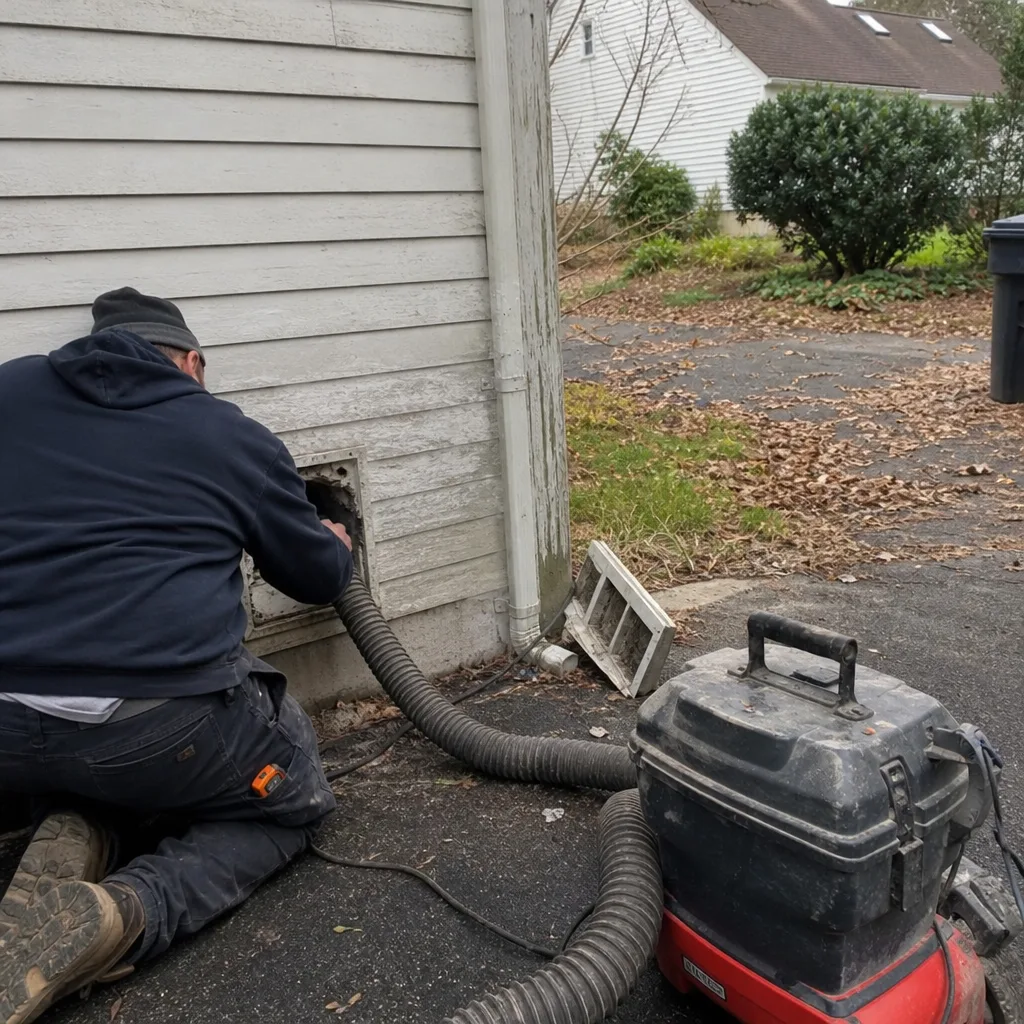
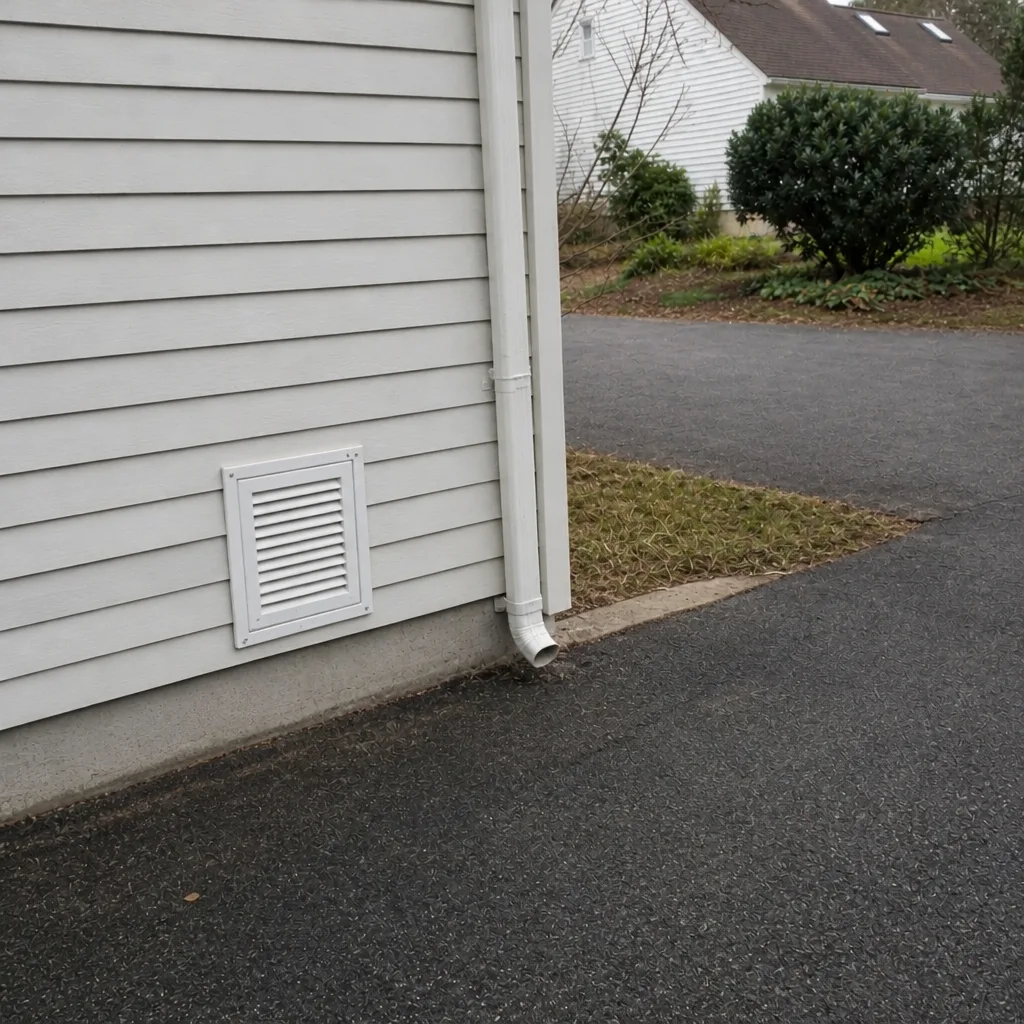
- Leaving the dryer vent off the checklist. It’s a separate system from the ducts, but it’s the leading cause of household dryer fires and it’s often neglected for years. Add it to the summer pass.
- Upgrading the filter without checking specs. The densest filter isn’t the right filter for every system, and throwing one into a blower that wasn’t designed for it can make the airflow problems you’re tracking worse.
- Waiting for a smell to call. Most duct conditions don’t announce themselves with an odor. Airflow and register observations catch them earlier, and earlier is cheaper.
See the difference
 Before
 After
 Before
 After
 Before
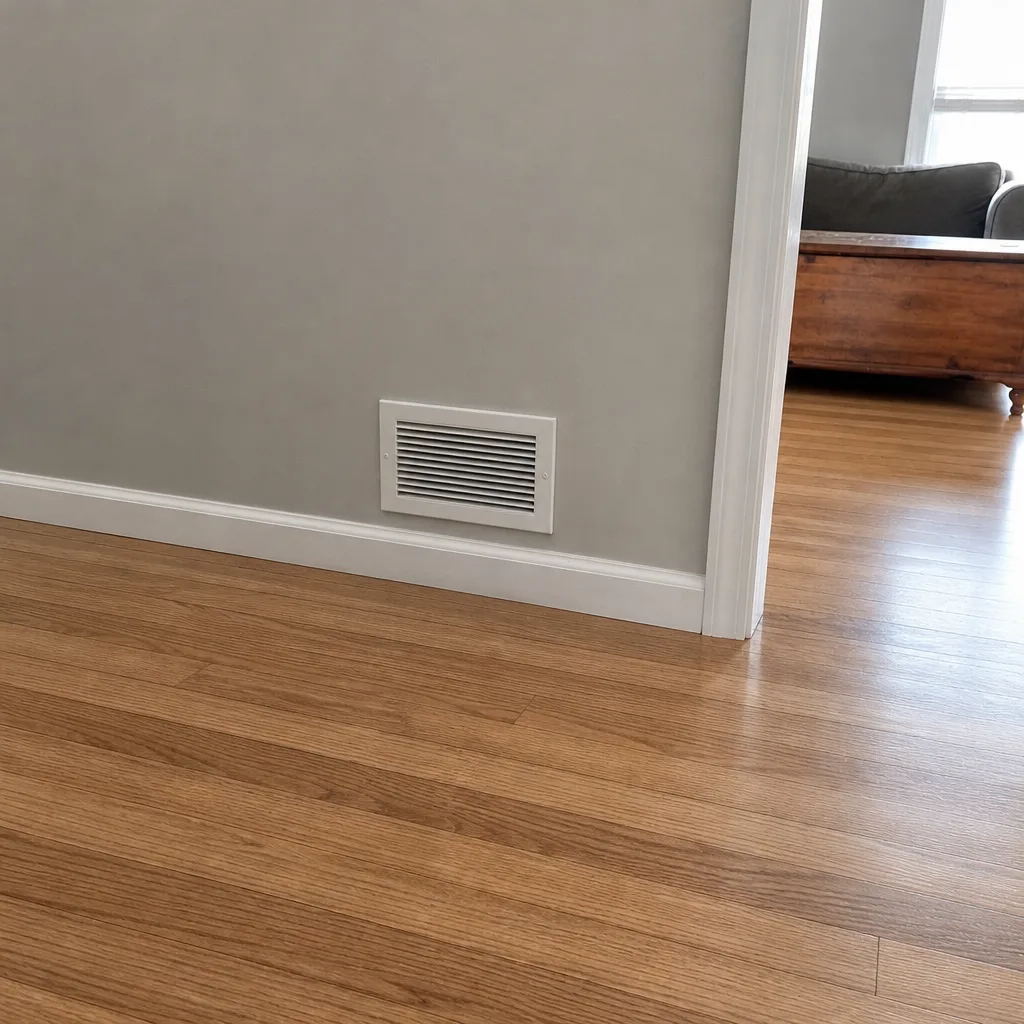 After
When to Call a Professional
Call when a register inspection shows heavy buildup deeper than the opening, when a room’s airflow drops between seasons without any change to the registers, when you see or suspect a tear in flex duct, or when the interior of a duct shows signs of moisture or discolored growth. Call after a home purchase if there’s no documentation of a prior cleaning, and call before heating season if your last cleaning is more than a few years back. Duct Cleaning Albany offers free estimates in Albany, and the price is set per job by the written estimate, so there’s no surprise invoice once work begins. Call (888) 861-7237. We answer 24/7. Fast dispatch from 7am to 7pm, Sunday through Friday.
Frequently Asked Questions
Most Albany homes do well with a professional cleaning every few years, and the gap widens or narrows based on what your own quarterly checks show. Homes near heavy tree cover, homes with pets, and homes with allergy-sensitive occupants often benefit from more regular attention. Your register notes and airflow observations tell you more than a fixed calendar does. Call (888) 861-7237 for a free estimate on where your system actually stands.
Yes, and most of it is designed for exactly that. Registers, grilles, filters, airflow observations, and photography are all homeowner tasks. The checklist exists so you can make a knowledgeable call rather than guess. The only thing off-limits is reaching into ductwork or repairing what you find.
Pricing depends on the size of the system, the number of supplies and returns, and whether repair is needed. Rather than quote a coupon figure that grows once a technician is on site, we set one flat price per system based on a written estimate agreed before work starts. That estimate is free. Call (888) 861-7237.
Equipment is usually the reason. A company using consumer-grade vacuums isn’t performing the same job as one running Rotobrush, Nikro, or Abatement Technologies systems, and the price gap reflects that. Ask what equipment will be used on your home before you compare quotes. It answers the question faster than the price does.
Ask for before and after photographs of your own ducts, not just the register faces. That’s the standard we work to, and it’s the only way to verify what changed. Keep the photos. They become the baseline for every future inspection.
Yes, and it’s a separate job from air duct cleaning. Dryer lint buildup is the leading cause of household dryer fires, and it’s easy to check during your summer pass because the appliance is running often. Add it to the same schedule rather than treating it as an afterthought. Call (888) 861-7237 to schedule both together.
The Bottom Line
The filter you change isn’t a maintenance system; it’s one part of one. A real checklist covers registers, grilles, airflow balance, filter timing tuned to Albany’s pollen and heating seasons, and documentation after every professional visit. Run the airflow test seasonally, walk the registers quarterly, and keep your own photos. When a check turns up something deeper than the register opening, that’s not a failure of your checklist. That’s the checklist doing its job. Call (888) 861-7237 for a free estimate. We answer 24/7. Fast dispatch from 7am to 7pm, Sunday through Friday, and if you’re starting from scratch, duct cleaning in Albany outlines where we begin.
Written by the team at Duct Cleaning Albany.