
Last updated November 16, 2026
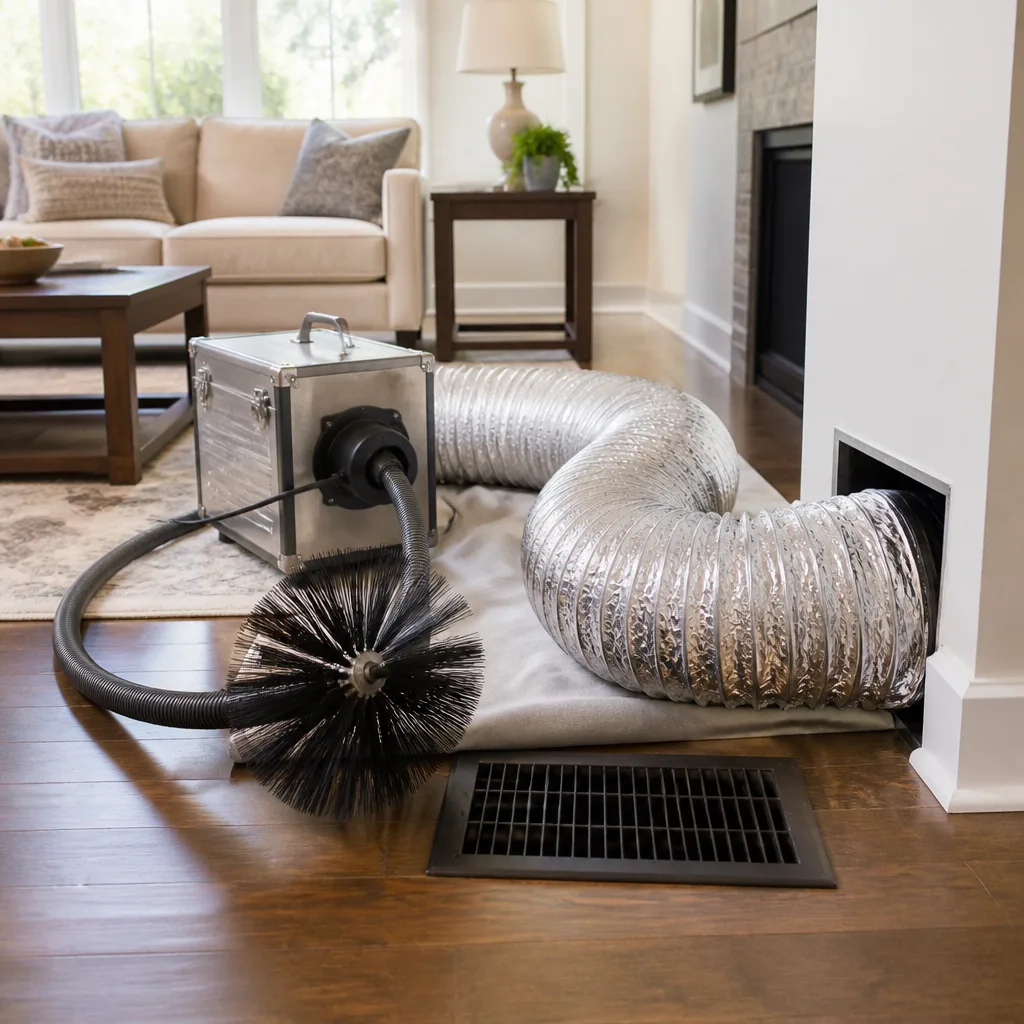 Whole-home duct cleaning
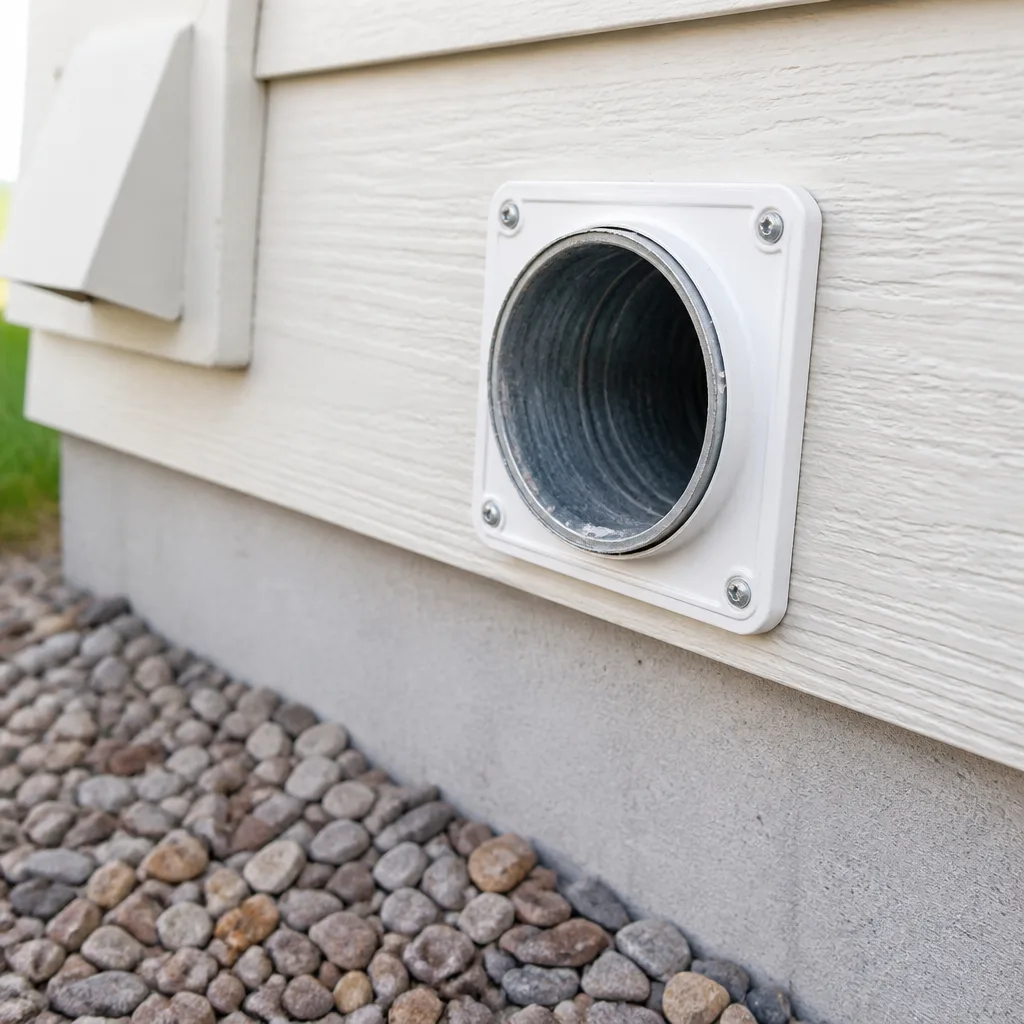 Dryer vent cleaning
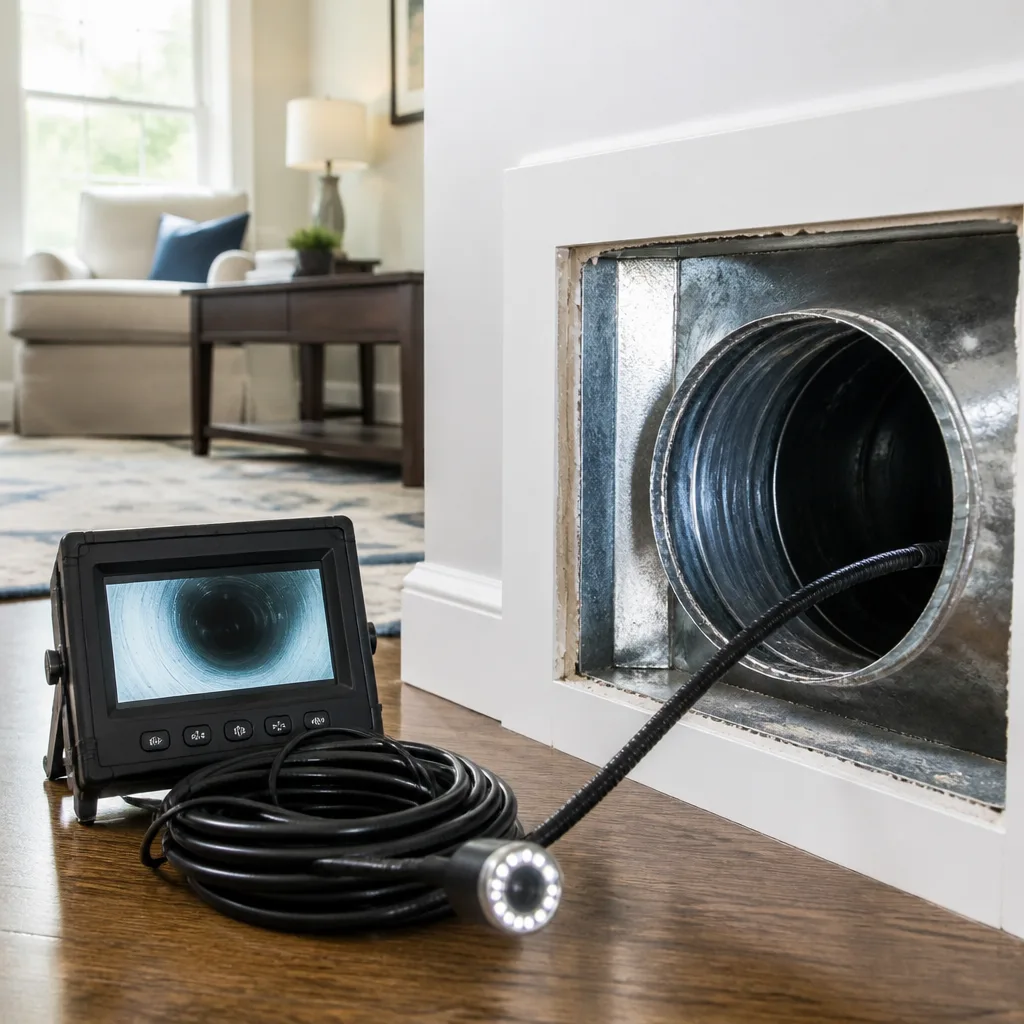 Camera inspection
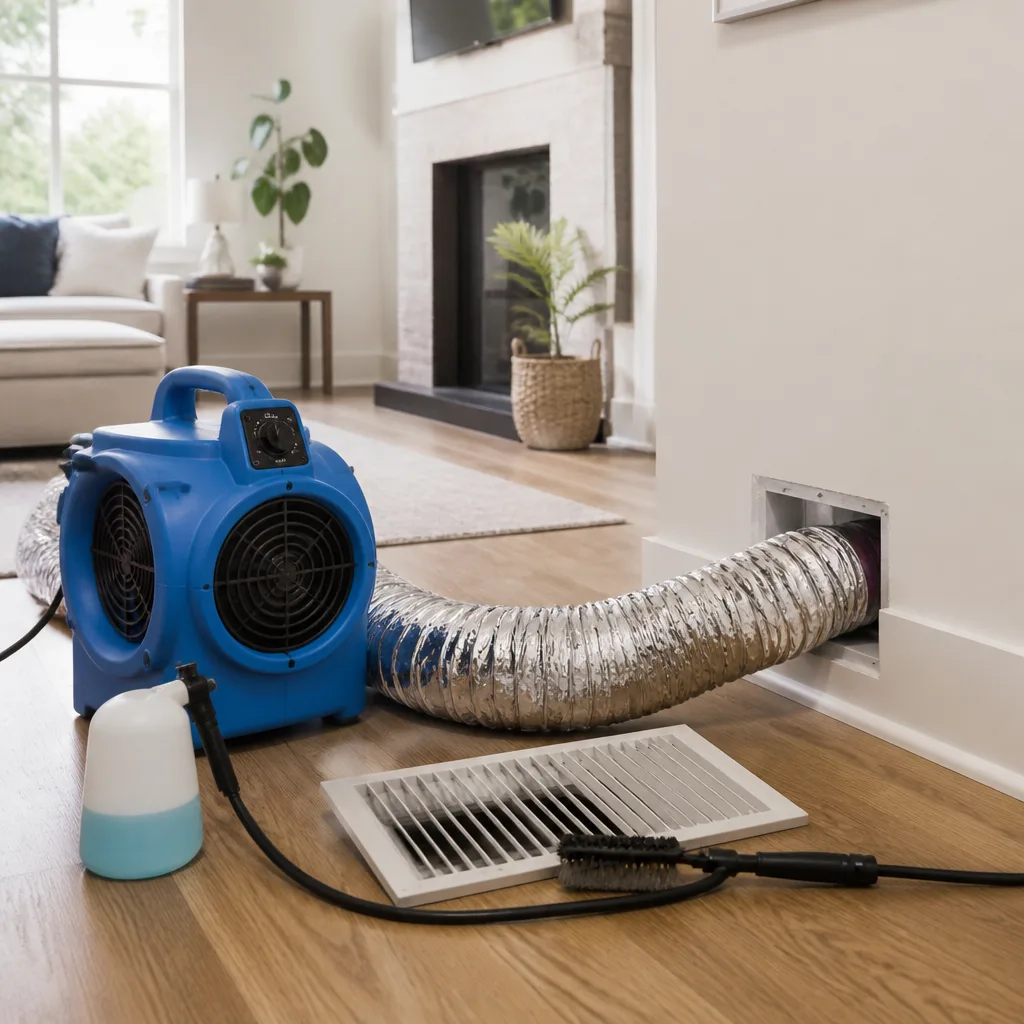 Sanitizing & deodorizing
Whole-system duct and dryer vent check with before-and-after photos - you see exactly what came out of your vents
That "$99 whole-house special" is a bait ad - the real number appears once they are in your hallway, or the "clean" is a shop-vac at the register. We photograph the inside of your ducts before and after instead.
Air Duct Cleaning Emergency Preparedness Guide for Albany Homes
After a basement flood in Albany, most homeowners do the right thing with the water: they run the wet vac, pull the wet boxes, point fans at the concrete and watch the sump pump. Then they stop. What gets missed is the return-air side of the system, which spent those wet days pulling humid, musty air through the ducts and into every room in the house. That’s usually where the mold problem actually begins, and it begins quietly, weeks after the floor is dry. This guide covers the emergencies Albany homes actually face (flooding, chimney smoke, rodents, storm infiltration) and the specific response each one needs.
Quick Answer
After a flood, fire, pest infestation or major storm, have your duct system inspected before you start running the heat or AC again. Contamination that sits in the ducts for weeks is harder and more expensive to remove than contamination addressed within the first few days. For biological growth after water intrusion, the window that matters is roughly the first 24 to 48 hours, so schedule an inspection as soon as the standing water is gone. If you’re not sure whether your system was affected, call Duct Cleaning Albany at (888) 861-7237. The estimate is free, and we answer 24/7.
Styles & brands we work with
- Whole-home duct cleaning
- Dryer vent cleaning
- Camera inspection
- Sanitizing & deodorizing
Table of Contents
- Post-Flood: Assessing Whether Your Duct System Was Compromised
- Smoke and Fire Events: When There’s No Visible Damage
- Rodent and Pest Infiltration: Cleaning Before Sealing
- Storm Debris and Construction Dust
- What Insurers Require for a Duct Cleaning Claim
- Building an Emergency Duct Kit Before Anything Happens
- Common Mistakes to Avoid
- Frequently Asked Questions
Post-Flood: Assessing Whether Your Duct System Was Compromised
Albany’s older housing stock is a big part of the risk here. Homes in neighborhoods like Pine Hills, the Delaware Avenue corridor, and the older blocks around Washington Park often have original ductwork running through unconditioned basement space, sometimes with return-air chases built low to the floor. When a basement takes on water after a heavy rain event or a frozen pipe thaw, those low returns are the first thing to get wet. A return grille sitting two feet off the basement floor is a wet, dark cavity with a constant trickle of air moving through it. That is almost a textbook environment for biological growth.
The key question is whether the system was actually compromised or just near a wet area. Here’s how to think about the assessment, without crawling into a chase you’re not trained to enter:
- Check the water line on the equipment. Look for a visible high-water mark on the furnace, air handler, and any ductwork within reach. If the water reached the equipment or the return plenums, the system should be professionally evaluated before it’s run.
- Smell the nearest returns. A one-time musty smell that fades is different from a persistent, earthy odor. Persistent odor from the return grilles usually means the ducts stayed wet.
- Look at the grilles and registers. Discoloration, water spotting, or visible dark patches on the inside of a return grille point to moisture that was drawn through the duct.
- Ask how long the system ran while wet. If the HVAC equipment ran during or after the flood, it pulled humid air through the entire duct network. If the system was off and stayed off, damage may be limited to the return side.
- Get an inspection before the first heat cycle of the season. Turning the system on blows whatever settled into the ducts into the rooms, which is why the inspection should come first.
Professional air duct cleaning after a water event is not the same as a routine cleaning. It means inspecting the system, pulling contaminated debris with HEPA-filtered equipment, and in our case, using Abatement Technologies equipment for containment so that disturbed material doesn’t settle back into the rooms. If the ductwork itself was damaged, we can repair it without sending you to a second contractor, which matters a lot when you’re already coordinating a water damage claim.
The timeline that matters: biological growth needs moisture, organic dust, and a few days. Address the wet return side within the first 24 to 48 hours after the water recedes if you want to keep remediation simple. Waiting until next month is how a moderate cleaning becomes a significant repair job.
Smoke and Fire Events: When There’s No Visible Damage
Albany has a lot of homes with chimneys, and a lot of homes with natural gas appliances. A small chimney fire, a kitchen fire that got put out fast, or a furnace malfunction that produced a puff of smoke can leave the visible surfaces clean while the duct system holds a fine, sticky layer of combustion residue. Combustion byproducts travel on the airstream. When the system runs during or right after an event, that residue deposits inside the ducts, and a fine smoky or chemical odor returns whenever the heat runs.
Here’s what to do after any combustion event in the structure, even a small one:
- Shut the HVAC system down until the ducts have been inspected. Running it spreads the residue through the house.
- Ventilate with windows and box fans for the immediate few hours.
- Document everything before you clean anything. Photos of the affected area, and the incident date, are part of a file you may need for insurance.
- Schedule a duct inspection with a technician who can look inside the system, not just at the grilles. Residue is not always visible from the register.
- Replace your furnace filter after the cleaning, not before. Putting a fresh filter into a smoke-contaminated air handler just loads it with residue.
Homes with whole-home air quality equipment need a little more care. If you have a Duct Cleaning Albany system with Honeywell or Aprilaire components, we work alongside those systems rather than around them. That means checking whether filtration media needs replacement and making sure the cleaning doesn’t push residue into an air quality component that should stay sealed.
One safety note: if the fire event involved gas piping or the electrical panel, don’t reset breakers or relight a pilot until a qualified professional has checked the system. That’s a different job from duct cleaning, but it’s the first thing that should happen.
Rodent and Pest Infiltration: Cleaning Before Sealing
Albany gets cold, and animals know it. Squirrels, mice, and the occasional raccoon find their way into attic and crawl-space duct runs through gaps at the foundation, soffit vents, or where a duct penetrates an exterior wall. Once inside a flexible duct or a return chase, they leave droppings, urine, nesting material, and hair. The smell travels to every room the system serves.
The instinct most homeowners have is to seal the entry point and move on. That order is backwards, and it’s the most common mistake in this whole category. Sealing without cleaning first closes the contamination inside the ducts, keeps it moist, and gives any remaining biological material an ideal environment. The correct sequence is: remove the contamination, then repair the duct, then seal the building penetration.
What a professional extraction involves:
- Source removal, not just fogging. Droppings and nesting material have to be physically pulled out. A HEPA-filtered vacuum system with a rotating brush, like the Rotobrush and Nikro systems we use, allows the technician to reach the walls of the duct rather than the center of it.
- Disinfection after removal. Once the physical material is gone, the duct interior can be treated. Disinfection on top of debris does very little.
- Duct repair where the animals damaged it. Rodents chew through flexible duct and insulation. That damage should be patched or replaced, which is part of our air duct cleaning and repair scope.
- Sealing the entry point last. A technician should confirm the ductwork is clean and sealed before the exterior gap gets closed.
If the infestation was in the duct system for a while, the problem often shows up in winter when the system is running constantly. Don’t wait. Odor doesn’t fade on its own; it cycles back through the house every time the heat comes on.
Storm Debris and Construction Dust
Albany gets the full range of weather: ice storms, wind-driven rain, the occasional late-season snow that drops faster than anyone expects. A storm that takes out part of a roof, tears off a soffit, or sends a branch through a vent opening turns a duct system into a sieve. Debris blown in through a broken vent, wet insulation, and fine grit from the storm find their way into the system. The same problem happens after home renovations: drywall dust, sawdust, and fine construction particles get pulled into the return-air side within hours of the first cut.
In both cases, the answer is the same and it’s counterintuitive: shut the system down before running it. Here’s the logic.
- Running the system distributes the debris across every duct branch instead of confining it to the area where it entered.
- Fine dust and grit get pulled into the blower motor, the evaporator coil, and the heat exchanger, where they act like a mild abrasive and reduce efficiency.
- Wet insulation and paper debris, once distributed, can start to grow biological growth in a humid summer system.
- A temporary shutdown, followed by a professional cleaning, is a much smaller cost than replacing a blower motor or a coil.
For construction dust, the guideline is to close off the returns in the work area (tape and plastic, temporary, with the system off) and schedule a professional cleaning after the renovation is complete. Don’t run the system hard and expect the filter to catch it all; standard furnace filters capture coarse particles, not the fine dust that settles in the ductwork.
If your storm event also knocked the power out for a few days, be aware that humid, still air inside a non-running duct system can produce condensation on cool surfaces. Turn the system on, yes, but schedule an inspection if the weather was hot and humid during the outage.
What Insurers Require for a Duct Cleaning Claim
Duct cleaning after a covered event, including a water loss, fire, or storm, is usually eligible for reimbursement, but only if you document the loss properly. The most common failure point is timing: homeowners clean the ducts, throw out the dirty filter and the debris, and then file a claim. By that point, the adjuster has no way to verify the condition. Building a file from day one takes ten minutes and changes the outcome.
Here’s what to assemble, and in what order:
- Date-stamped photos of the water line, storm damage, or combustion source. Take wide shots and close-ups. Photos of the affected return grilles matter more than photos of the room.
- A written description of what happened and when. A paragraph is enough. Include the start time, what you did first, and whether the HVAC system ran while the area was wet.
- Your HVAC filter change record. If you changed the filter before the event and had to replace it after, note both dates. That establishes the baseline.
- The professional’s written scope of work. Ask the technician to describe in writing what was found, what was removed, and what was repaired. A good invoice includes photographs of the system before and after, which we include on every job.
- A copy of the technician’s insurance and bonding information. Many insurers request it for the file.
- The paid invoice and payment record. Submit it with the claim rather than waiting to be asked.
Before the technician starts work, call your insurer and ask whether the loss requires pre-approval. Some policies do and some don’t, and that one call protects your reimbursement. Mention the loss date, not the date you called the duct cleaner, because the covered event is the flood or fire, not the remediation.
Building an Emergency Duct Kit Before Anything Happens
The best emergency response starts before the emergency. A small preparedness kit and a short list of phone numbers turn a chaotic week into a manageable one. This applies to Albany homes across the board, whether you’re in a newer build out toward Colonie or an older duplex near the South End.
- A folder (digital or paper) with your HVAC equipment model and serial numbers, filter sizes, and installer information. You’ll need these for an insurance claim.
- Two backup filters in your current size, sealed in their packaging. A flooded basement is no time to hunt for the right size.
- A roll of plastic sheeting and painter’s tape. Enough to close off return grilles in a work area or near a water-damaged wall.
- A phone list with your HVAC contractor, your insurer’s claims line, and Duct Cleaning Albany at (888) 861-7237. The last one is a free call and we answer 24/7.
- A small notebook for documentation. Write down the date, time, and what happened the moment it happens. Memory fades over a stressful week.
- A note about where your return-air grilles are located. If you don’t know which grilles are returns and which are supplies, walk the house now and label them.
Two of these matter more than the rest. The equipment information saves days of back-and-forth with an adjuster, and the return-air map lets you act in the first hour after a basement water event instead of puzzling over which grille to check first. The Albany climate makes this worth doing once. The payoff is a calmer response the next time something happens.
Common Mistakes to Avoid
- Running the HVAC system while a wet area is still open. This pulls humid, contaminated air through the entire duct network. Turn the system off first, then assess.
- Sealing a rodent entry point before the ducts are cleaned. This traps the contamination inside and lets biological growth continue in a warm, moist environment. Remove the material first, then seal.
- Waiting weeks for a “convenient” appointment after a flood. The window that matters for post-flood contamination is roughly the first 24 to 48 hours. Called early, the scope stays small.
- Cleaning the ducts after a fire without changing the furnace filter afterward. A fresh filter into a smoky system just loads it with residue. Replace it after the cleaning, not before.
- Skipping the insurance pre-approval call. A five-minute call to your insurer before the work starts often determines whether the claim gets paid.
- Hiring a cleaner with consumer-grade equipment. A shop vac and a hose cannot pull contamination out of the far reaches of the duct system. Ask what equipment will be used, and expect a real answer.
- Pulling the grilles off and vacuuming by hand. This disturbs contamination into the air and rarely reaches the duct walls. The proper equipment exists for a reason.
- Forgetting the dryer vent cleaning as a safety item. After a flood or renovation, the dryer vent is often overlooked. Lint buildup in the vent is a leading cause of household dryer fires, and it’s a fire-safety item, not a housekeeping detail.
See the difference
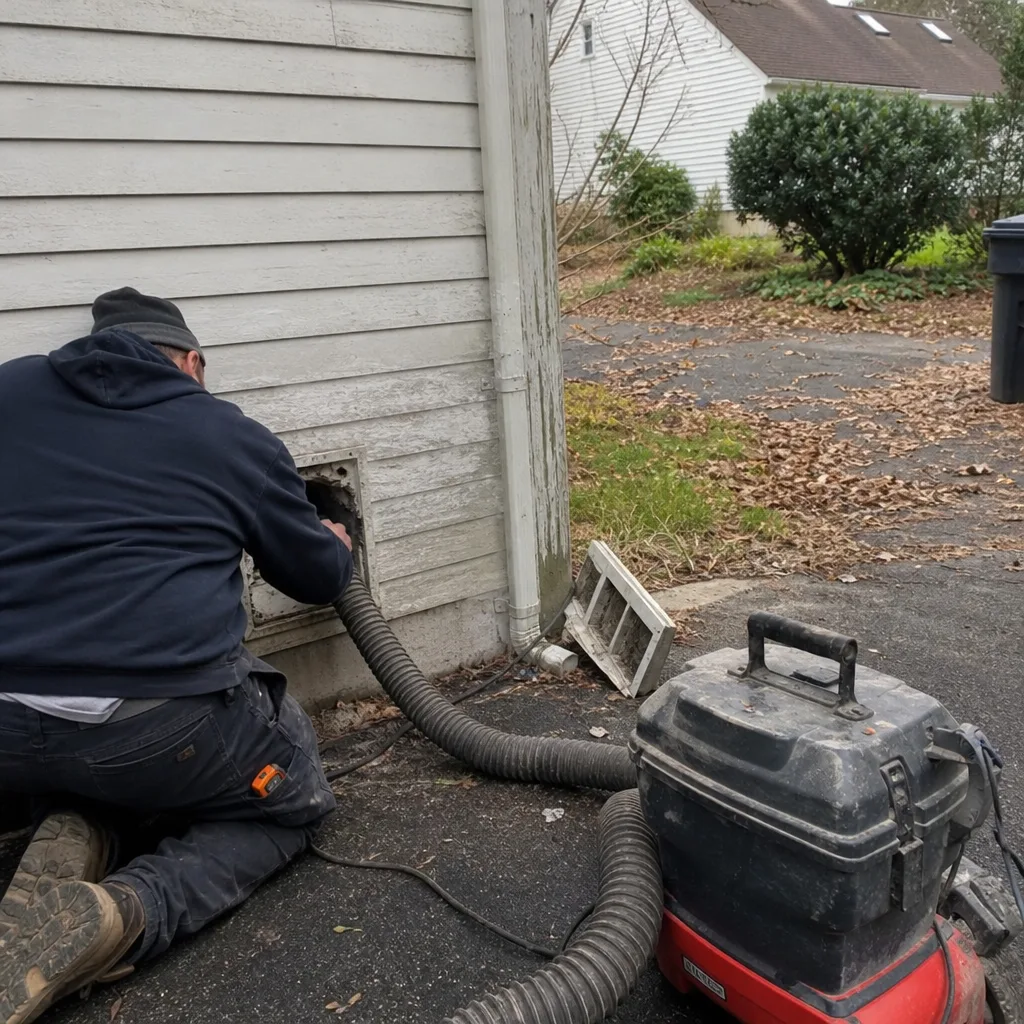 Before
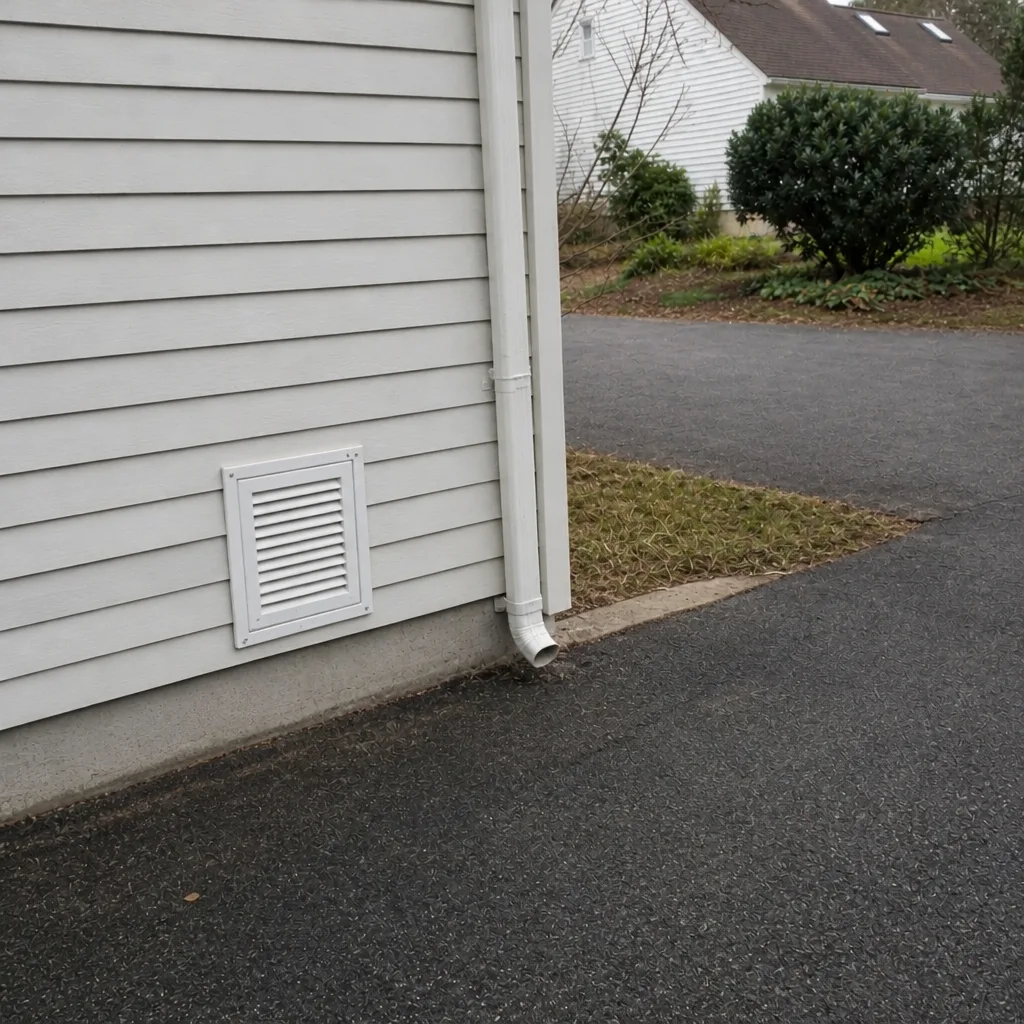 After
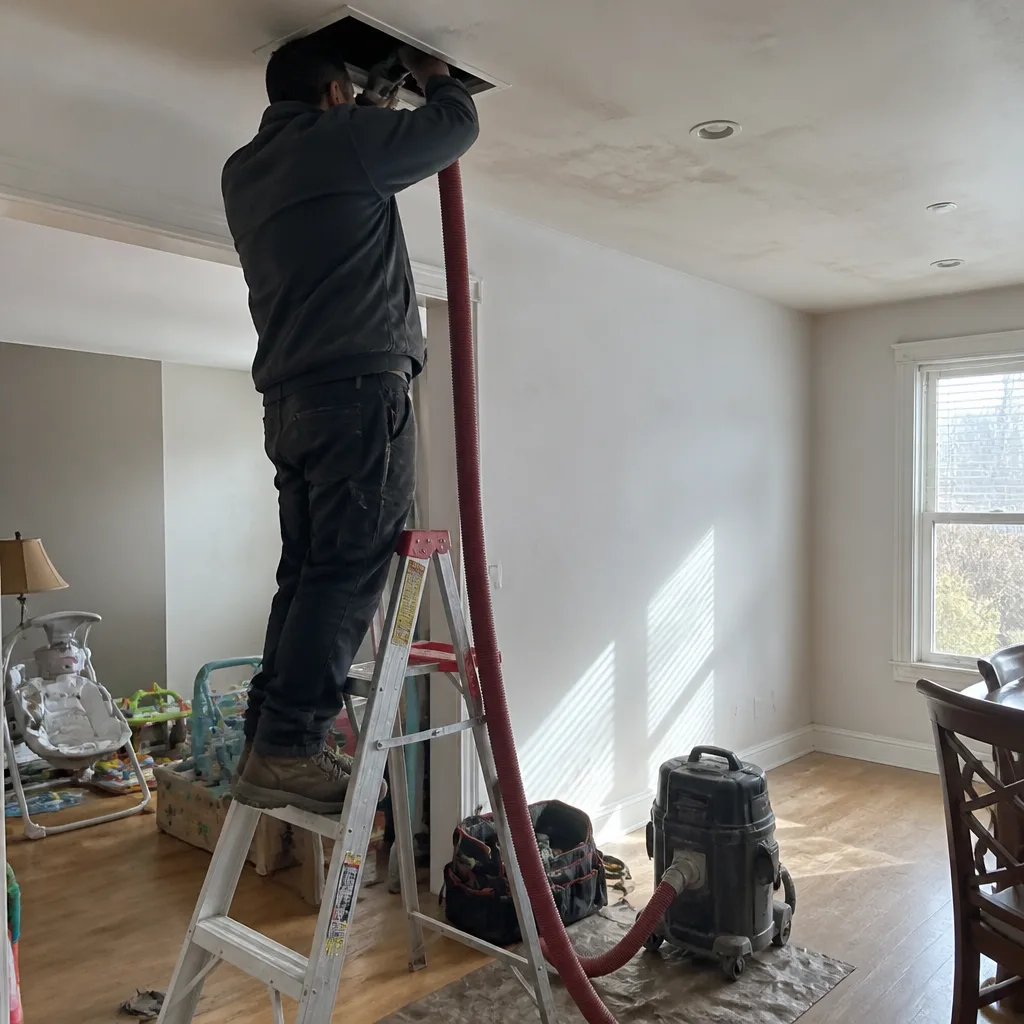 Before
 After
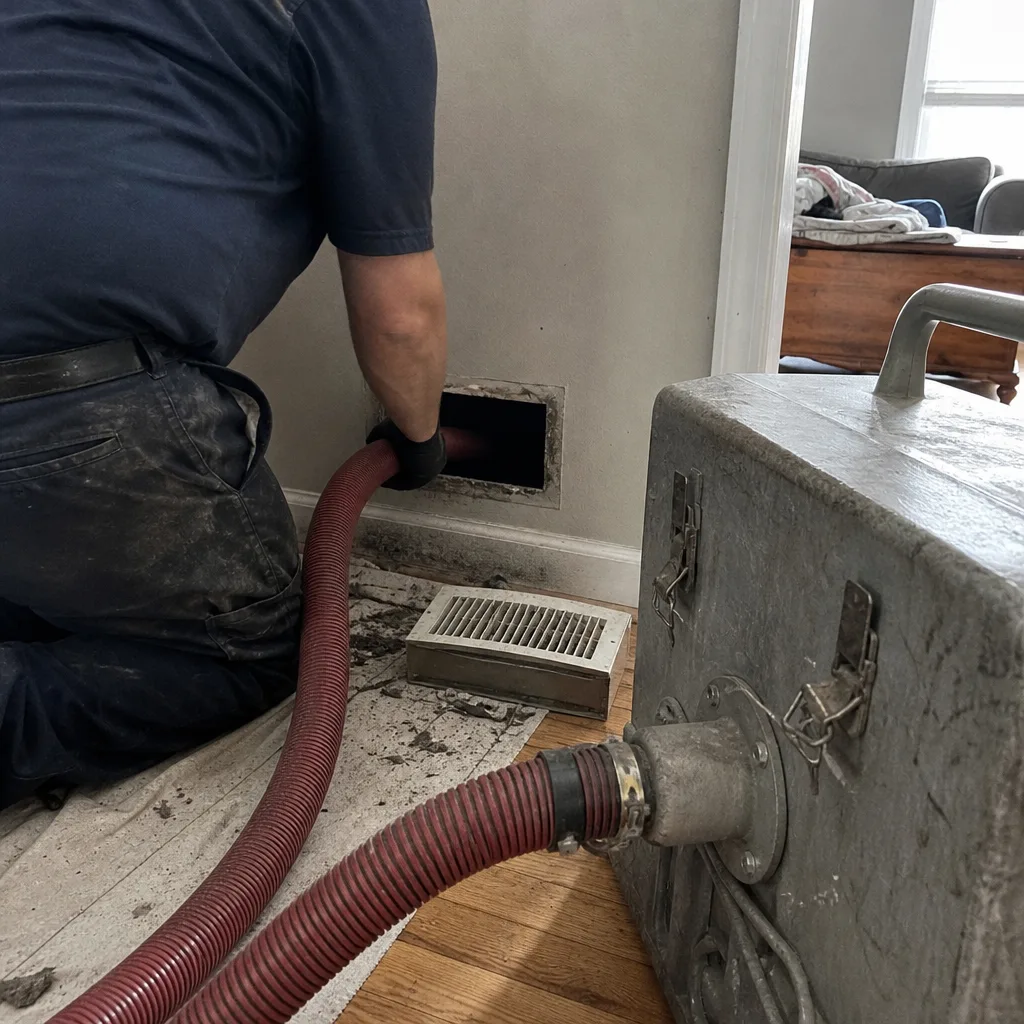 Before
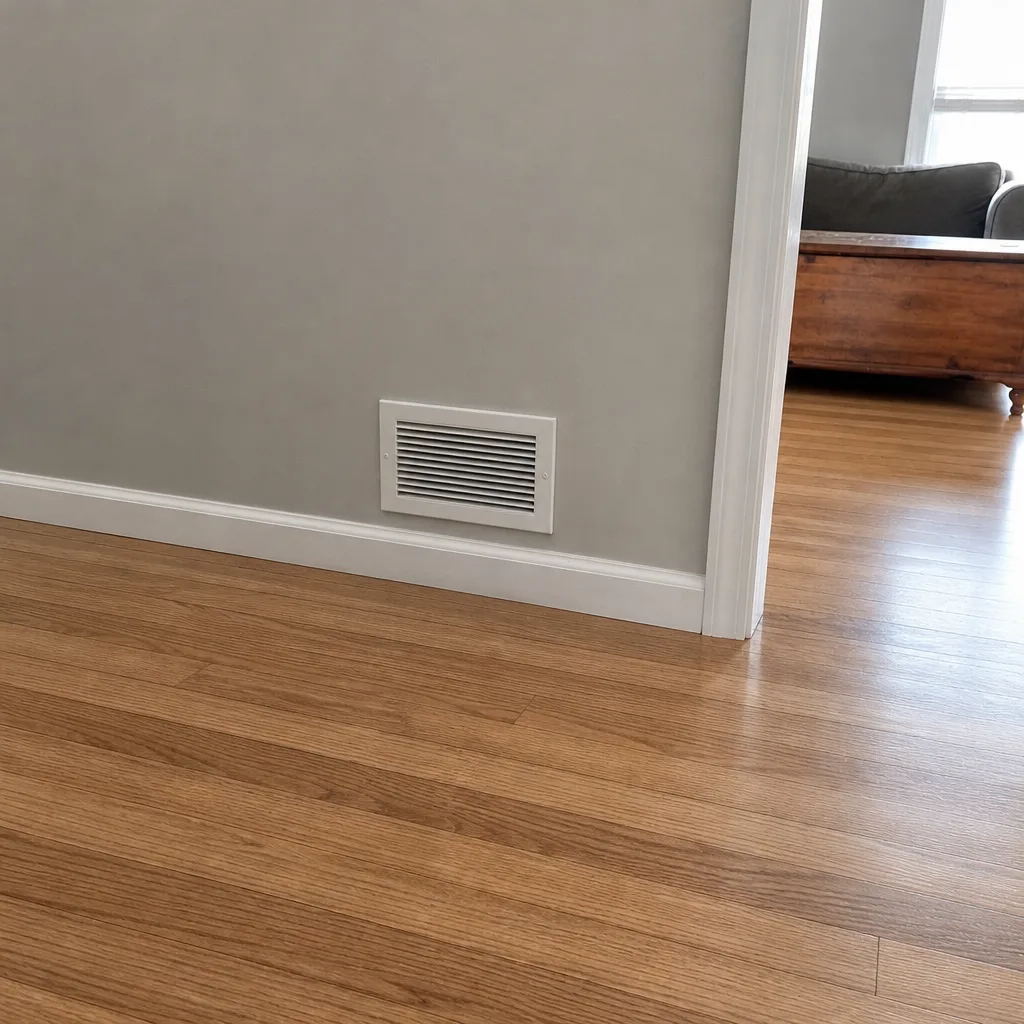 After
When to Call a Professional
Call a professional if the water level in your basement reached the base of your furnace or return-air grilles, if your system ran during any part of a flooding event, or if you’ve noticed a persistent musty or smoky smell from the vents. Call if a chimney or kitchen fire happened any time in the last few months, even a small one. Call if you’ve seen signs of rodents in the house or found droppings in the attic or crawl space. Call if a storm opened your roof or a wall to the outside. In any of those situations, an inspection is a low-cost step that prevents a much bigger remediation job later.
Duct Cleaning Albany offers free estimates in Albany. Call (888) 861-7237. We answer 24/7. Fast dispatch from 7am to 7pm, Sunday through Friday.
Frequently Asked Questions
You have roughly 24 to 48 hours to start the process before biological growth becomes a serious risk. That’s the window for the inspection and the start of the cleaning; the whole job usually takes longer. If the water is still present, get it out first, then call (888) 861-7237 for a quote.
Yes. Combustion residue travels on the airstream and settles in the ducts even when no flame damage is visible. The smoky or chemical smell returning whenever the heat runs is the signal. Call (888) 861-7237 for a professional look inside the system.
Not safely. Sealing without removing the droppings, nesting material, and hair traps the contamination inside and lets the problem grow. The order is remove, repair, seal. Call for an inspection and a quote; estimates are free.
Often yes for a water loss, fire, or storm event, but the claim depends on documenting the condition before the work is done. Photograph the affected area, note the date, get an insurer pre-approval if your policy requires it, and keep the written scope of work from the technician. Call (888) 861-7237 and we’ll document the job thoroughly for your file.
A HEPA-filtered truck- or portable-mounted vacuum system and a mechanical brush system, not a shop vac. We bring professional Rotobrush and Nikro systems, along with Abatement Technologies equipment for containment, on every job. If a contractor can’t tell you what system they use, that’s worth noting before you schedule.
No. Running the system distributes debris through every duct branch and pulls grit into the blower, coil, and heat exchanger. Keep the system off, close the affected grilles with tape and plastic, and schedule a professional cleaning after the work is done. Call (888) 861-7237 for a free quote.
The Bottom Line
Emergencies in Albany homes tend to involve water, smoke, animals, or storm debris, and in every case the duct system is the part of the house people forget to check. The response protocol is consistent: shut the system down, document the loss with photos and dates, call your insurer if a policy applies, and get a professional inspection before the system runs again. The first 24 to 48 hours matter for post-flood contamination, and the same early action keeps a rodent problem from becoming a duct repair. Ask what equipment a contractor brings, because the difference between consumer-grade and professional-grade shows up in the result. And don’t skip the dryer vent cleaning while you’re at it; that one is fire safety, not housekeeping.
Call Duct Cleaning Albany at (888) 861-7237 for a free estimate. We answer 24/7. Fast dispatch from 7am to 7pm, Sunday through Friday. Our technicians have up to 9 years of experience, and we’re licensed and insured. You’ll see before-and-after photos of your own duct system on every job, along with a written scope of work you can share with your insurer.
Written by the team at Duct Cleaning Albany.