
Last updated November 16, 2026
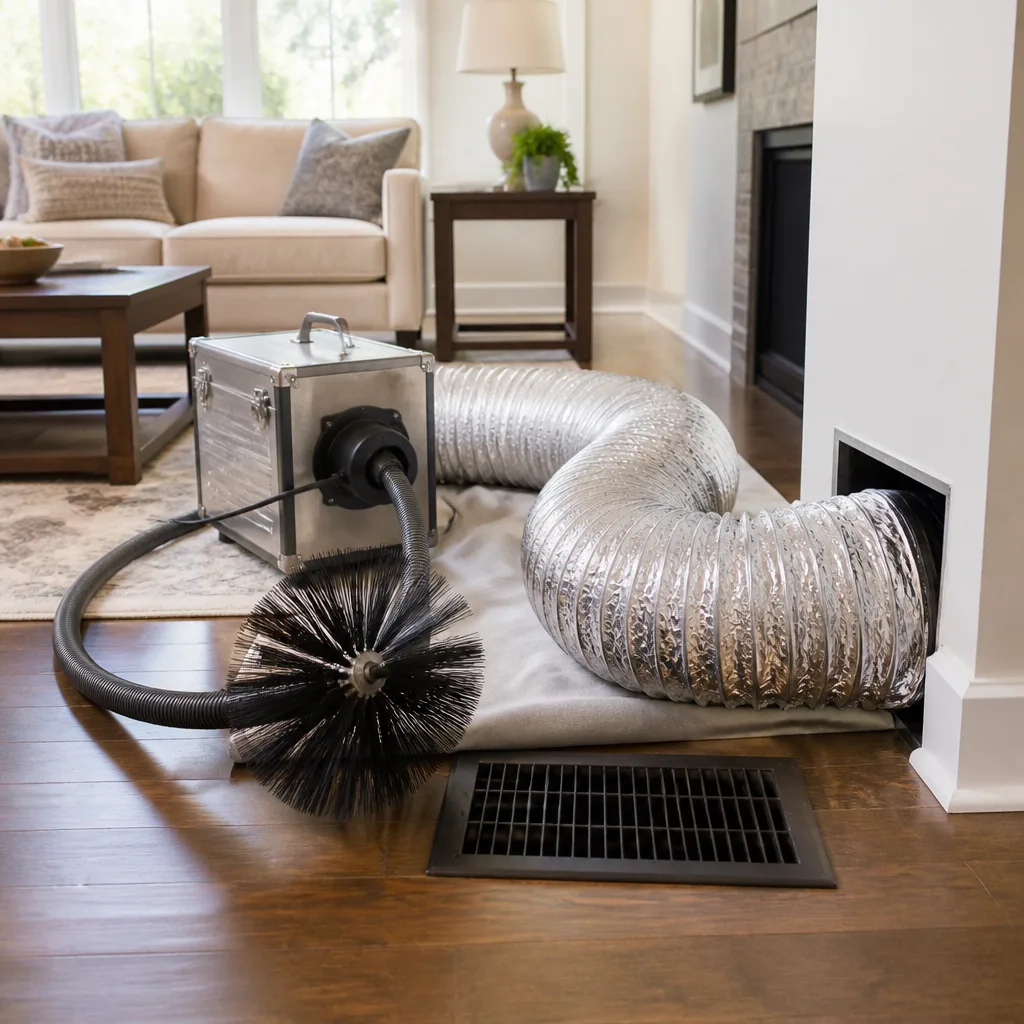 Whole-home duct cleaning
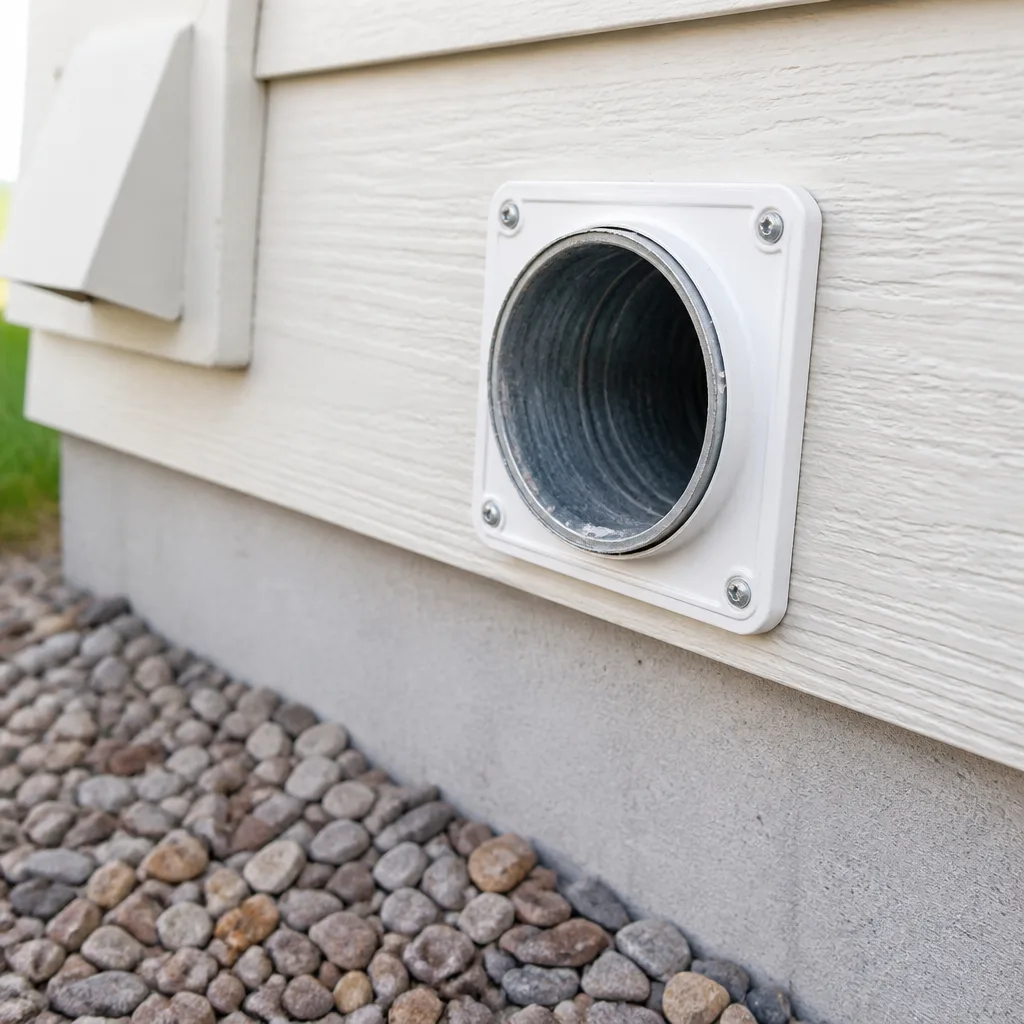 Dryer vent cleaning
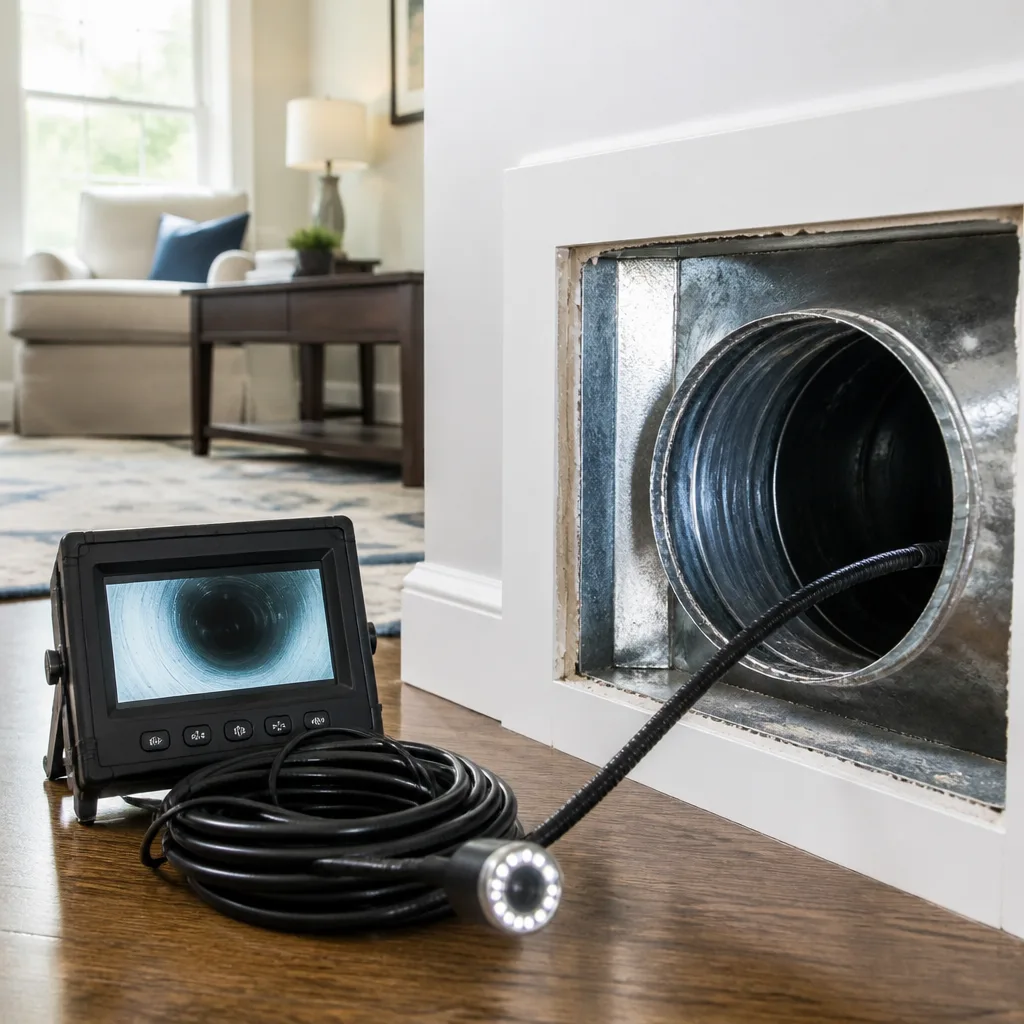 Camera inspection
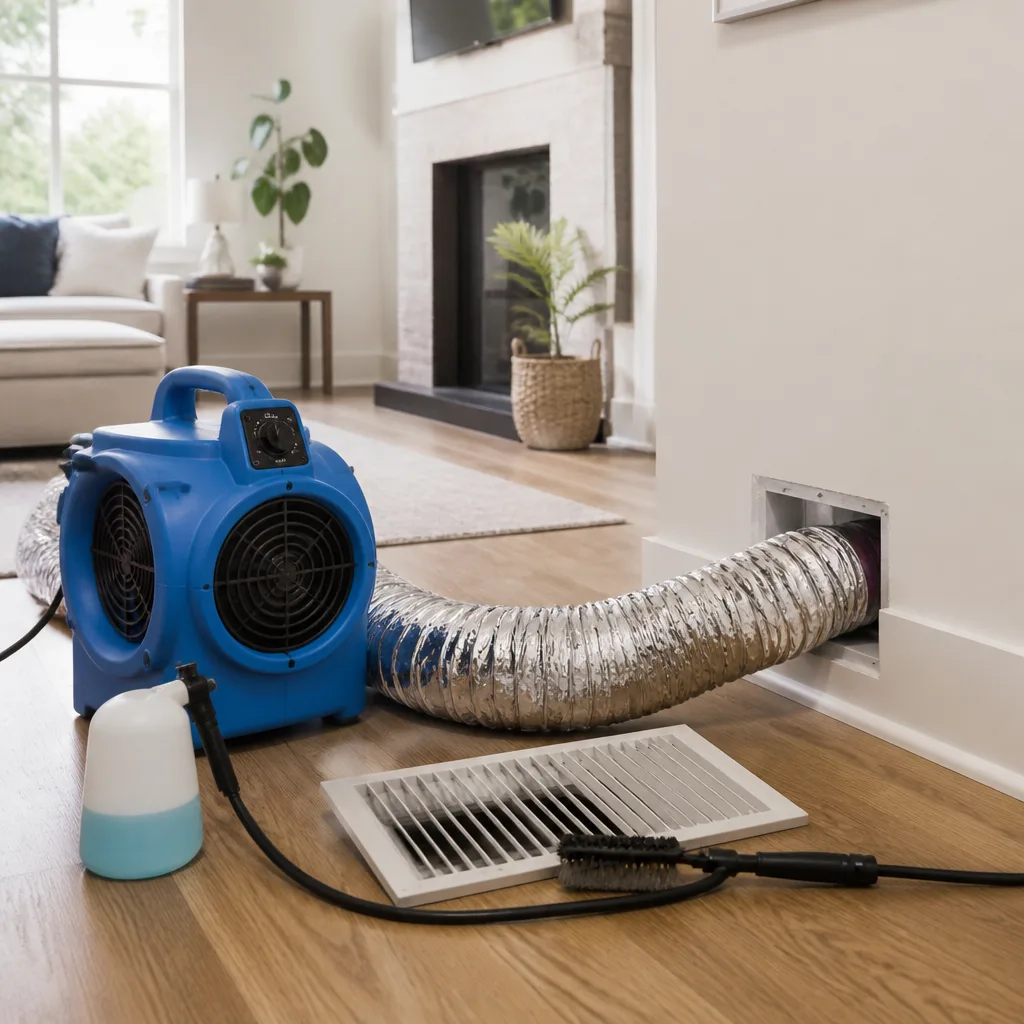 Sanitizing & deodorizing
Whole-system duct and dryer vent check with before-and-after photos - you see exactly what came out of your vents
That "$99 whole-house special" is a bait ad - the real number appears once they are in your hallway, or the "clean" is a shop-vac at the register. We photograph the inside of your ducts before and after instead.
Air Duct Cleaning Cost Breakdown: The Albany Homeowner’s Reference for 2026
The $99 duct cleaning special has a business model. It works like this: arrive with a shop vac, walk the homeowner through the system pointing out every dark spot as “contamination,” and leave having collected $400 for work that took an hour and never touched the supply runs. The low headline price isn’t a discount, it’s a door-opener. The only reliable defense is understanding what actually drives cost in a duct cleaning job, line by line, so you can read a quote and know what’s missing. This guide breaks down the real cost structure for Albany homeowners: square footage, run count, equipment type, access complexity, and the repair pricing that shows up when damage is found mid-job.
Quick Answer
A properly scoped air duct cleaning for a 1,500-2,500 square foot Albany home typically runs $350 to $700 in 2026, with full-system jobs involving heavy buildup, multiple zones, or difficult access pushing toward $900 to $1,200+. Add-on services like dryer vent cleaning generally add $100 to $175. Anything under $200 for a whole-home cleaning is almost always a teaser price that becomes a much larger invoice once the technician is inside.
Styles & brands we work with
- Whole-home duct cleaning
- Dryer vent cleaning
- Camera inspection
- Sanitizing & deodorizing
Table of Contents
- What Actually Drives the Cost of Duct Cleaning
- What a 2026 Albany Market Rate Looks Like
- Why Truck-Mounted and Professional Equipment Costs More (and Why That’s Fair)
- Scope: What a Proper Cleaning Includes vs. What Gets Cut
- Add-Ons Worth Paying For vs. Upsells to Skip
- Duct Repair Pricing When Damage Is Found
- Cost Factors Specific to Albany Homes
- How to Read a Duct Cleaning Quote
What Actually Drives the Cost of Duct Cleaning
Legitimate cost variation comes down to four things: square footage, the number of supply and return runs, how accessible the system is, and what equipment is being used. Those are the only inputs that should move a price. If a quote changes based on anything else, ask why.
Square footage is the starting point. A 1,200 square foot ranch with a single-zone system has far fewer runs than a 2,400 square foot colonial with two zones and a finished basement. More runs mean more time, more access points, and more hose work.
Supply and return run count matters more than total square footage in some homes. A 2,000 square foot house with twelve supply runs and three returns takes less time than a 1,800 square foot house with sixteen supply runs and four returns. Return trunks in particular are where heavy accumulation builds up, and they’re often the part a cheap cleaner skips entirely.
Access complexity is the wildcard. Flex duct in a tight attic, a trunk line buried behind finished drywall, or a furnace tucked into a closet all slow the job down. Access challenges are legitimate cost drivers because they require real labor, not upselling.
Equipment type is the one most homeowners don’t know to ask about. A shop vac and a rotating brush head against a professional rotary system with HEPA filtration and negative pressure are completely different jobs in both effort and result. We’ll get into that below.
- Square footage: baseline pricing tier
- Number of supply and return runs: the real labor driver
- Access: attics, closets, finished ceilings add time
- Equipment: consumer-grade vs. professional-grade changes scope and result
What a 2026 Albany Market Rate Looks Like
For a 1,500-2,500 square foot home in Albany, a properly scoped whole-system cleaning in 2026 typically lands in the $350 to $700 range. That assumes a single furnace, standard ranch, colonial, or cape layout, and reasonable access to the trunk and main runs. Homes with heavy buildup, multiple zones, or hard access often run $700 to $1,200, and full-system jobs that include repair work can exceed that comfortably.
Albany’s housing stock shapes these numbers. The city has a lot of older homes: pre-war colonials in neighborhoods like Pine Hills, cape cods and bungalows throughout the older blocks of the city, and post-war ranches in the outer residential areas. Older homes mean older ductwork, and ductwork that’s never been cleaned tends to be dirtier than ductwork that was serviced in the past decade.
What you should not see in an Albany quote is a per-vent price. Whole-system pricing is standard because duct cleaning is a system job, not a piecework job. A company that charges per vent has an incentive to overcount vents, or to justify skipping the ones that are harder to reach. One flat price per system, agreed before work starts, is the honest structure.
If you’re comparing quotes across the city, make sure each one covers the same scope. One quote may include the furnace blower housing, another may not. One may include the return trunks, another may charge extra. The air duct cleaning page lays out what a full-scope service covers for reference.
Why Truck-Mounted and Professional Equipment Costs More (and Why That’s Fair)
Professional duct cleaning setups use rotary brush systems with HEPA-filtered negative pressure – equipment like the Rotobrush and Nikro systems that commercial and industrial contractors use. That equipment costs more to buy, more to maintain, and more to operate than a shop vac. Those costs show up in your quote, and they’re legitimate when the work actually warrants them.
Here’s the honest comparison:
- Shop vac setup: no real containment, dust stirred up and partially left in the system, brushes that can’t reach past the first few feet of a run. Cheap. Doesn’t actually clean the system.
- Rotary brush with HEPA negative pressure (professional grade): the brush reaches through the length of each run, the negative-pressure machine keeps disturbed debris from blowing back into the house, and filtration captures what’s pulled out.
We run Rotobrush and Nikro systems on every cleaning job, and we carry Abatement Technologies equipment for containment and HEPA-level air handling on homes with serious air-quality concerns. That equipment is the difference between “technician ran a vac over the register for ten minutes” and “the entire system was actually cleaned.”
A quote of $500 that includes professional-grade equipment and real containment is a better deal than a $250 quote that uses a shop vac. The cheaper job isn’t a discount on the expensive one. It’s a different product.
Scope: What a Proper Cleaning Includes vs. What Gets Cut
The biggest reason quotes vary by hundreds of dollars is that they’re quoting different scope, not different prices for the same scope. Here’s how a full-scope cleaning breaks down, in order:
- Inspection and access setup. Locate the furnace, air handler, and every trunk and run access point. Seal the system so negative pressure can work.
- Supply run cleaning. Rotary brush and negative-pressure extraction through each supply run, from register back to the trunk.
- Return trunk cleaning. Returns carry the heaviest accumulation because they’re pulling unfiltered air through the home. This is where cheap cleaners cut corners first.
- Main trunk line cleaning. The central trunk that connects everything.
- Furnace and blower compartment. Blower wheel, heat exchanger surfaces allowed to be cleaned, and the plenum.
- Register and grille cleaning. Face plates and grilles removed, cleaned, and reinstalled.
- Final verification. Before-and-after photos of the system so you can see what changed.
Steps 3, 4, and 5 are where low-price quotes usually disappear. A company that only runs a brush down the supply runs and calls it done has skipped the most contaminated parts of the system. Ask any Albany duct cleaner point-blank: “Do you clean the return trunks, the main trunk line, and the blower compartment?” If the answer is vague, that’s what the low price is buying.
For the fuller service picture, the Duct Cleaning Albany page covers what we do and how the job runs.
Add-Ons Worth Paying For vs. Upsells to Skip
Some add-ons are genuinely worth the cost. Others are pricing padding dressed up as health science. Knowing which is which is where most homeowners get taken.
Worth paying for
- Dryer vent cleaning ($100 to $175 typical): this is a fire-safety service, not a maintenance nicety. Lint accumulation in a dryer vent is the leading cause of household dryer fires. If your dryer takes two cycles to dry a load, the vent is restricting airflow. dryer vent cleaning is worth scheduling alongside a duct cleaning job.
- Sanitizing in confirmed mold cases: if the cleaning inspection actually finds microbial growth inside the system, a sanitizing treatment makes sense. If a cleaner “smells something” and offers sanitizing before the cleaning even starts, that’s a sale, not a service.
- Duct repair when damage is found: disconnected joints, crushed flex duct, and torn insulation are real problems. Cleaning a system with damaged runs and not repairing them means the problem comes right back. Our Albany homeowners often end up needing small repairs discovered mid-job, and we handle those in-house rather than sending the call to a separate contractor.
Usually not worth paying for
- Deodorizing treatments on systems with no odor source
- “Antimicrobial fogging” offered as a standard line item before any diagnosis
- UV light installs pitched as a duct-cleaning add-on (those are separate IAQ decisions, not part of a cleaning)
- Frequent re-cleaning “maintenance packages” signed before the first job is even done
We work alongside Honeywell and Aprilaire whole-home air-quality systems, which means our cleaning doesn’t disrupt steam humidifiers, media cabinets, or the other IAQ components that are installed on a lot of Albany homes.
Duct Repair Pricing When Damage Is Found
Repair pricing is where duct cleaning quotes genuinely fall apart, and where a full-service company beats a cleaning-only company. When damage is found mid-job, you want it fixed by the same operation, not handed to a second contractor who wasn’t there to see the system.
Reasonable 2026 pricing on typical repairs:
- Reconnecting a disconnected joint: $75 to $150 per joint, depending on access
- Replacing crushed or torn flex duct: $8 to $18 per linear foot, including materials and labor on standard runs
- Adding a new access point (register or sealed panel): $60 to $125 per point
- Sealing leaks at seams and boots: $15 to $40 per sealed joint, done as part of a larger repair
Those ranges assume a repair that can be made during the cleaning visit. Repairs inside a finished ceiling, behind a chase, or in an attic with limited clearance cost more because they require real access work. What shouldn’t happen is a bid for a full duct replacement when what’s actually wrong is one collapsed run in the basement.
Ask for a written repair estimate before any repair work is authorized, and ask what happens to the repair cost if you decline. If a company won’t put repair pricing in writing before the work, don’t let them touch the system.
Cost Factors Specific to Albany Homes
A few things about Albany as a place interact with duct cleaning pricing in ways that don’t show up in a generic national calculator.
Heating season intensity. Albany’s winters are cold and long, which means heating systems run hard from November through March. A system running six months at near-constant load moves a lot of air through the ductwork, and it pulls in whatever dust, dander, and combustion byproducts are in the return air. Homes here tend to need cleaning more often than a mild-climate home of the same age.
Older housing stock. Neighborhoods across the city – Pine Hills, the Delaware Avenue corridor, the older blocks near Washington Park, and the surrounding residential grids – include a substantial share of homes built between the 1920s and the 1960s. Original ductwork in those homes may be unsealed, leaky, or partially retrofitted with later flex runs. That shows up as either more cleaning time or repair findings.
Basement systems. Many Albany homes have ductwork running through unfinished or semi-finished basements, which is often easier to access than a system buried in an attic. That can drop the price. Homes with systems in tight attic spaces run higher.
Recent home purchase inspections. A lot of duct cleaning in Albany gets scheduled right after a home purchase, when a new owner wants the system cleaned before moving in. If that’s your situation, budget the cleaning and set aside $200 to $400 for potential repair findings during the inspection.
How to Read a Duct Cleaning Quote
A duct cleaning quote should tell you what’s being done, what’s not, and what triggers additional cost. If it doesn’t, ask for the missing pieces before you sign.
- Is the price per system or per vent? Whole-system pricing is standard. Per-vent pricing is a red flag.
- What equipment is being used? Professional rotary and negative-pressure systems – Rotobrush, Nikro, or similar – versus a shop vac and a promise.
- What parts of the system are included? Supply runs, return trunks, main trunk, and blower compartment should all be named.
- Is containment included? HEPA filtration and negative pressure keep debris out of your air.
- What’s the repair policy? If damage is found, is repair handled in-house or referred out? In-house means one visit, one crew, one written estimate.
- What proof will you see? Before-and-after photos of your own system, not stock imagery.
- What does the written estimate lock in? The number on the estimate is the number. If scope changes, the estimate gets revised before work continues.
We put before-and-after photos on every job and confirm a flat price per system before work starts. That’s not a marketing position, it’s the honest way to structure a duct cleaning job so the customer knows what they’re paying for.
Common Mistakes to Avoid
- Booking based on the coupon price. A $99 special is a sales call, not a cleaning. The number on the coupon is the entry point; the real invoice is whatever the tech upsells once they’re inside.
- Not asking about equipment. If the quote doesn’t mention rotary brush and negative-pressure equipment, assume a shop vac until proven otherwise. Consumer-grade gear cannot properly clean a residential system.
- Skipping the return trunks. Some low-cost jobs clean only supply runs and skip returns. Returns carry the heaviest accumulation, and cleaning around them is a waste of the money you spent.
- Signing up for maintenance before the first cleaning. Get the first job done, see the before-and-after photos, and then decide if you want a recurring schedule.
- Ignoring the dryer vent. A $100 dryer vent cleaning is one of the cheapest risk reductions a homeowner can buy. Skip it and you’re leaving a known fire risk in the wall.
- Declining repair findings without a second look. If the technician finds a crushed run, a disconnection, or torn insulation, don’t just decline – ask for photo evidence. Real damage photographs clearly.
- Not verifying the price is flat per system. A quote that says “starting at” or “average $X” for an Albany home means the actual price gets determined by how much the technician can pitch on site. Ask for a flat number before scheduling.
See the difference
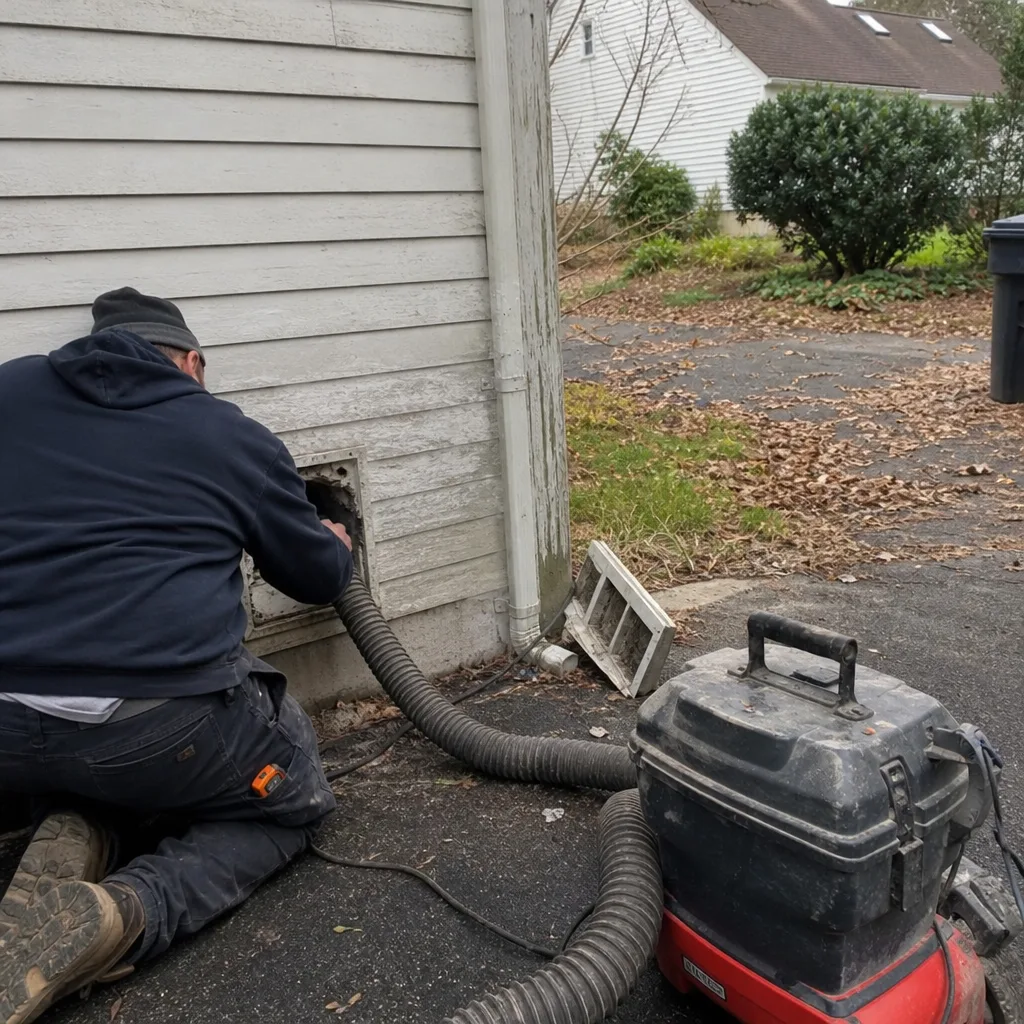 Before
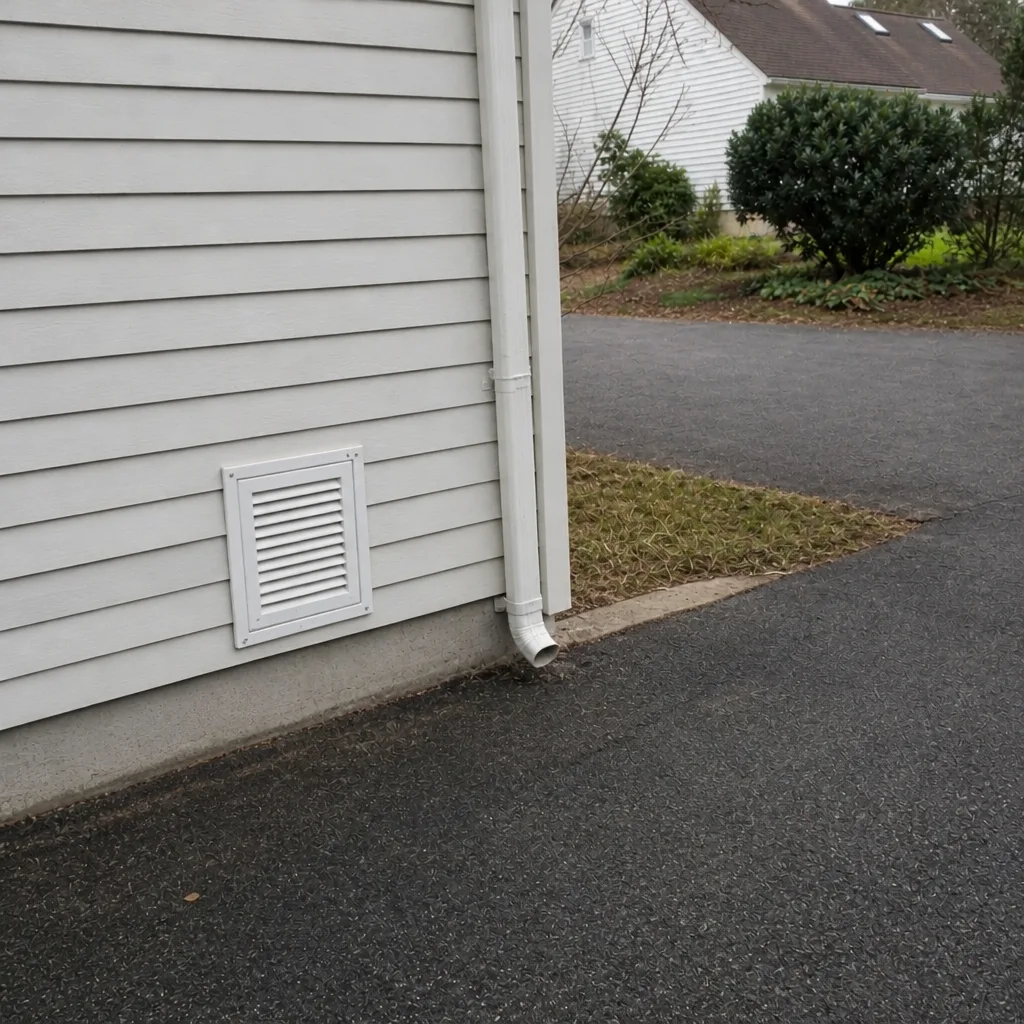 After
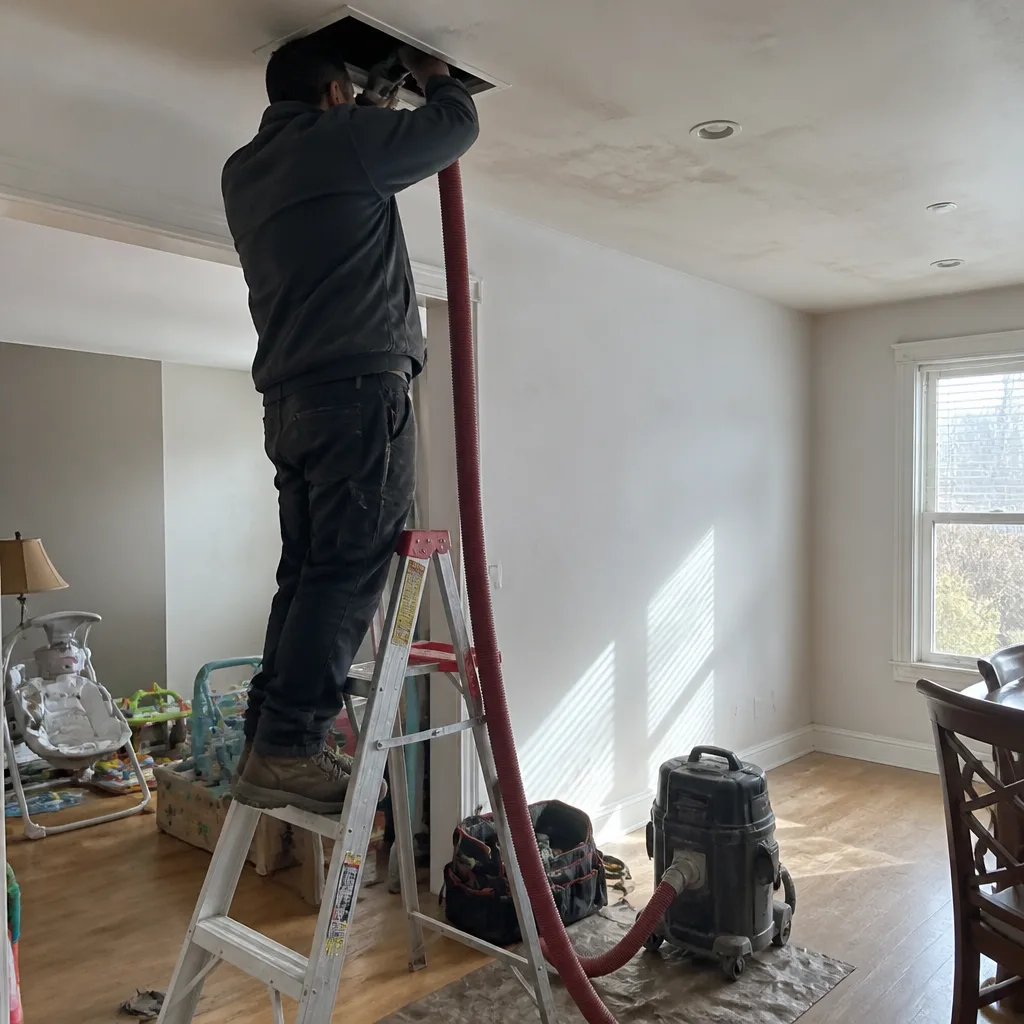 Before
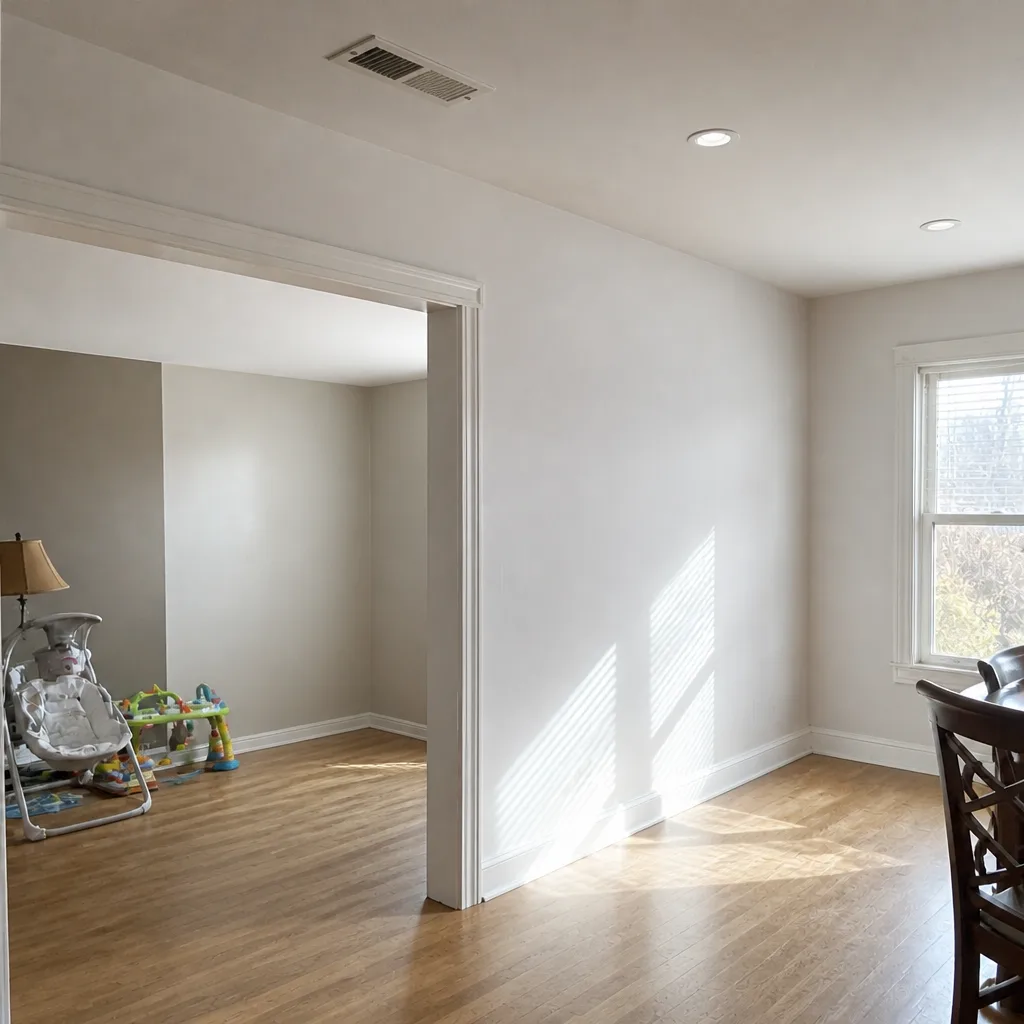 After
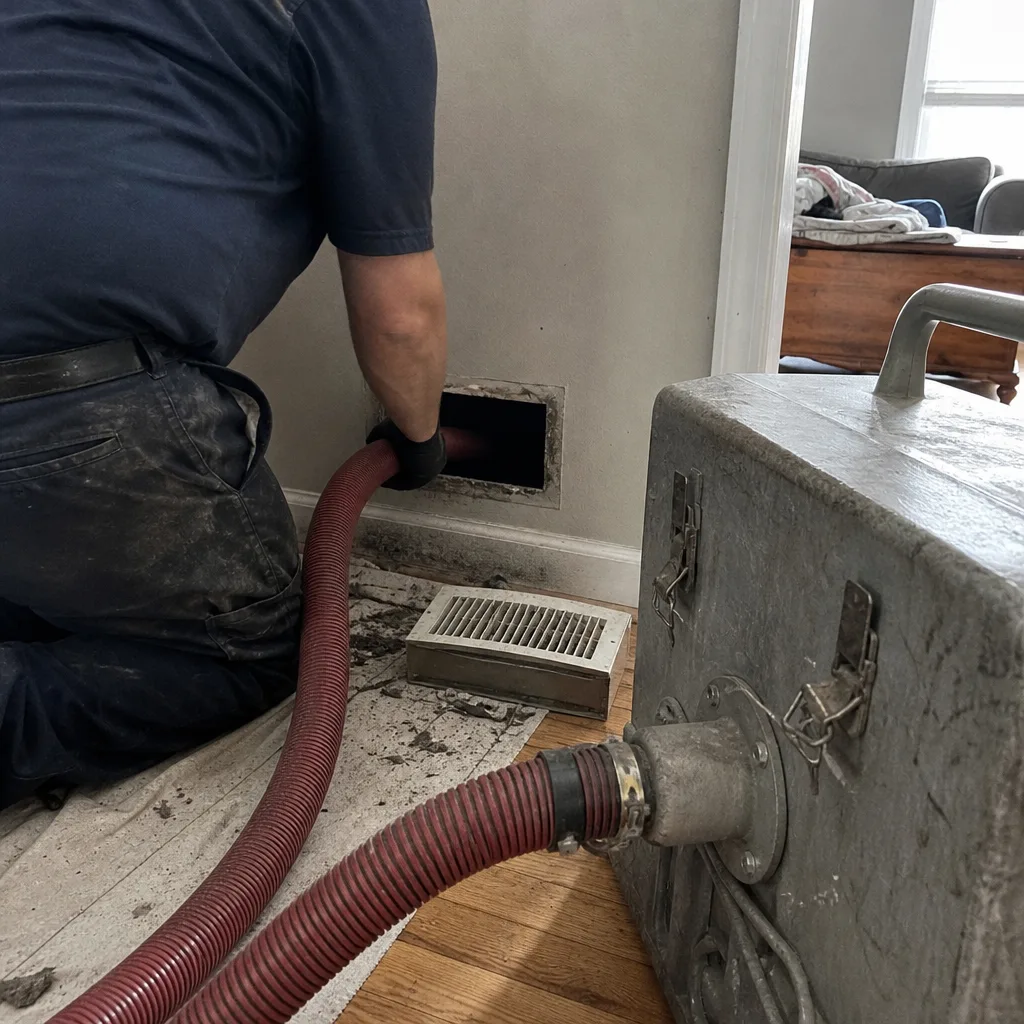 Before
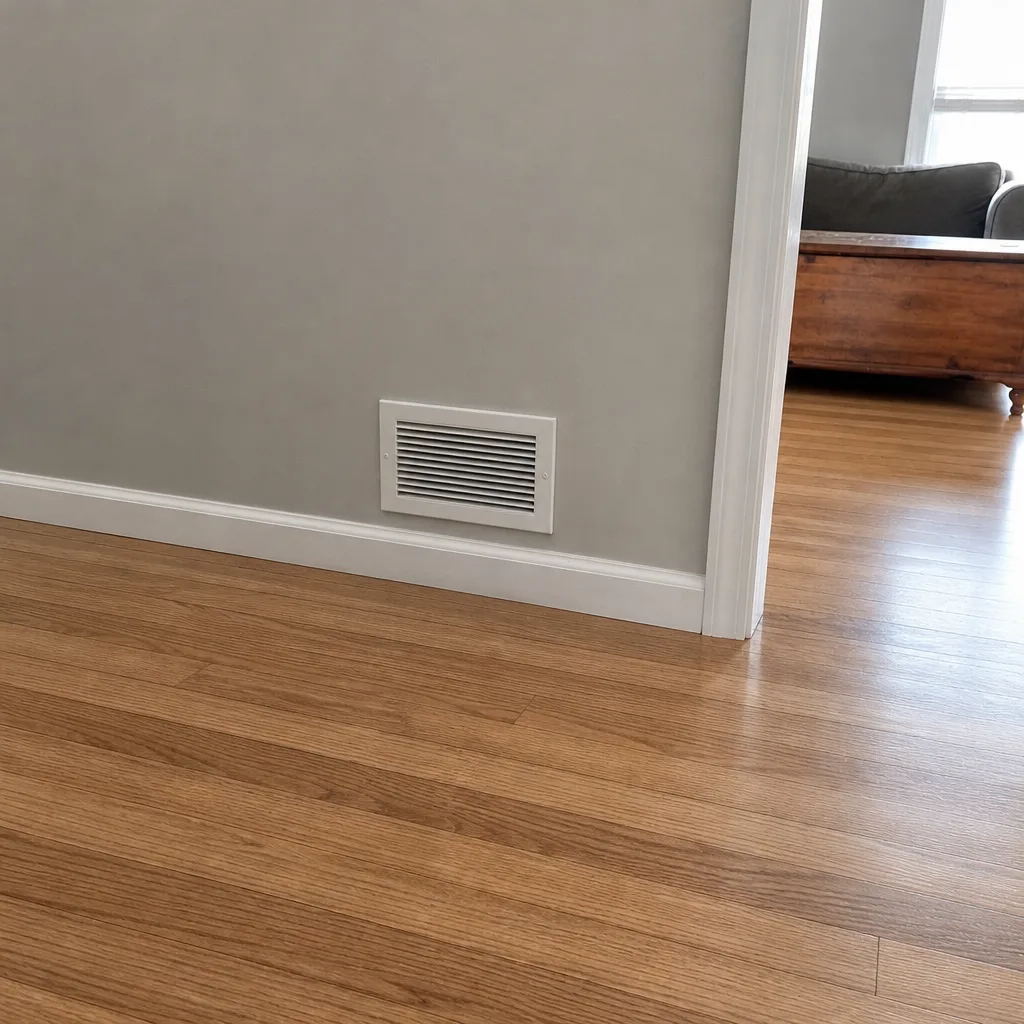 After
When to Call a Professional
Duct cleaning is not a job for a rented shop vac and a Saturday. If the system hasn’t been cleaned in years, if you’ve just bought a home and want a clean start before moving in, or if anyone in the household is dealing with stubborn allergy symptoms that haven’t responded to filtration changes, call a professional. If your dryer takes two cycles to dry a load, that’s a dryer vent problem, not a dryer problem, and it should be handled by someone with the right equipment. If you’ve noticed dust blowing out of registers right after the furnace cycles on, there’s a real duct issue underneath. And if a previous cleaning company left you unsure of what they actually did, a professional re-inspection will show you. We provide free estimates in Albany for any of these situations. Call (888) 861-7237. We answer 24/7. Fast dispatch from 7am to 7pm, Sunday through Friday.
Frequently Asked Questions
For most Albany homes in the 1,500-2,500 square foot range, a proper whole-system cleaning in 2026 runs $350 to $700. Larger homes, homes with heavy buildup, or homes with difficult system access can run $700 to $1,200 or higher. The written estimate sets the final price, and a legitimate quote will be flat per system rather than per vent. Call (888) 861-7237 for a free estimate – we’ll give you a real range for your specific home.
Because they’re quoting less work, not a better price. A $99 to $199 quote typically reflects a shop vac and a short visit that skips the return trunks, main trunk line, and blower compartment. Those are the parts of the system that hold the most contamination, and they’re the first things cut when a company has to hit a low headline price. Ask what’s actually included before you compare numbers. Call (888) 861-7237 to talk through a full-scope quote for your Albany home.
Before-and-after photos of your own duct system, not stock images. Every cleaning we run includes photos of the supply runs, returns, main trunk, and blower compartment before and after – you can see the actual state of your system change. Any cleaning company that won’t show you photos of your own system is telling you something. Call (888) 861-7237 to book a free estimate and ask about the documentation you’ll receive.
Most homes need whole-system cleaning every three to five years, though cold-climate homes like Albany’s often run closer to the three-year end because the heating system runs hard through long winters. Homes with pets, recent renovations, or household members with respiratory concerns may need it more often. There’s no universal schedule – the inspection tells you what the system actually needs. Call (888) 861-7237 for a free assessment.
You get a written repair estimate before any repair work starts. Common findings include disconnected joints, crushed flex duct, torn insulation, and leaky boots. We handle repair in-house, so you don’t get handed off to a second contractor. Typical repair pricing runs $75 to $150 per joint reconnection, $8 to $18 per linear foot for flex replacement, and $60 to $125 per new access point. Call (888) 861-7237 for a free estimate that includes a repair scope if needed.
Yes, and it’s one of the highest-value add-ons in the trade. Dryer vent cleaning typically adds $100 to $175 to a duct cleaning visit, and lint accumulation in the vent is the leading cause of household dryer fires. If your dryer takes two cycles to dry a load or feels hot to the touch on the outside, the vent is restricted and needs attention. Call (888) 861-7237 to schedule both services on one visit.
The Bottom Line
The Albany duct cleaning market ranges from $99 bait-and-switch offers to $1,200+ full-system jobs, and the gap isn’t profit margin – it’s what equipment is on the job and what scope is included. A properly scoped cleaning in 2026 runs $350 to $700 for most Albany homes, uses professional-grade rotary and HEPA equipment, cleans the returns and main trunk, and includes before-and-after photos. Anything meaningfully under that range is buying less work. Anything meaningfully over is worth a second look at what’s being added. Ask about equipment, ask about scope, ask what triggers additional cost, and get the price in writing before anyone starts.
Duct Cleaning Albany provides air duct cleaning, dryer vent cleaning, and duct repair across the Albany area. Our technicians have up to 9 years of experience, we run Rotobrush and Nikro professional systems on every job, and we repair damage in-house rather than subcontracting it. Call (888) 861-7237 for a free estimate. We answer 24/7. Fast dispatch from 7am to 7pm, Sunday through Friday.
Written by the team at Duct Cleaning Albany.